SunStar Solar Pool Heater Pump Requirements: GPM Flow Rate Guide
Getting the pump right for your SunStar solar pool heater is often the difference between a system that works well and one that barely makes a dent in your heating bill. The pump must deliver enough gallons per minute (GPM) to keep the panels primed and transferring heat, but too much flow can reduce efficiency and waste power. This guide cuts through the confusion and gives you the specific flow numbers for SunStar panels, with practical advice for new installations and existing setups.
What GPM Does a Single SunStar Solar Panel Require?
Each standard SunStar 4×12 panel—roughly 48 square feet—needs a minimum flow of 4 GPM for basic operation. The sweet spot for heat transfer is slightly higher, around 6 to 8 GPM per panel. That range ensures the water picks up heat without staying in the panel so long that it loses temperature to the surrounding air. If you’re running the heater on a mild sunny day, 5 GPM per panel is often enough, but for peak late-afternoon sun, aim for 7 GPM.
SunStar’s engineering team has confirmed that any single panel can handle up to 12 GPM without significant backpressure issues, but remember that your entire array adds up. For example, four panels in a single bank need 28–32 GPM total to operate in the ideal range. The key is matching this demand to your existing pump’s curve, not just its label rating.
How Do I Calculate Total GPM for My SunStar Solar Array?
The math is straightforward: multiply the number of panels by the target GPM per panel. But you must account for plumbing losses and friction in long pipe runs. Here’s the formula that fits most residential setups:
- Count the total square footage of your SunStar collector array (panel length × width × number of panels).
- Divide that by 48 (each panel is 48 sq. ft.) to get the panel count.
- Multiply the panel count by 6 GPM (minimum) or 8 GPM (target).
- Add 10–15% to compensate for friction through valves, elbows, and any vertical lift over 10 feet.
Example: You have a 288 sq. ft. array (six 4×12 panels). 6 panels × 6 GPM = 36 GPM minimum. Adding 15% gives roughly 41 GPM. That’s the number your pump must deliver at the actual operating head—not just the pump’s free-flow rating. If your existing pump struggles to push that much water, you might need to split the array into two banks using a balancing valve arrangement. You can also review the Sizing a SunStar Solar Pool Heater for Your Pool article for more on array configuration.
What If My Pump Flows Too Much GPM Through the SunStar Panels?
Excess flow is a real problem with oversized pumps. When water rushes through the panels too fast, it doesn’t have enough dwell time to absorb heat. The result is lukewarm water returning to the pool and a higher electric bill from the pump motor. SunStar panels work best at a velocity of roughly 2 to 4 feet per second through the internal tubes. Exceeding 6 feet per second can also accelerate wear on fittings and o-rings.
If your pump pushes 15 GPM per panel (common with a 1.5-HP pump on a small array), you’ll see a drop in thermal efficiency of 20–30%. The fix is either installing a bypass valve to divert some flow away from the panels or throttling the pump with a partially closed valve. The better long-term solution is a variable-speed pump set to a lower RPM that matches the array’s flow curve. A 20% reduction in pump speed typically halves energy consumption—worth considering when tuning your system.
| Symptom | Severity Level | Action Needed |
|---|---|---|
| Water temp climbs slowly, but pump is running fast | Usually not urgent | Check flow rate with a bucket or flow meter; consider throttling or adding a bypass |
| Panels feel hot to touch, but pool temp stays the same | Needs attention soon | Flow is likely too high; measure GPM per panel and reduce to 6–8 GPM range |
| Backpressure gauge reads above 15 psi at panel manifold | Needs attention soon | Possible blockage or pump too large; inspect for pinch points and reduce pump speed |
| Water temperature actually drops when panels are engaged | Usually not urgent (if ambient is cool) | Check if nighttime operation or cloudy conditions; re-evaluate flow and controller settings |
Can I Use My Existing Pool Pump, or Do I Need a Dedicated Solar Pump?
Most pool owners can use their existing pump, provided it can handle the extra head pressure from the solar panels. SunStar panels add about 2-3 psi of backpressure per panel in series, plus the friction from rooftop plumbing. A typical 1-HP single-speed pump can manage up to four panels in a single run without issues. Beyond that, you’ll likely need to either upgrade to a higher-head pump or install a dedicated solar booster pump.
Dedicated solar pumps are quieter and often more efficient for large arrays. They also let you leave your primary filter pump on a lower speed for circulation while the solar pump ramps up only when the controller calls for heat. If you have a 240 sq. ft. array or larger, a 1/2-HP or 3/4-HP dedicated pump is a common choice. Make sure your controller can handle the remote start—the SunStar Solar Pool Heater Controller Programming Instructions guide covers that wiring step.
What Are the GPM Requirements for SunStar Solar Panels on Two-Story Homes?
Roof height dramatically raises the required head pressure. For every 10 feet of vertical lift, you add roughly 4.3 psi of head. A two-story home with 20 feet of lift plus 50 feet of horizontal pipe on the roof can push total head to 25–30 psi. In such cases, a standard 1-HP pump may barely move enough water, even if the GPM rating at zero head looks good on paper.
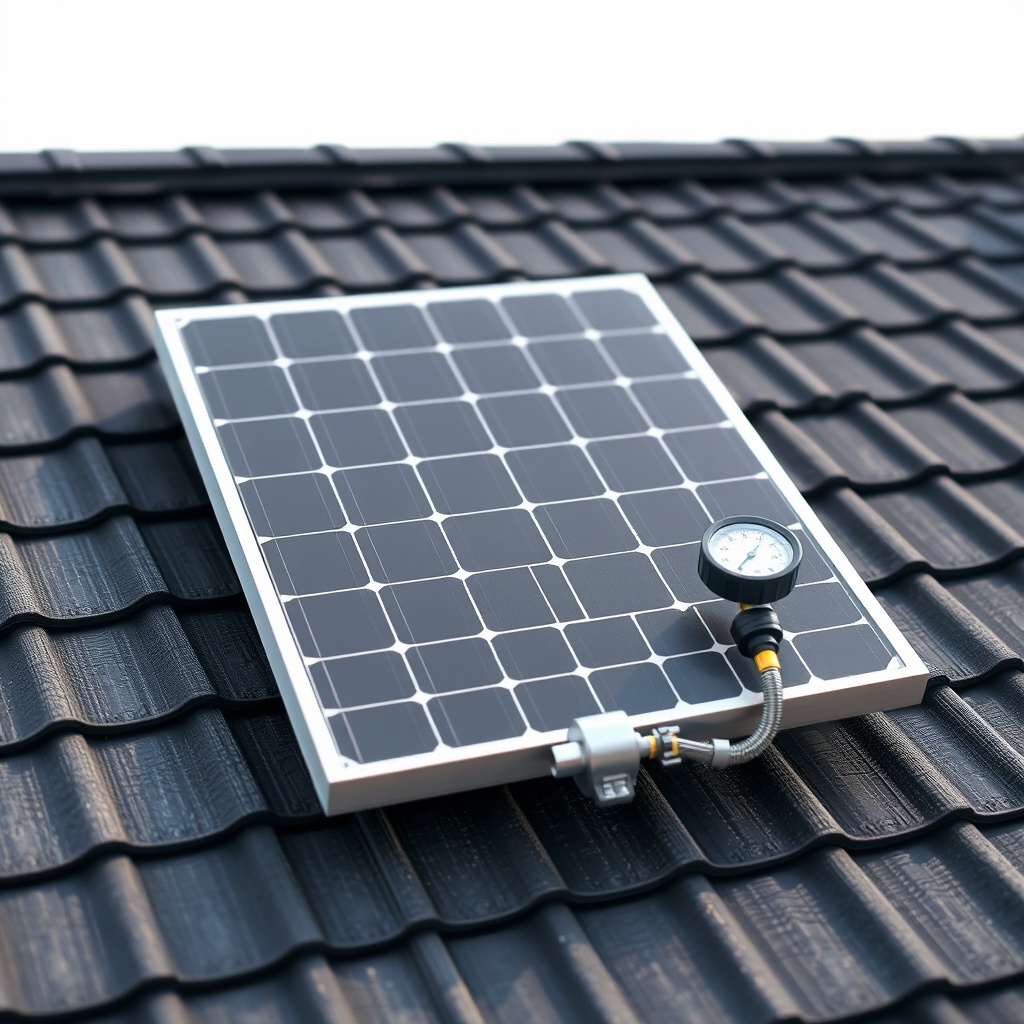
Check your system’s total dynamic head (TDH) with a simple pressure gauge tee-d into the pipe just before the panel inlet. Subtract the pressure reading from the outlet side; the difference is what the pump must overcome. For two-story installations, you often need a pump with a TDH rating of 35–40 feet or more. SunStar panels themselves handle up to 50 psi, but the pipe fittings and valves may not. Use sweeps instead of sharp 90s to reduce friction, and SunStar Solar Pool Heater Not Heating? Troubleshooting Steps has more details on diagnosing flow problems on tall roofs.
How Should I Configure the Piping to Maintain Correct GPM?
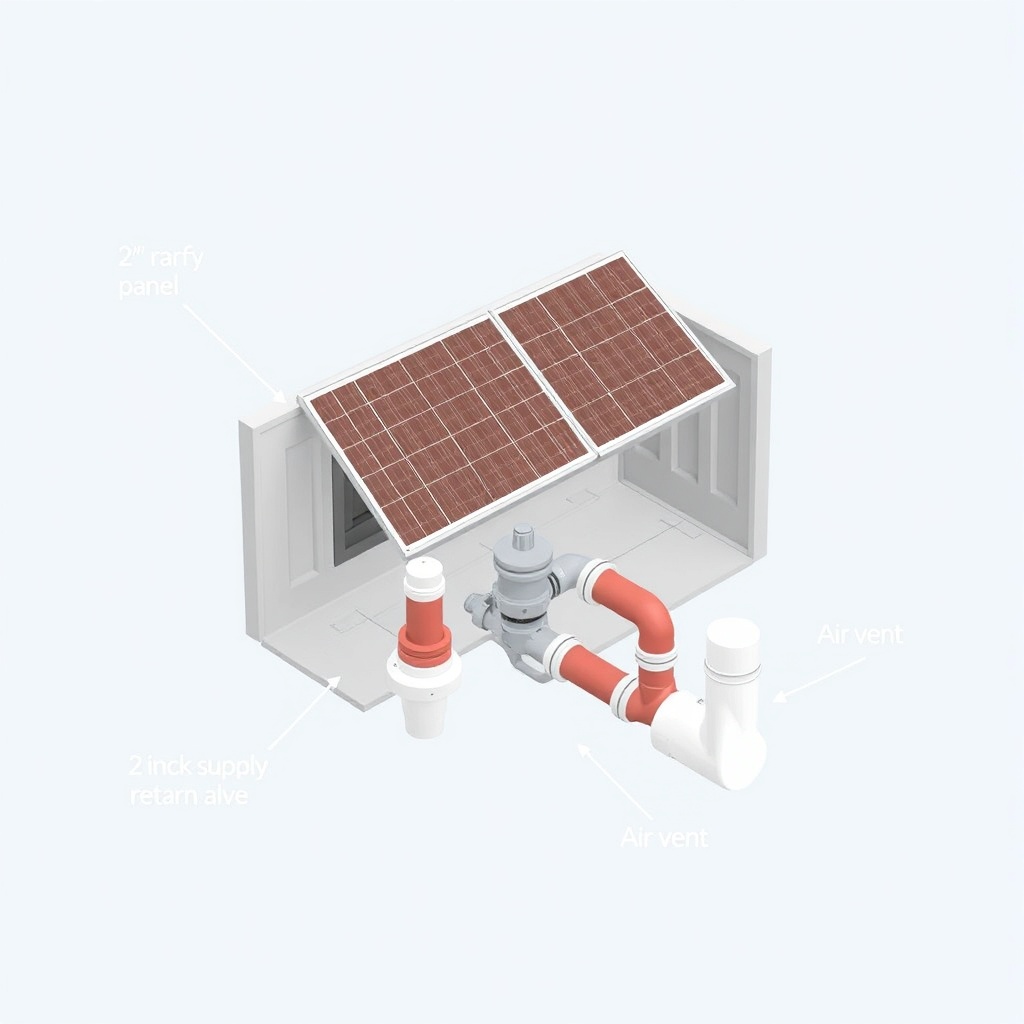
Piping diameter matters enormously. A 1.5-inch pipe can carry up to about 40 GPM with acceptable friction loss. If your array demands more than that, you need 2-inch pipe for the main supply and return lines from the pump to the panels. On the roof, you can use 1.5-inch headers for up to six panels, but beyond that, split them into two rows with separate return lines.
You also want to avoid dead ends and air traps. Install a manual air vent at the highest point of the piping on the roof to prevent air binding, which kills flow and leads to overheating. And always use a check valve after the pump to keep water from draining back down when the pump shuts off—that ensures instant prime on the next cycle. For large arrays, include a balancing valve on each row to equalize flow. Proper plumbing can boost efficiency by 15% without any pump upgrade.
What Owners Say
“I have a 12-panel SunStar array on a one-story ranch house. My 1.5-HP pump was supplying around 10 GPM per panel, and I was getting a 5-degree temperature rise on sunny days. I put a ball valve on the solar return line to limit flow to about 7 GPM per panel, and the temperature rise jumped to almost 9 degrees. Better heat, lower noise.” – Mark D., Tampa, FL
“My two-story house needed a separate solar pump. The primary pump just couldn’t push enough water up 22 feet. I installed a 1/2-HP Grundfos solar pump, and now I get a steady 32 GPM through my six-panel array. The controller programming guide helped me set the differential timer so the solar pump only runs when the roof temp is 8 degrees above pool temp.” – Susan T., Phoenix, AZ
“At first I had three 4×10 panels (not the 4×12) and didn’t check the GPM per panel. Water was barely warm. I realized the panels are smaller, so the flow requirement per panel is around 1 GPM per 10 square feet less. Once I recalculated and reduced my pump speed, it worked perfectly. Size matters more than people think.” – Dave M., San Diego, CA
Frequently Asked Questions
What is the minimum GPM for one SunStar 4×12 panel?
The minimum recommended flow is 4 GPM per panel to keep the tubes primed and avoid hot spots. At this flow rate, heat transfer is still moderate but acceptable for mild climates.
Can I run two banks of SunStar panels in parallel with one pump?
Yes, but you must balance the flow with a dedicated balancing valve for each bank. Otherwise, the path of least resistance gets the majority of the flow, starving the other bank. A manifold with two separate returns and gauges helps you adjust.
Will a variable-speed pump save electricity with SunStar panels?
Absolutely. A variable-speed pump set to the exact GPM your array needs can cut electricity use by 40–60% compared to a single-speed pump running full throttle. Just make sure the pump can handle the head pressure at the lower RPM.
How do I measure GPM through my SunStar panels precisely?
One reliable method uses a flow meter installed in the supply line near the pump. For a quick estimate, you can time how long it takes to fill a 5-gallon bucket from a hose bib placed after the panels, then calculate: 300 / seconds = GPM. This works only if you have a test port, though.
What happens if the GPM is too low for a long period?
Low flow causes water to overheat inside the panels, possibly reaching 160–180°F. This can damage the plastic headers and o-rings over time, cause scaling, and reduce panel lifespan. It also triggers the controller to shut down the pump if it has a high-limit sensor, stopping heating entirely.
Do all SunStar panel models require the same flow rates?
No. The 4×10 panels (40 sq. ft.) require roughly 3–6 GPM each, while the larger 4×14 panels (56 sq. ft.) need 5–9 GPM each. Always check the specific specifications for your model number. The flow recommendation scales roughly with surface area—1 GPM per 7-8 square feet is a safe rule.