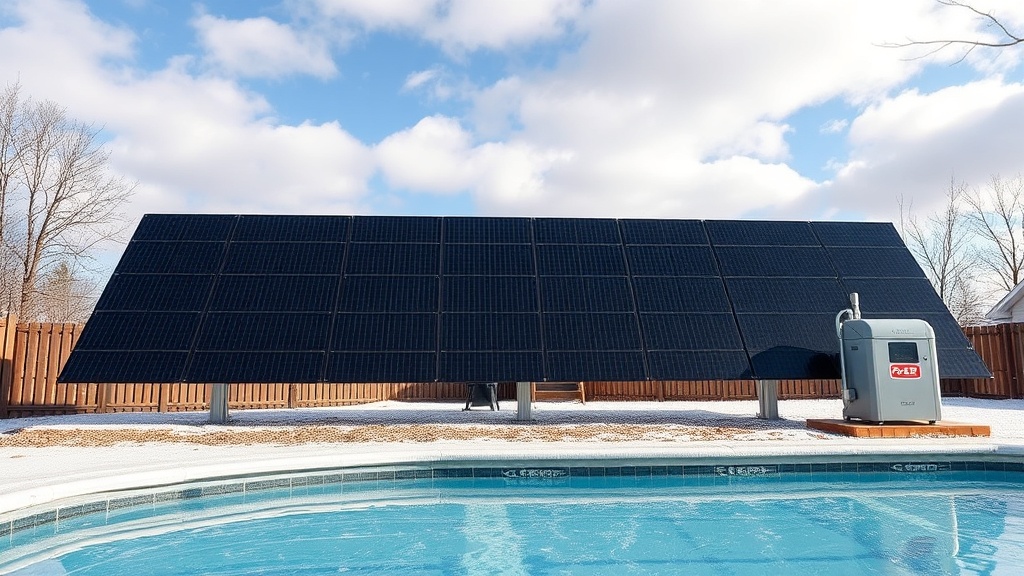
How Does the Fafco Solar Bear Winter Freeze Protection Work?
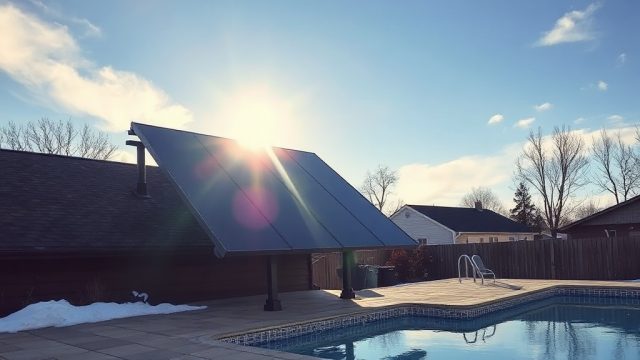
The Fafco Solar Bear solar pool heating system relies on a combination of silicone rubber absorber panels and a drain-back mechanism to survive freezing temperatures. Unlike glazed collectors, the Bear’s unglazed panels allow water to drain out completely when the pump shuts off. This passive drain-back action prevents standing water from freezing and expanding inside the panels, which is the primary cause of winter damage. For added protection, a properly installed vacuum break—detailed in our Fafco Solar Bear Vacuum Break Installation Guide—ensures no siphon persists after pump shutdown, allowing panels to drain rapidly even in sub-freezing conditions.
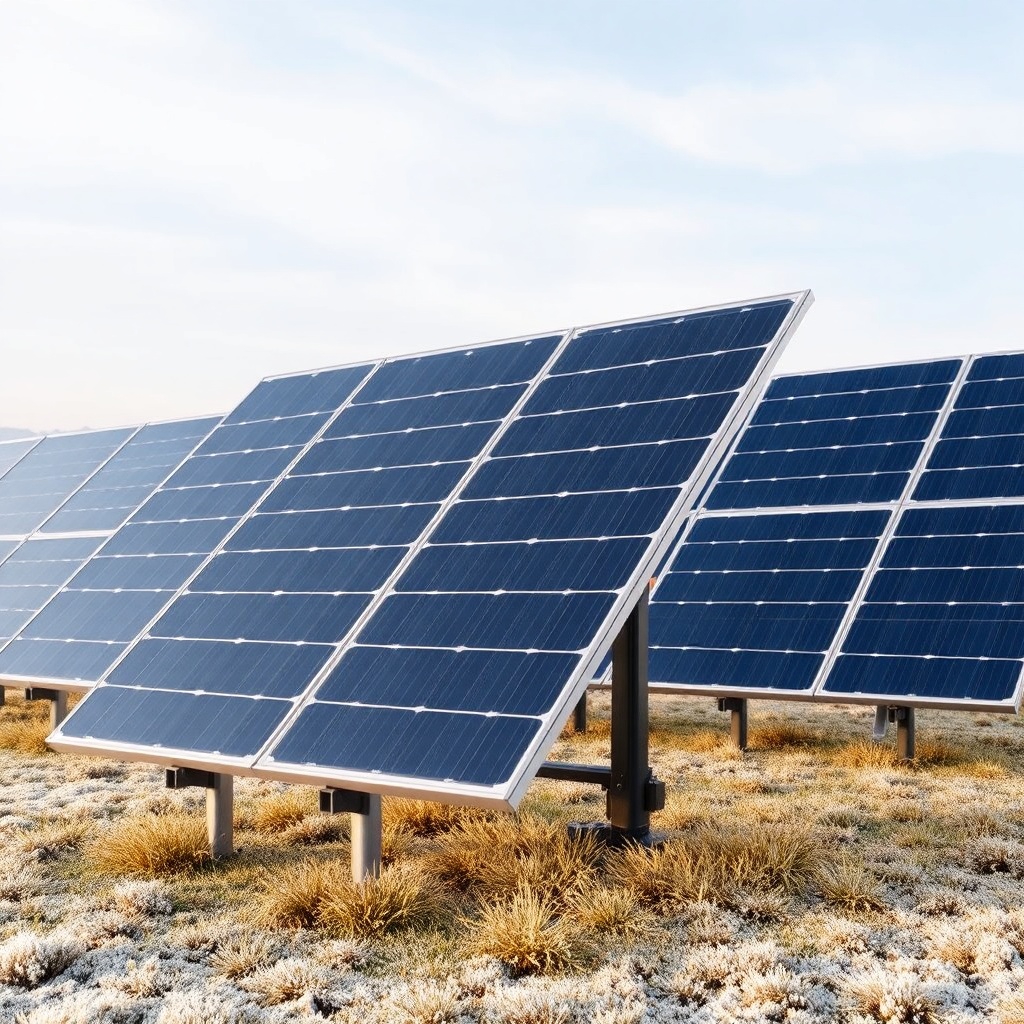
Why Should I Use Antifreeze Instead of Just Drain-Back?
While the drain-back design is effective down to about 20°F (-7°C), prolonged exposure to temperatures below 15°F (-9°C) can create ice blockages in the supply lines or manifold connections. Adding a non-toxic propylene glycol antifreeze mixture to the system provides a safety buffer. For Fafco Solar Bear installations in zones where winter lows dip below 10°F (-12°C), mixing a 30% to 50% propylene glycol solution ensures that any residual water in the headers or elbows does not freeze. This is especially critical if your Generic Solar Pool Pump Sizing for Fafco Solar Bear Systems results in a pump that does not fully purge all water from the panels on shutdown. Antifreeze also reduces the risk of cracking the collector headers, which are the most vulnerable point in the system.
Recommended Antifreeze Mixture by Climate
| Minimum Expected Winter Low | Propylene Glycol Concentration | Freeze Protection Down To | Recommended for Fafco Bear? |
|---|---|---|---|
| 20°F to 25°F (-6°C to -4°C) | None – drain-back only | 20°F (-7°C) | Yes, if pump purges fully |
| 10°F to 19°F (-12°C to -7°C) | 30% (30% glycol, 70% water) | 5°F (-15°C) | Strongly recommended |
| 0°F to 9°F (-18°C to -13°C) | 40% (40% glycol, 60% water) | -10°F (-23°C) | Yes, with drain-back |
| Below 0°F (-18°C) | 50% max (50% glycol, 50% water) | -30°F (-34°C) | Yes, but consider winterizing |
Note: Propylene glycol reduces heat transfer efficiency slightly (about 5-10% at 50% concentration). For most residential pools, this is negligible compared to the risk of panel damage.
How Do I Perform a DIY Antifreeze Setup for My Fafco Solar Bear?
To add antifreeze to an existing Fafco Solar Bear system, you will need a clean 5-gallon bucket, a submersible pump (or a garden hose with a venturi injector), and a bottle of food-grade propylene glycol (such as Dowfrost or Star brite). Begin by shutting off the pump and closing any isolation valves. Drain the system via the lowest drain port on the collector manifold. Next, mix your glycol with water in the bucket according to the table above. Using the submersible pump, feed the mixture into the system’s return line or via a dedicated antifreeze injection port near the filter. Run the pump for 5-10 minutes to circulate the mixture through the panels, then shut off the system and verify that the panels drain completely. This process ensures that only the glycol mixture remains in the headers, not pure water. For ground-mount systems, reference our Fafco Solar Bear Ground Mount Installation: A Step-by-Step Guide for accessory port locations.
What Is the Exact Drain-Back Setup Required for Winter?
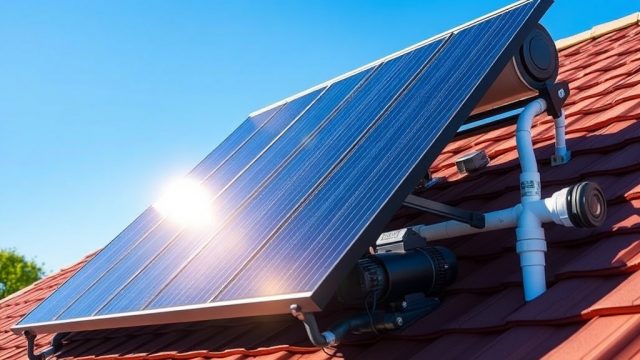
A proper drain-back setup for the Fafco Solar Bear requires three key components: a correctly sloped collector array (minimum 1/4 inch per foot toward the drain point), a vacuum break at the highest point of the supply line, and a check valve on the return line to prevent back-siphoning. The panels themselves must be mounted with the headers tilted so that water flows downward to the collection manifold. In our Fafco Solar Bear Ground Mount Tilt Angle Optimization: Best Summer and Winter Settings, we recommend a winter tilt of 45° to 60° from horizontal, which also aids drainage by creating a steeper slope. Do not rely on the pump’s check valve alone; install a manual drain valve at the lowest point of the piping. When the pump turns off, the vacuum break opens, air enters the panels, and water drains out within 10-15 seconds. Test this by running the system and then observing the panels after shutdown. If water drips for more than 30 seconds, you need to adjust slope or check for clogs—see Fafco Solar Bear Low Flow Rate: Causes and Fixes.
What Owners Say About Winter Performance
Fafco Solar Bear owners in colder climates consistently report that with a manual drain-back check and antifreeze addition, they have zero freeze damage after many winters. One owner in Pennsylvania noted that after adding a 30% propylene glycol mix and verifying the vacuum break operation, the system endured multiple nights at -5°F without issue. Another user in Colorado emphasized that the key is to not just rely on the drain-back—they found that a small amount of water was trapped in the header unions until they tightened them after an annual maintenance check. Several owners on pool forums highlight that the biggest fail point is the vacuum break sticking closed; they recommend testing it monthly from November to March. For tilt optimization during winter, readers often refer to our Fafco Solar Bear Mounting Tilt Angle Optimization: Best Winter Settings for Maximum Heat Gain to also improve drainage.
Frequently Asked Questions
Q: Can I leave my Fafco Solar Bear exposed to freezing temperatures all winter?
A: While the panels are UV-stable and rated for outdoor exposure, the water inside must be removed or protected with antifreeze. In zones with sustained sub-freezing temps, drain-back plus antifreeze is mandatory.
Q: How much antifreeze do I need for a typical Fafco system (4-panel array)?
A: A 4-panel array (approx. 40 ft² each) holds roughly 3-4 gallons of water. You will need about 1.5 gallons of pure propylene glycol to achieve a 40% mixture, mixed with 2.5 gallons of water. Buy a 2-gallon jug of concentrated glycol to be safe.
Q: Do I need to remove the antifreeze in spring?
A: Not necessarily. The mixture remains in the system all year. However, after winter, you should test the concentration with a refractometer and dispose of any degraded glycol (it can become acidic). Replace with fresh mixture every 2-3 years.
Q: Will antifreeze harm my pool water or equipment?
A: Food-grade propylene glycol is non-toxic and NSF-approved for swimming pools. It will not harm the pool water chemistry, but it may temporarily increase the viscosity and reduce pump flow by 5-10%. Monitor your pressure gauge after adding.
Q: My vacuum break is frozen. What do I do?
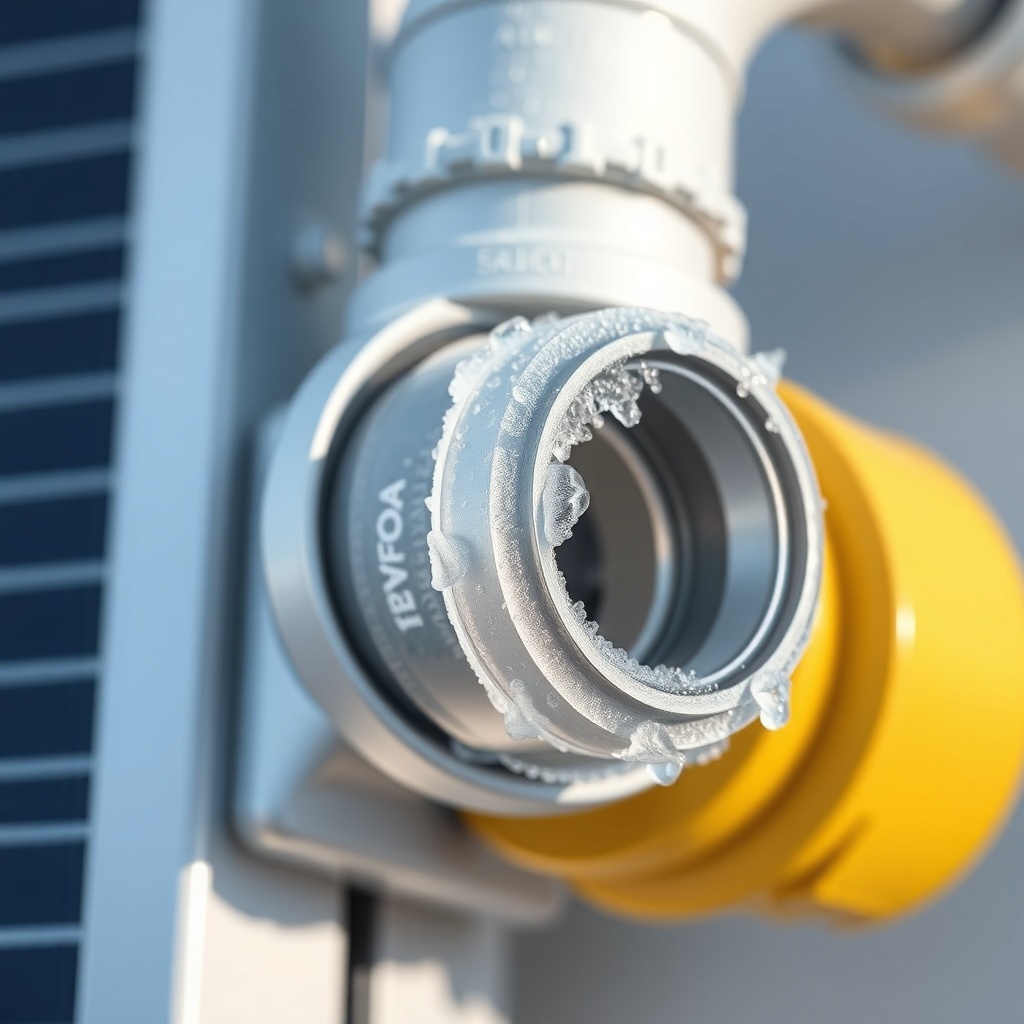
A: Do not operate the pump if the vacuum break is frozen. Gently thaw it with warm water (never a torch). Once thawed, clean any debris from the rubber seal. If it consistently sticks, replace it with a winter-rated model.
Q: Can I use automotive antifreeze (ethylene glycol) in my Fafco Bear?
A: No. Ethylene glycol is highly toxic and can poison pets or children if there is a leak into the pool. Only use food-grade propylene glycol labeled for solar or pool systems.