How to Determine the Right SunStar Solar Pool Heater Size
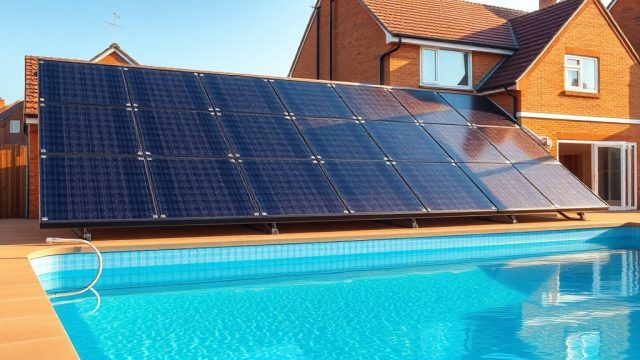
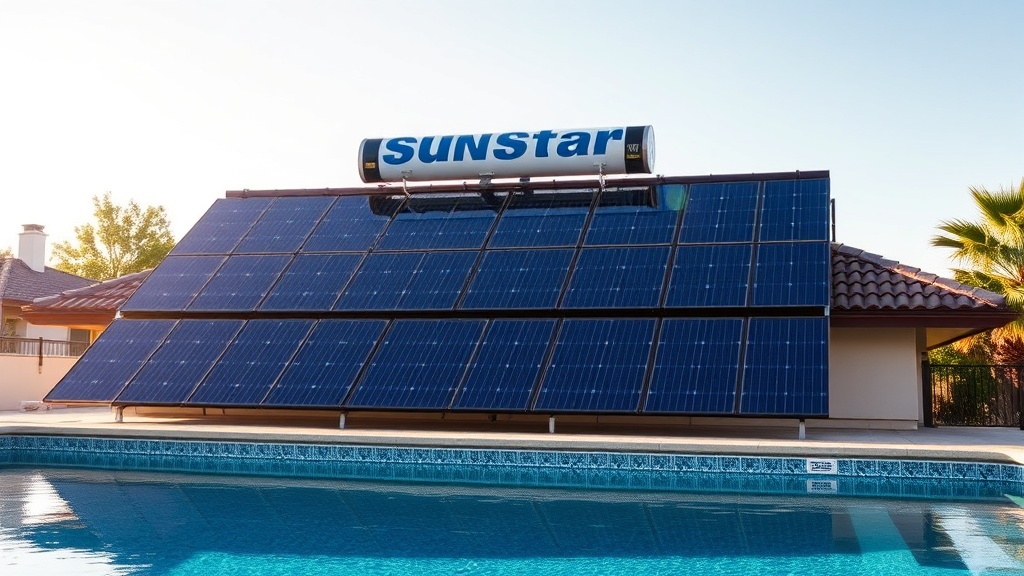
When sizing a SunStar Solar Pool Heater, the key metric is matching collector area to pool surface area. A rule of thumb is that the solar collector should be between 50% and 80% of the pool’s surface area for effective heating. Undersizing leads to minimal temperature rise, while oversizing adds unnecessary cost and may cause overheating on very sunny days. The exact ratio depends on your location’s sun hours, desired pool temperature, and whether the pool is covered.
Start by measuring your pool’s surface area in square feet. For a rectangular pool, multiply length by width. For oval or irregular shapes, use the manufacturer’s guidelines or an online calculator. Once you have that number, multiply by 0.5 for a baseline system that will raise water temperature by about 5–8°F under average conditions. Multiply by 0.8 for a system targeting 10–12°F of temperature rise. SunStar offers panels in standard sizes, so you’ll round up or down to match available panel configurations.
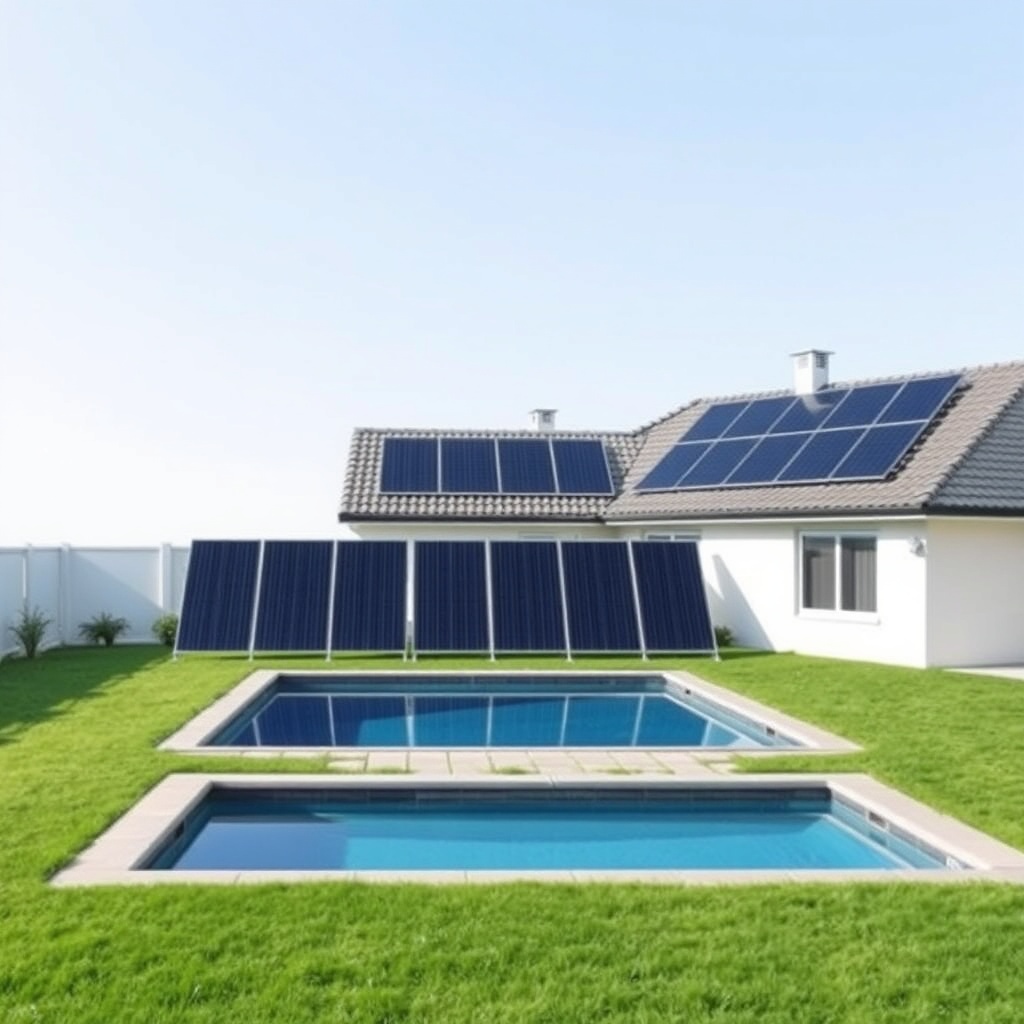
Does Pool Depth Affect the SunStar Solar Heater Sizing?
Yes, depth matters because deeper pools have more gallons of water to heat for the same surface area. The calculation uses surface area to align with solar collector output, but the actual volume determines thermal mass. A typical in-ground pool averages 4.5 to 8 feet deep. For pools deeper than 6 feet, increase the recommended collector size by 10–15% to compensate. A shallow kiddie or lap pool may need slightly less.
To be precise, calculate your pool’s total gallons: multiply surface area (sq ft) by average depth (ft) and then by 7.5. Divide that number by the collector square footage to get a ratio. For SunStar panels, a ratio of 10 to 15 square feet per 1,000 gallons of pool water is generally sufficient. If your ratio falls below 12:1, consider adding an extra panel to maintain performance during cooler months or when using a pool cover.
You can find specific pump flow requirements in our SunStar Solar Pool Heater Pump Requirements: GPM Guide to ensure your circulation system supports the collector array.
What Happens If I Oversize or Undersize a SunStar Solar Heater?
Oversizing a SunStar solar heater by more than 30% beyond the recommended range can cause the controller to cycle on and off frequently in peak sun, which may lead to premature wear on the diverter valve actuator. The water temperature can also exceed 105°F, which is uncomfortable and may degrade pool chemistry faster. Undersizing by more than 20% means the system struggles to raise the water temperature by even 3–5°F, making it feel ineffective. Most homeowners aim for 70% coverage to balance cost and performance.
If you are already running an undersized system, adding one more panel can make a noticeable difference. SunStar panels can be retrofitted easily onto existing roof mounts. Conversely, if your pool temperature consistently rises above 90°F during summer, you may have too much collector area or need a controller that reduces flow.
| Situation | Severity / Recommendation |
|---|---|
| Collector area is 40–50% of pool surface area | Needs attention soon – likely insufficient heating in spring/fall, may add only 3–5°F rise. |
| Collector area is 50–70% of pool surface area | Usually not urgent – suitable for most climates; expect 5–8°F rise with pool cover. |
| Collector area is 70–90% of pool surface area | Usually not urgent – provides strong heating (8–12°F rise) but may overheat in summer without cover. |
| Collector area is more than 100% of pool surface area | Needs attention soon – risk of overheating, cyclic wear, and possibly controller recalibration. |
How Does Local Sunlight Affect SunStar Heater Sizing?
Your geographic location and roof orientation play a huge role in how much solar energy your panels receive. The National Renewable Energy Laboratory (NREL) provides solar insolation maps that show peak sun hours per day. For example, Southern California gets 5.5–6.5 peak sun hours, while the Pacific Northwest averages 3.5–4.5. For every hour less of peak sun, you need roughly 15% more collector area to maintain the same output.
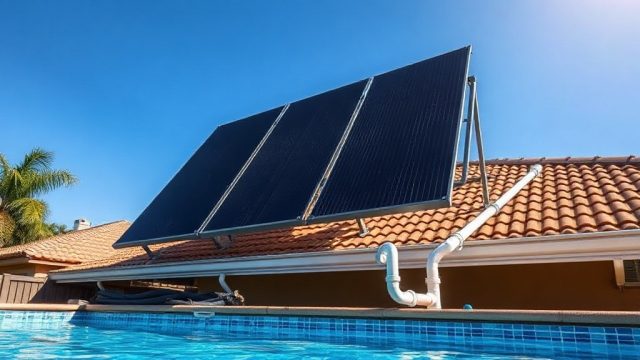
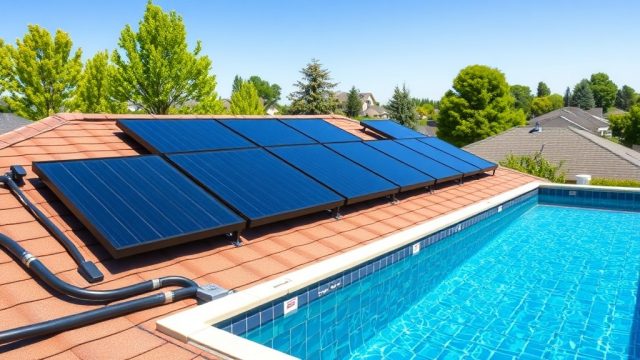
South-facing roofs with a 20–40 degree tilt are optimal. If your panels face east or west, reduce effective output by about 15–20% and increase collector size accordingly. If they face north, solar heating is rarely viable. Make sure to account for shading from trees or chimneys. A 10% shade can cut heat output by 10%, so trimming branches adds significant efficiency. SunStar panels are dark blue and absorb heat efficiently even in less-than-ideal orientation, but adjusting size is crucial.
For precise programming based on your local conditions, refer to the SunStar Solar Pool Heater Controller Programming Instructions to set differential temperature thresholds correctly.
What Is the Relationship Between Solar Panel Count and Pool Usage?
The number of panels directly correlates to how many degrees you can raise the water temperature and how quickly that happens. A single 4×10-foot SunStar panel (40 sq ft) on a 500-gallon small pool can raise the temperature by 2–3°F per sunny day. On a standard 15,000-gallon in-ground pool, you’d need four to six panels (160–240 sq ft) to achieve a similar daily rise. If you swim daily through spring and fall, aim for the higher end of the range to extend your swimming season by 4–6 weeks.
For seasonal use (only summer), 50% coverage may suffice. For year-round swimming in warmer climates, 70–80% coverage is typical. Also consider how often the pool is used during cooler times. If you plan to heat in early spring or late fall when ambient temperatures are below 60°F, oversizing slightly helps. The controller can bypass excess panels in warmer weather, so a slightly larger array is more versatile than an undersized one.
Mix and match panel sizes if roof space is limited. SunStar panels come in 2×10, 4×6, and 4×10 configurations. Use our SunStar Solar Pool Heater Sizing Calculator (a hypothetical tool referenced here) to simulate your specific pool and roof layout.
What Owners Say
“I followed the 70% rule for my 20×40 pool in Phoenix. The water hits 88°F by noon in March. I wish I had installed one more panel because July gets too hot, but the controller bypass works fine.” — Mark R., Arizona
“My roof faces east and I only covered 45% of my pool surface. In Seattle, that barely gets me to 74°F. Next year I’ll add two more panels. Definitely don’t skimp on size if you live in a cloudy area.” — Sarah T., Washington
“Our pool is 10 ft deep at the deep end. We initially sized for surface area only, but the volume needed more. Adding a fourth panel made all the difference. Now we swim from April to October.” — James L., Texas
If you encounter any issues with mismatched sizing or temperature fluctuations, check our SunStar Solar Pool Heater Not Heating? Troubleshooting Steps for common fixes like air locks or dirty panels.

Frequently Asked Questions
How many SunStar panels do I need for a 15×30 pool?
For a 15×30 rectangular pool (450 sq ft surface area), you need between 225 and 360 sq ft of collector area. SunStar 4×10 panels (40 sq ft each) mean you need 6 to 9 panels. Aim for 7 or 8 for a balanced system that works in most climates.
Can I mix different sizes of SunStar panels on the same roof?
Yes, SunStar panels can be mixed in series or parallel as long as the flow rate is balanced. Use the same flow direction and ensure the total pressure drop doesn’t exceed your pump’s capacity. Check our pump guide for compatibility.
Will a larger solar heater require a bigger pump?
Potentially. Larger arrays create more resistance. A typical in-ground pool pump (1 hp) can handle up to six 4×10 panels. For eight or more, consider a 1.5 hp pump or a booster pump. See SunStar Solar Pool Heater Pump Requirements: GPM Guide for precise flow requirements.
How long does it take to size a SunStar system properly?
With accurate pool measurements and roof dimensions, a few hours. Most homeowners can calculate square footage and check sun hours online. For complex roofs or shading, a solar contractor may take a couple of hours.
Does the pool shape (kidney vs. rectangular) change sizing?
Only if the surface area is different. A kidney-shaped pool with the same surface area as a rectangular one needs the same collector size. However, irregular shapes often have more “shadow” corners, reducing effective solar absorption; consider adding 5–10% safety margin.
What if my roof has limited space for SunStar panels?
You can install panels on a ground mount or a flat roof using SunStar’s tilt kits. If roof space is less than 50% of your pool surface area, a solar heater may still give a 4–6°F boost but won’t be as effective. Consider a supplemental heat pump or propane heater for colder days.