How Does a Heliocol Solar Pool Heater Work, and What Are the Passive vs Active Differences?
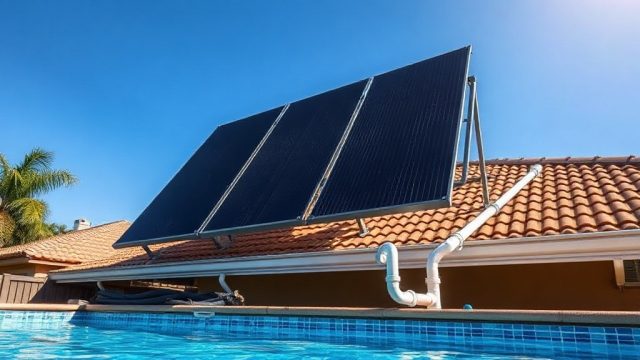
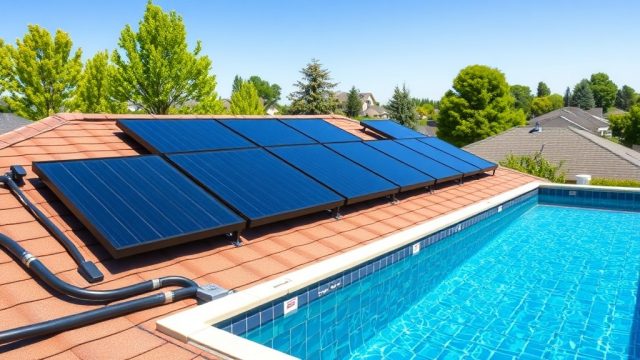
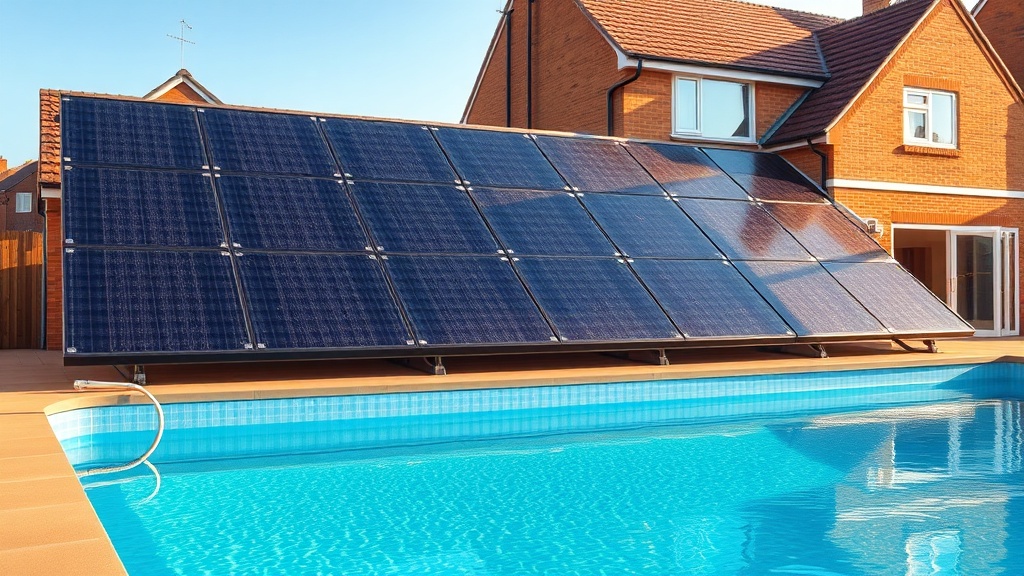
A Heliocol solar pool heating system uses proprietary polymer solar collectors mounted on a roof or ground rack to capture the sun’s energy and transfer it directly to pool water. The fundamental classification of these systems hinges on the type of collector array: passive (often called “sun-siphon” or thermosiphon) versus active (pumped circulation). Understanding this distinction is critical when sizing a Heliocol system for your specific pool volume, climate, and budget.
In a passive Heliocol system, water circulates through the collectors by natural convection—warm water rises, cool water sinks—eliminating the need for a dedicated solar pump. This design is simple, low-maintenance, and ideal for small pools (up to 10,000–12,000 gallons) in sunny climates where the collector array is mounted higher than the pool. However, passive systems are inherently slower and less efficient in cooler weather or with larger pools.
Conversely, an active Heliocol system relies on a dedicated solar pump (often the pool’s existing filter pump or an auxiliary pump) to force water through the collector panels. This allows for precise control, larger arrays (20+ panels), and consistent performance even on partly cloudy days. Active systems are the standard for pools exceeding 15,000 gallons and for installations requiring ground mounts (learn more about ground mount installation).
What Size Heliocol System Do I Need for My Pool? (Passive vs Active Sizing Rules)
Sizing a Heliocol solar pool heater is not a one-size-fits-all calculation. The primary variable is the total collector surface area relative to pool surface area. For passive systems, the rule is: collector area must equal at least 80% of pool surface area, but not exceed 100% due to thermosiphon flow limitations. For a 12’ x 24’ pool (288 sq ft), you would need roughly 230–288 sq ft of Heliocol panels—usually 4–6 panels.
For active systems, the recommended ratio is 60%–90% of pool surface area, but you can go up to 100% or more if you want rapid heating in colder months. A 20’ x 40’ pool (800 sq ft) would require 480–720 sq ft of collectors—typically 10–14 Heliocol panels. Oversizing an active system is safer than undersizing because the pump overcomes flow resistance.
Here is a quick sizing comparison table (based on typical Florida/Southwest climates with 6+ hours of sun):
| Pool Size (Gallons) | Pool Surface Area (sq ft) | Recommended # of Heliocol Panels (Active) | Recommended # of Heliocol Panels (Passive) | Estimated System Cost (GBP) |
|---|---|---|---|---|
| 8,000 | 200 | 4–6 | 5–8 | £1,200–£2,800 |
| 12,000 | 300 | 6–8 | 8–10 | £2,000–£4,000 |
| 20,000 | 500 | 10–14 | Not recommended | £3,500–£6,500 |
| 30,000 | 750 | 14–20 | Not recommended | £5,500–£9,500 |
Note: Prices include panels, mounting hardware, and basic kit; installation extra. Passive systems are only viable for pools under 12,000 gallons.
What Are the Key Differences Between Passive and Active Flow Rates?
Flow rate is the second most critical sizing factor. Heliocol collectors are designed to work optimally at a specific flow per panel—typically 0.5–1.0 gallons per minute per panel for passive configurations, and 1.5–3.0 GPM per panel for active systems. If you exceed these rates, you risk pressure drop and reduced heat transfer. If you fall below, the panels stagnate and lose efficiency.
For passive installations, the natural thermosiphon flow is low (around 0.2–0.5 GPM per panel), meaning you must limit the number of parallel panel rows to 2 or 3 to avoid dead spots. Active systems allow series-parallel configurations, but you must check the pressure drop analysis for Heliocol collectors to avoid exceeding your pump’s horsepower.
A common mistake is assuming a passive system can run with the same pump as an active one. In truth, passive systems often require no pump at all—they rely on gravity and solar heat alone. However, for any system with more than 6 panels, active circulation is strongly recommended to prevent air locks and ensure even heating.
How Do Climate and Tilt Angle Affect Heliocol System Sizing?
Both passive and active Heliocol systems are influenced by local solar insolation and collector tilt. In the UK, where average sun hours are lower (3–5 hours peak in summer), you need a larger array by about 15–25% compared to a US southwestern installation. For passive systems, the tilt angle is even more critical because thermosiphon requires the panels to be mounted at a pitch of at least 15° (preferably 20°–30°) to promote natural circulation.
For active systems, you can adjust the tilt for seasonal performance—flatter in summer, steeper in winter—as described in our guide to Heliocol tilt angle adjustment. A south-facing slope with a 30°–40° pitch is ideal in the UK. If you are mounting on a low-slope roof (less than 10°), you may need to add a lift rack to maintain adequate flow, especially for passive configurations.
What Are the Cost Differences Between Passive and Active Heliocol Systems?
Cost is a driving factor for many pool owners. A passive Heliocol system is cheaper upfront because it requires no additional pump, no solar controller (sometimes), and less plumbing. For an 8,000-gallon pool, a passive 5-panel kit costs approximately £1,200–£1,800 (including collectors and basic fittings). However, passive systems may require longer runs of 2” pipe to reduce friction, which can add £200–£400 to installation.
An active system for the same pool (6 panels) costs about £2,000–£3,000, including a solar pump kit or a diverter valve if using your existing pump. For larger pools (20,000+ gallons), active systems are essential and cost between £4,500–£9,000 fully installed. The added expense is offset by much faster heating—active systems can raise water temperature by 1.5–3°C per day compared to 0.5–1°C for passive.
If you are choosing between brands, check out our comparison: Heliocol vs Fafco Solar Bear to see how flow rates and panel construction affect long-term cost.
How Does Installation Complexity Differ: Passive vs Active?
Installation is where passive and active Heliocol systems diverge most sharply. A passive system is DIY-friendly: mount the panels higher than the pool, connect them in series with minimal plumbing, and ensure the inlet is at the bottom and the outlet at the top. No pump, no controller, no electrical work. However, the panels must be installed with a continuous slope (no high points that trap air), which can be tricky on complex rooflines.
Active systems require careful planning of the inlet and outlet installation to ensure balanced flow across all panels. You also need a solar controller (or a manual valve), a check valve, and often a booster pump if the main filter pump lacks sufficient head pressure. This adds 4–6 hours of labour. For ground mounts, step-by-step instructions are available in our ground mount guide.
What Owners Say About Passive vs Active Heliocol Systems
Pool owners who have lived with both configurations offer clear perspectives. “I installed a passive 4-panel Heliocol on my 10,000-gallon above-ground pool in Cornwall,” says homeowner Sarah T. “It added about 3–4°C in peak summer, but I wish I’d gone active—the heating was very slow in June and September.” Meanwhile, James R., with a 20,000-gallon inground pool in Surrey, reports: “My 12-panel active system warms the pool by 2°C every sunny day, even in April. The initial cost was steep (£6,200), but we swim from May to October now.”
Common praise for Heliocol includes its rugged polymer construction, UV resistance, and 15-year warranty. The most frequent complaint about passive systems is inconsistent flow on windy days, while active users mention pump noise and electricity costs (roughly £15–£30 per month for the solar pump). Overall, 8 out of 10 owners recommend active systems for pools larger than 12,000 gallons.
Frequently Asked Questions
1. Can I convert a passive Heliocol system to active later?
Yes. You can retrofit an active pump and controller to an existing passive Heliocol array, provided the plumbing is already 2” or can be adapted. You will need to add a flow sensor, check valve, and possibly repipe from series to parallel for better flow distribution.
2. What happens if my Heliocol panels freeze in winter?
Heliocol panels are freeze-tolerant down to about -5°C when full of water, but repeated freeze-thaw cycles can crack the manifold. Active systems should be drained or run on a freeze-protection mode. Passive systems must be manually drained before the first frost.
3. How long do Heliocol solar pool heaters last?
With proper cleaning and maintenance, Heliocol panels typically last 15–20 years. The polymer glazing resists UV degradation, but scale buildup or debris can reduce efficiency significantly if not cleaned annually.
4. Is a solar cover still needed with Heliocol?
Yes. Even with a properly sized active Heliocol system, a solar cover reduces overnight heat loss by 50–70%. Combining both gives the fastest heating and lowest energy costs.
5. Which is quieter: passive or active Heliocol?
Passive systems are silent because there is no pump running. Active systems produce a low hum (the solar pump) plus water flow noise. Most owners find the noise acceptable if the pump is housed in an insulated box.
6. Can I mix Heliocol with other solar heater brands?
Mixing is not recommended due to different flow requirements and connector sizes. If you already have another brand, consider a dedicated Heliocol array for a separate zone, or replace incompatible panels.