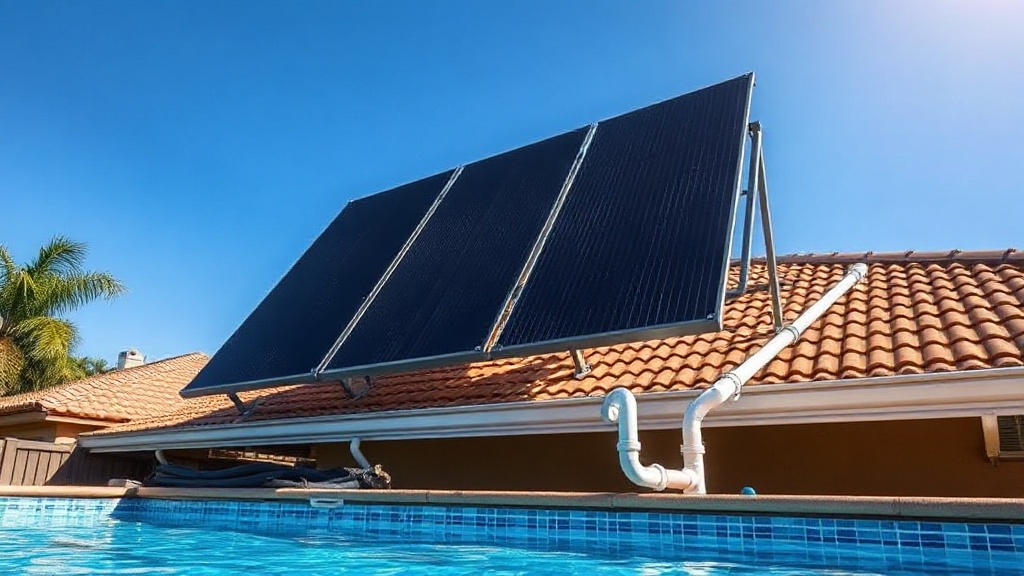
How Do Sizing Requirements Differ Between Above Ground and Inground Pools for a Generic Helio Solar Heater?
Choosing the right size for a Generic Helio solar pool heater depends heavily on whether the system will serve an above ground or inground pool. The fundamental difference lies in exposure, volume, and heat retention. Above ground pools typically lose heat faster due to thinner walls and greater surface area exposure to wind, while inground pools benefit from ground insulation but often have larger water volumes. The Generic Helio line offers specific sizing guidelines that account for these variables, ensuring the collector area matches the pool’s surface area and typical daily use.
A general rule of thumb is that the solar collector area should equal 50% to 70% of the pool’s surface area for above ground pools, and 60% to 80% for inground pools. However, the Generic Helio family—particularly the Helio 2.0 and Helio Pro models—provides more granular sizing tables that factor in local sunlight hours and desired temperature rise. For example, in a climate averaging 5 peak sun hours, a 12-foot above ground pool (approx. 3,500 gallons) may need a 4-panel Helio system (8 ft x 4 ft each), while a 20-foot inground pool (approx. 10,000 gallons) might require 8 to 10 panels.
What Is the Correct Collector Square Footage for Above Ground Pools Using Generic Helio?
Sizing a Generic Helio solar heater for an above ground pool starts with calculating the pool’s surface area in square feet. For a round above ground pool, use π × (radius²); for oval or rectangular pools, multiply length by width. The Generic Helio recommendation is to match 50% to 70% of that surface area with collector panels. In practice, a 24-foot round above ground pool (surface area ~452 sq ft) would require between 226 and 316 sq ft of Generic Helio collectors.
It is also critical to consider the pump’s flow rate. Above ground pools often use smaller pumps (1/3 to 1/2 HP) that deliver 20 to 30 GPM. The Generic Helio collector array must be matched to this flow to avoid pressure drops. The How to Size a Solar Pool Heat Exchanger to Match Your Pump Flow guide provides detailed formulas for calculating the optimal number of panels based on GPM ratings. For typical above ground setups, a maximum of 4 to 6 panels in series is recommended to keep pressure loss under 3–4 PSI at the pump.
| Pool Diameter (ft) | Surface Area (sq ft) | 50–70% Coverage (sq ft) | Recommended Panels | Panel Config | Est. Cost (USD) |
|---|---|---|---|---|---|
| 10–12 | 79–113 | 40–79 | 2 | Series | $1,200–$1,500 |
| 14–16 | 154–201 | 77–141 | 3–4 | Series or 2 parallel | $1,800–$2,800 |
| 18–20 | 254–314 | 127–220 | 4–6 | 2 parallel strings | $2,400–$4,200 |
| 22–24 | 380–452 | 190–316 | 6–8 | 2–3 parallel strings | $3,600–$5,600 |
For above ground pools with heavy shading or in cooler climates, homeowners should lean toward the 70% coverage option. The Generic Helio panels are designed for easy roof or ground mounting, and the included mounting rails simplify adjustments. Always verify that the pump pressure is rated for the added head of the solar loop—many above ground pumps require a bypass valve to avoid overworking the motor.
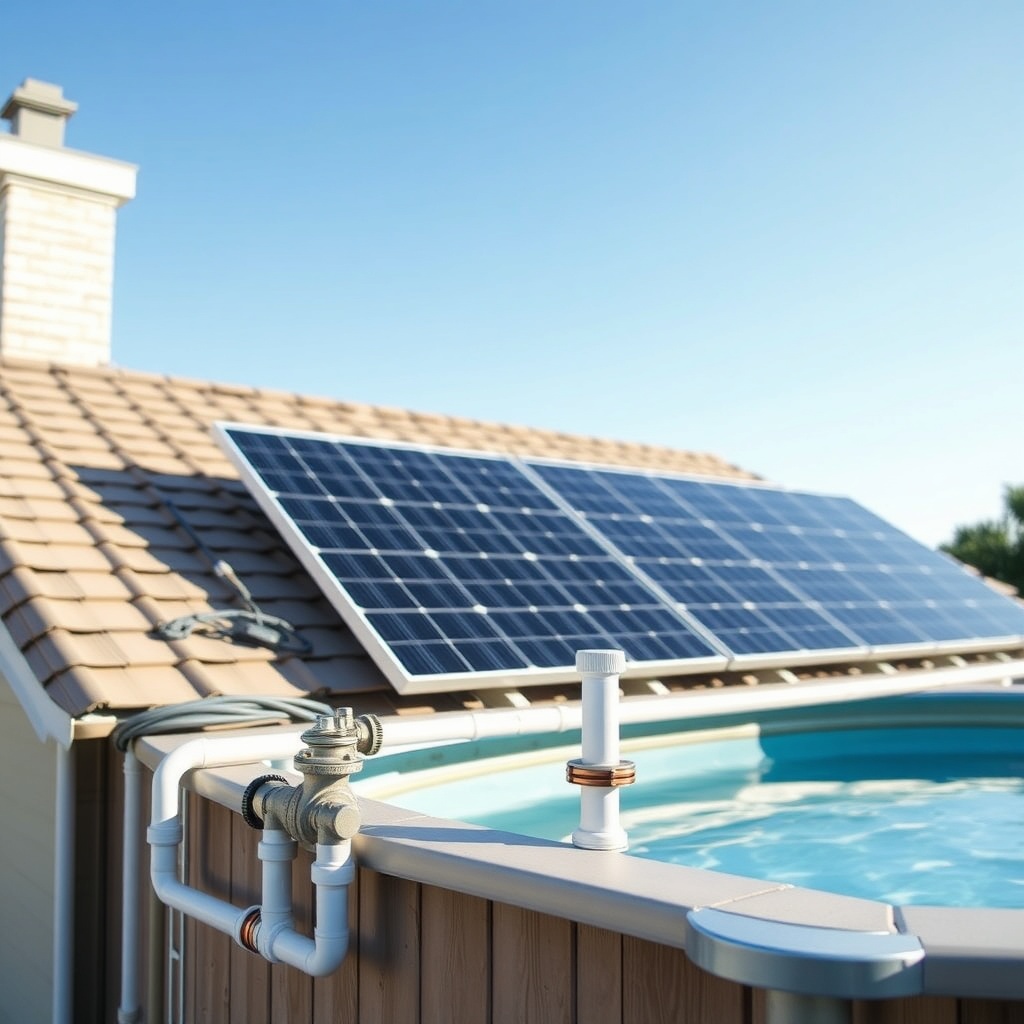
How Should Inground Pool Sizing Differ When Using Generic Helio Panels?
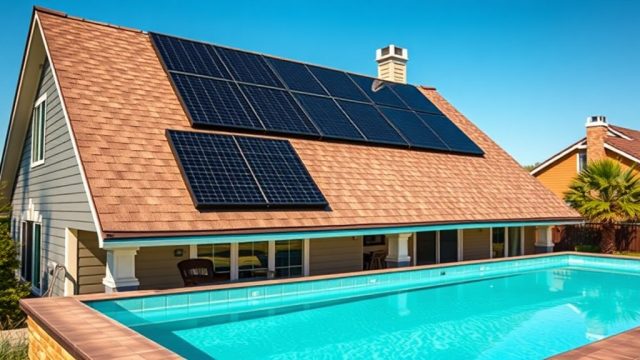
Inground pools present distinct sizing challenges for the Generic Helio solar heater due to larger volumes (typically 15,000 to 35,000 gallons) and deeper depths. The recommended collector coverage increases to 60–80% of the pool’s surface area. For a 20 ft x 40 ft inground pool (800 sq ft surface area), this translates to 480 to 640 sq ft of collector—equivalent to 15 to 20 Generic Helio panels. Additionally, inground pools usually have dual-speed or variable-speed pumps rated at 1.0 to 2.0 HP, providing 40 to 70 GPM, which supports larger arrays.
The Generic Solar Pool Heater Pump Requirements: GPM Guide for Optimal Performance outlines that each Generic Helio panel has a maximum flow capacity of 4 GPM in series and up to 8 GPM in parallel. For an inground pool requiring 20 panels, the optimal configuration is two parallel strings of 10 panels each, delivering 40 GPM total at 3–5 PSI pressure drop. Valving and manifold sizing become critical at this scale to balance flow across strings. The use of a flow meter and balancing valves is strongly recommended during installation to avoid dead spots that reduce heat transfer.
What Are the Key Specifications for Generic Helio Panels and How Do They Affect Sizing?
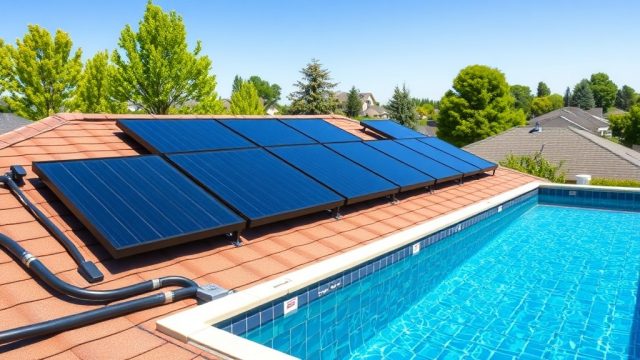
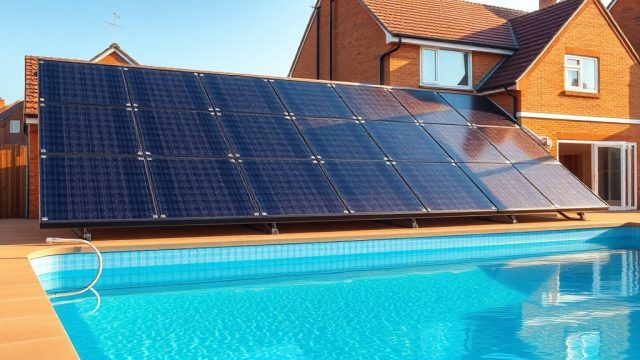
The Generic Helio solar collector is a glazed, copper-tubed panel with a black powder-coated aluminum frame. Each panel measures 8 ft long by 4 ft wide (32 sq ft gross area) and weighs 45 lbs dry. The absorber is a sheet-and-tube design with ½-inch copper riser tubes and 1-inch headers. Key specifications include a maximum operating pressure of 50 PSI, a stagnation temperature rating of 180°F, and a pressure drop of 0.8 PSI per panel at 2 GPM. The efficiency rating is 0.82 (based on the Hottel-Whillier equation).
These specs directly influence sizing decisions. For instance, the pressure drop per panel means that a series string of six panels will see a 4.8 PSI drop at 2 GPM, which is acceptable for most pumps. However, if the pump delivers 4 GPM per panel (as required for optimal heat transfer), the pressure drop per panel rises to 1.5 PSI, limiting series strings to four panels maximum. The Generic Solar Pool Heater Buying Guide: What to Look For provides further details on panel dimensions, freeze protection ratings, and certification marks like SRCC OG-100 that guarantee performance data.
How Do Climate and Sun Hours Affect the Generic Helio Sizing for Both Pool Types?
Solar pool heating is inherently climate-dependent. The Generic Helio sizing tables assume 5 peak sun hours per day, which is typical for southern U.S. regions. In areas with 4 peak sun hours or less (e.g., Pacific Northwest or northern Midwest), the collector area must be increased by 20–30%. For above ground pools that are unheated most of the year, this adjustment can mean adding two extra panels. Conversely, in sun-rich regions like Arizona or Florida, reducing coverage by 10% may still achieve desired temperatures during peak season.
For inground pools, the thermal mass of the water moderates temperature swings, but cloudy periods can still drastically reduce heating capacity. A good rule of thumb is to target a temperature rise of 10–15°F above the ambient pool water temperature. Using Generic Helio’s online calculator (available via their support portal), homeowners can input zip code, pool volume, surface area, and collector tilt to get a precise sizing recommendation. The How to Vacuum Bleed Air from Solar Pool Collectors: A Step-by-Step DIY Guide is also relevant here, as air pockets can easily reduce effective collector area by 15–20% if not properly bled, especially in cooler climates where night-time stagnation may cause vapor lock.
What Does the Cost Comparison Look Like for Generic Helio Systems on Above Ground vs Inground Pools?
The total installed cost of a Generic Helio system varies significantly between pool types. For an above ground pool requiring 4 panels (128 sq ft), the equipment cost averages $2,400 to $3,200 USD, with installation adding $500 to $1,000 for simple roof mounting and PVC connections. In contrast, a 20-panel system for a 20,000-gallon inground pool totals $8,000 to $12,000 USD for panels alone, plus $2,500 to $4,500 for professional installation, including manifolds, check valves, and controller wiring. However, the payback period is similar for both: 2 to 4 years based on savings of $50–$150 monthly on gas or electric heating.
Ongoing maintenance costs are minimal—primarily occasional cleaning and winterizing. The Generic Helio panels carry a 10-year warranty, while the mounting hardware is warranted for 5 years. Owners of inground pools should also budget for a flow meter and balancing valves ($200–$400). Above ground owners may need a replacement pump seal if the added head pressure causes premature wear, though this is less common with proper Generic Solar Pool Heater Overheating: Causes and Solutions diagnostics that ensure the system is not running when the pool is already warm enough.
What Do Generic Helio Owners Say About Sizing for Their Pools?
Real-world feedback from Generic Helio users consistently highlights two sizing pitfalls: underestimating collector area and neglecting pump flow. A typical comment from an above ground pool owner in Texas: “I started with 3 panels for my 18-foot round pool. It heated fine in July, but by October the water was cold. Added two more panels—now I get 78°F even in November.” Another inground pool owner in New York shared: “My 20-panel system works great, but I had to upgrade from a 1 HP single-speed pump to a 1.5 HP variable-speed to push water through 20 panels. The Generic Solar Pool Heater Pump Requirements: GPM Guide for Optimal Performance article helped me calculate the right pump.”
Several online reviews note that the Generic Helio installation instructions are clear for basic setups, but larger arrays benefit from professional plumbing from a solar specialist. One forum member joked, “I wish I’d read the sizing guide before buying—now my pool is a Jacuzzi in July, but I’m not complaining.” Overall, the consensus is that sizing up by 10–20% beyond the baseline recommendation provides a safety margin for cool spells and ensures the system meets owner expectations year-round.
Frequently Asked Questions
Can I use the same Generic Helio panel size for both above ground and inground pools?
Yes, the same panel dimensions are used for both pool types. However, the number of panels and their configuration (series vs parallel) will differ based on pool volume and pump flow.
How do I calculate the number of Generic Helio panels for a 15,000-gallon inground pool?
Start with the pool surface area. For a rectangular pool, multiply length by width. Then multiply that by 0.6 to 0.8 to get the required collector square footage. Divide by 32 (each Helio panel is 32 sq ft) to get the number of panels. For a 15,000-gallon pool, expect 12–16 panels.
What happens if I undersize the Generic Helio system?
The system will still heat the pool, but it will take longer and may not reach desired temperatures on cooler days. Undersizing also forces the pump to run longer, increasing energy costs.
Do I need a larger pump for an above ground pool with Generic Helio panels?
Not necessarily. Standard above ground pool pumps (0.5 HP) can handle up to 4 panels in series. For larger arrays (6–8 panels), consider a 0.75 HP or 1 HP pump, or use a bypass to reduce flow.
Can I mix different Generic Helio panel models in one array?
It is not recommended. Mixing models with different flow characteristics can cause unbalanced flow and reduce system efficiency. Stick with one panel type, preferably Helio 2.0 or Helio Pro.
How does roof pitch affect sizing for an inground pool?
Roof pitch should ideally be within 10–40 degrees for optimal solar collection. If the pitch is steeper or shallower, you may need to increase collector area by 5–10% to compensate for reduced incident radiation.