Why Does a Flow Meter Matter for a SunStar Solar Pool Heater System?
Installing a SunStar Solar pool heater is a smart investment for extending the swimming season, but achieving peak performance depends on precise water flow through the solar collectors. Without a properly installed and calibrated flow meter, owners risk reduced heat output, inefficient pump operation, or even voiding the product warranty. This guide provides step-by-step instructions for installing and calibrating a flow meter on a SunStar solar pool heater system, ensuring you get the maximum energy savings and consistent pool temperatures.
Whether you are a DIY homeowner or working with a professional, understanding flow meter placement and calibration is essential for system longevity and efficiency. For related setup tips, see our article on SunStar Solar Pool Heater Wireless Controller Setup and Programming Guide.
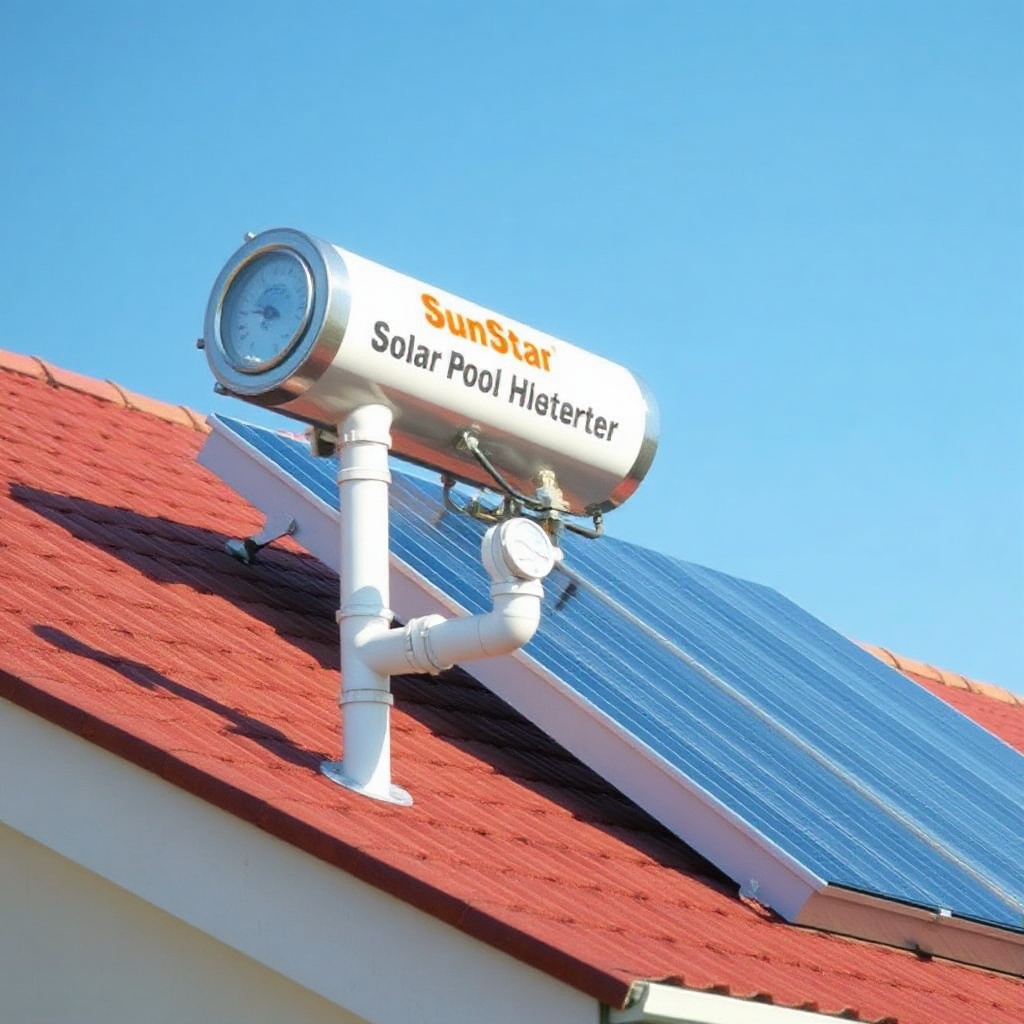
What Tools and Materials Do You Need for Installation?
Before starting, gather all necessary components to avoid mid-job interruptions. The following table lists the essential tools and materials for installing a flow meter on a SunStar solar pool heater system.
| Tool/Material | Specification | Typical Cost (USD) |
|---|---|---|
| Flow meter (paddlewheel type recommended) | 1.5” or 2” slip or threaded, PVC compatible | $45 – $120 |
| PVC pipe cutter or hacksaw | Clean, burr-free cut | $10 – $30 |
| PVC primer and solvent cement | Standard grade | $8 – $15 |
| Digital multimeter | For signal output testing | $25 – $80 |
| Calibration chart (supplied with meter) | Flow vs. frequency or voltage | Included |
| Check valve (if not already installed) | 1.5” or 2” PVC spring check | $15 – $35 |
| Teflon tape or pipe sealant | For threaded connections | $3 – $7 |
Also, ensure the flow meter’s output type (pulse, 4-20 mA, or 0-10 V) matches your SunStar controller. Many modern SunStar systems use a paddlewheel meter with a 5 VDC pulse output.
Where Should You Position the Flow Meter in the Plumbing Layout?
Positioning the flow meter correctly is critical for accurate readings and system performance. Install the meter on the return side (after the solar collectors) and after the pump, filter, and any check valves. This placement ensures the water is fully circulating and free of air pockets. A minimum straight pipe run of 10 pipe diameters upstream and 5 diameters downstream of the meter is recommended to avoid turbulence that skews readings.
For systems with a bypass valve, install the meter on the main return line, not the bypass. This guarantees the meter measures total solar loop flow. If you have a variable-speed pump, refer to the SunStar Solar Pool Heater Pressure Drop Analysis: Optimizing System Flow article for additional pressure considerations that affect flow meter performance.
How Do You Install the Flow Meter Step by Step?
Follow these steps for a secure and accurate installation:
- Step 1 – Shut Down the Pump: Turn off the pool pump and close any isolation valves. Depressurize the system by opening a drain port.
- Step 2 – Cut the Pipe: Measure and mark the pipe at the chosen location. Use a PVC pipe cutter to make a straight cut. Deburr the edges with sandpaper.
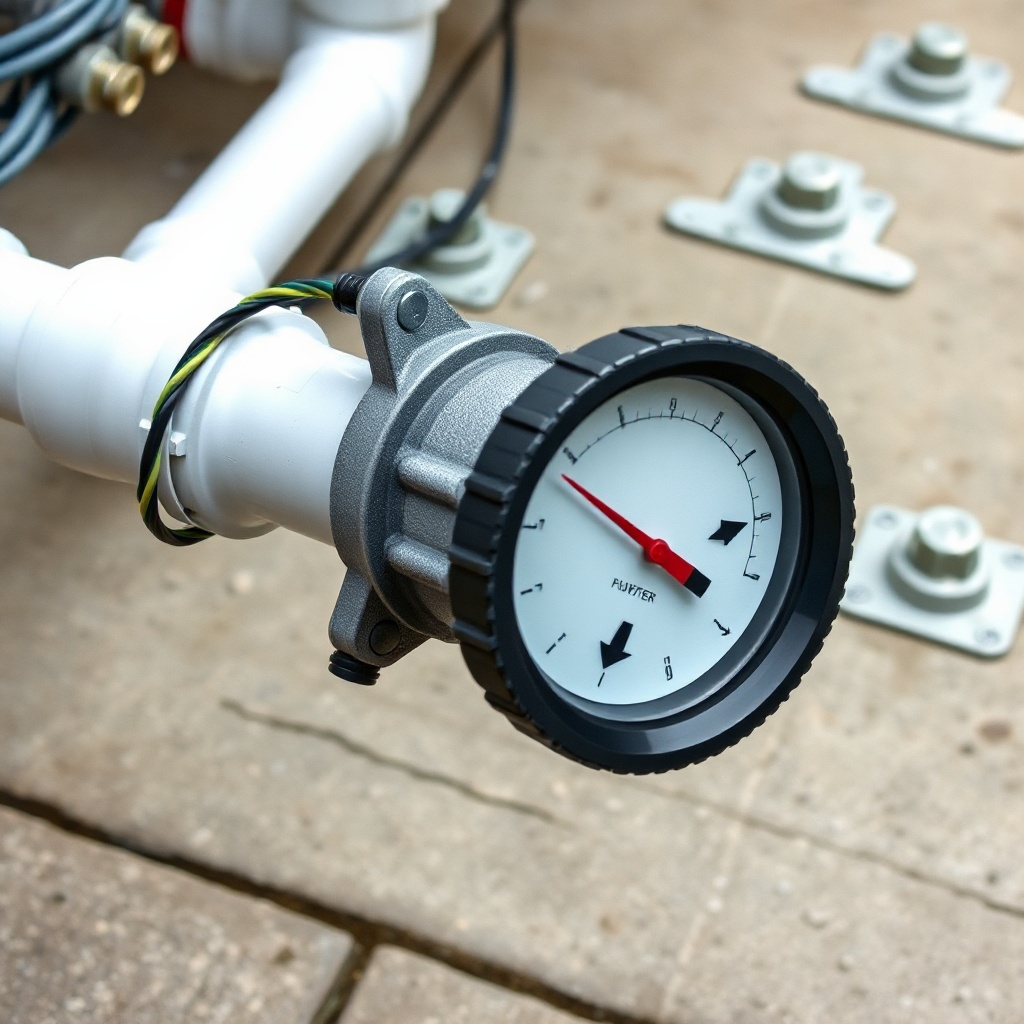
- Step 3 – Dry Fit the Meter: Slide the flow meter into the pipe section between two PVC couplings. Ensure the arrow on the meter body points in the direction of water flow (from pump to collectors, then return).
- Step 4 – Prime and Cement: Apply PVC primer to both pipe ends and inside the couplings. Quickly apply solvent cement and join the pieces. Hold firmly for 15 seconds.
- Step 5 – Wire the Meter: Connect the meter’s signal wires to the SunStar controller’s sensor input port. Use the multimeter to verify continuity and correct polarity.
- Step 6 – Leak Test: Open valves and start the pump. Check all joints for drips. If the system uses a SunStar wireless controller, follow the SunStar Solar Pool Heater Wireless Controller Setup and Programming Guide for integration.
Allow the cement to cure for 24 hours before full system operation if possible.
How Do You Calibrate the Flow Meter for Your SunStar System?
Calibration ensures the flow meter reports accurate gallons per minute (GPM) to the SunStar controller. Start by setting the pump to a known speed (e.g., 1200 RPM for a variable-speed pump). Measure actual flow using a known reference, such as a bucket-and-timer method for small pipes, or a portable ultrasonic flow meter for larger piping. Compare this reading to the meter’s output signal. Most SunStar controllers allow a calibration factor adjustment in the settings menu.
For example, if the flow meter outputs 50 pulses per gallon and the controller reads 500 pulses per minute, that equals 10 GPM. If the actual flow is 11 GPM, adjust the calibration factor from 50 to 45.5. Refer to your SunStar controller manual for exact steps. Also, ambient temperature affects fluid density; for advanced accuracy, see SunStar Solar Pool Heater Temperature Sensor Calibration: How to Improve Accuracy for temperature compensation tips.
Perform calibration annually or after any plumbing modification to maintain ±5% accuracy.
What Are Common Installation Mistakes and How to Fix Them?
- Mistake 1 – Meter Installed Upside Down: This causes inaccurate readings due to trapped air. Solution: Install meter with arrow aligned to flow, always on a horizontal pipe section.
- Mistake 2 – Insufficient Straight Pipe: Turbulence from elbows or valves leads to erratic output. Solution: Relocate meter to a straight run, or install flow straighteners.
- Mistake 3 – Wrong Meter Size: Using a meter rated for 2” pipe on a 1.5” system reduces accuracy. Solution: Match meter bore size to pipe diameter.
- Mistake 4 – Wiring Polarity Reversal: The controller may display zero flow or erratic readings. Solution: Swap signal wire connections and retest with multimeter.
For comprehensive system performance troubleshooting, consult the SunStar Solar Pool Heater Pressure Drop Analysis: Optimizing System Flow article.
What Do Owners Report About Flow Meter Accuracy and Reliability?
SunStar solar pool heater owners frequently share positive feedback regarding flow meter installation outcomes. One user in Phoenix, Arizona, noted that after calibrating his paddlewheel meter, his system efficiency improved by 12%, with consistent pool temperatures of 82°F (28°C) even on overcast days. Another owner in Florida reported that the factory calibration was accurate within 5% out of the box, but fine-tuning the calibration factor using a bucket test reduced his pump runtime by 20 minutes daily, saving about $10 per month in electricity.
Some users emphasize the importance of routine cleaning; debris buildup on the paddlewheel can cause underreporting of flow. A Louisiana owner cleans the meter annually with a mild vinegar solution, maintaining ±3% accuracy for over three years. Overall, the consensus is that a properly installed and calibrated flow meter pays for itself within the first swimming season through optimized pump energy use and solar heat gain.
Frequently Asked Questions
1. Can I install the flow meter on the supply side before the solar collectors?
Yes, but it is not recommended because supply side flow can be affected by pump cavitation or air entrainment. Return side installation after the collectors is standard for best accuracy.
2. How often should I recalibrate the flow meter?
Annually is sufficient for most residential systems. Recalibrate after any plumbing changes, pump replacement, or if you notice temperature fluctuations.
3. What flow rate should my SunStar system target?
For optimal heat transfer, most SunStar collector arrays require 4-6 GPM per 4’x12′ collector panel. Refer to your system’s specifications or manufacturer guidelines.
4. Does the flow meter work with a variable-speed pump?
Yes, paddlewheel and turbine flow meters work well with variable-speed pumps, provided the meter is rated for the flow range. Calibrate at multiple pump speeds for best results.
5. What if my flow meter shows zero flow but water is moving?
Check wiring connections, ensure the paddlewheel spins freely (no debris), and verify the controller input setting. A malfunctioning meter may need replacement.
6. Can I use a flow meter with a closed-loop antifreeze system on a SunStar heater?
Yes, but ensure the meter is compatible with glycol mixtures. Most PVC meters work well with antifreeze. For winterization details, see SunStar Solar Pool Heater Winterization: Antifreeze Mix Ratio Guide.