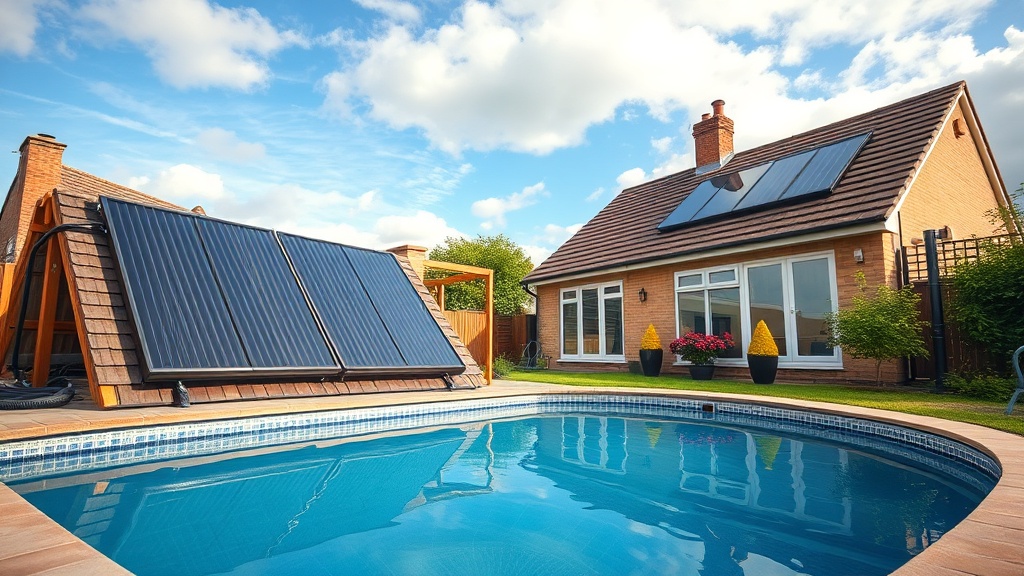
Why Fafco Solar Bear Heat Exchanger Sizing Matters for Your Pool
Properly matching the Fafco Solar Bear heat exchanger and collector area to your pool volume is the difference between a system that delivers warm, comfortable swims and one that barely raises the water temperature. The Fafco Solar Bear, known for its durable unglazed EPDM rubber panels, requires careful calculation to ensure your solar loop captures enough British thermal units (BTUs) without oversizing or undersizing the heat exchanger. This guide walks through the essential sizing formulas, real-world data, and owner insights to help you achieve the best return on investment, typically costing between £2,500 and £4,500 for a standard residential system.
What Is the Correct Collector Area for My Pool Volume?
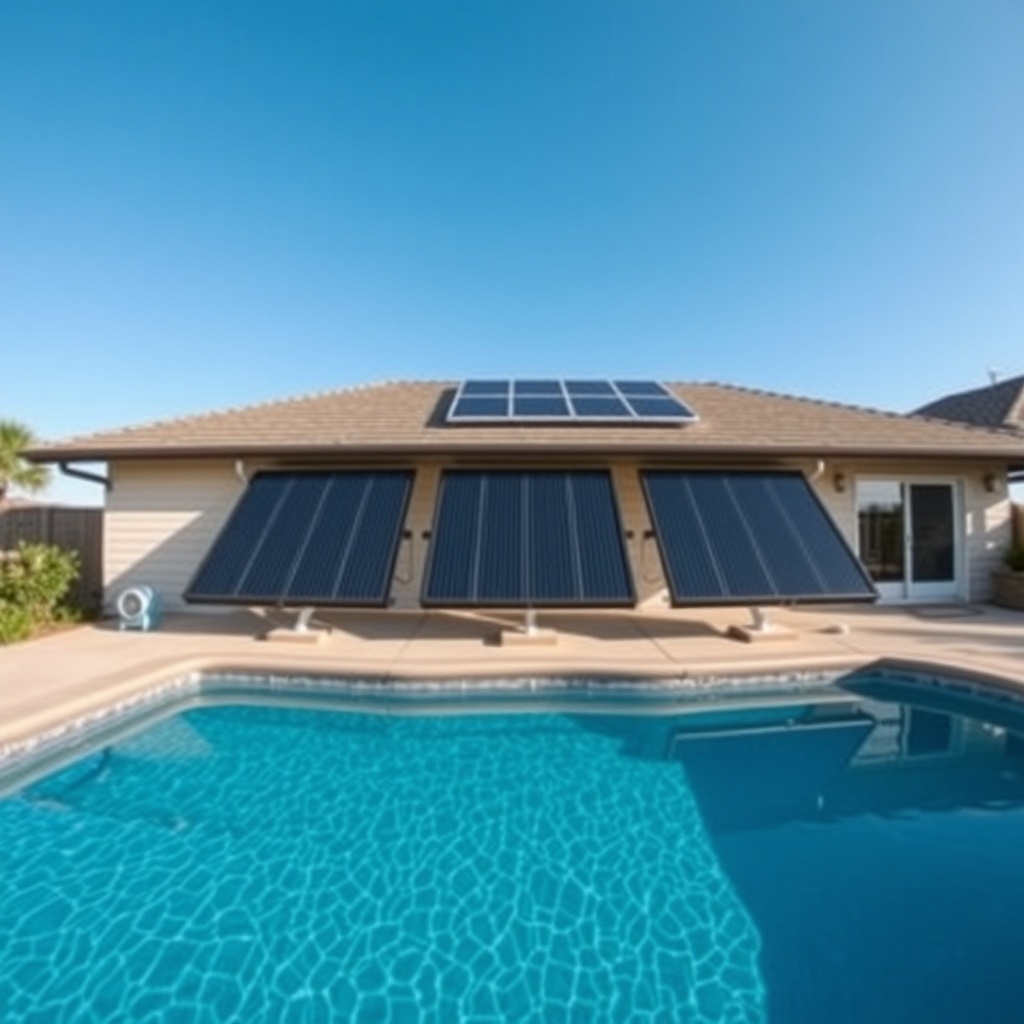
The fundamental rule for Fafco Solar Bear collector sizing is that you need approximately 70% to 80% of your pool’s surface area in solar panel coverage. For an average rectangular pool measuring 12 metres by 6 metres (72 m² surface area), you would need between 50 m² and 58 m² of Fafco Solar Bear collectors. This ratio assumes a direct correlation between collector area and heat absorption, but pool volume—not just surface area—must be the primary variable. A deeper pool holds more water that requires heating, so volumetric adjustments are critical.
Use this simple formula: Collector area (m²) = Pool volume (m³) × 0.07 to 0.09. For a 50 m³ pool, this gives you 3.5 to 4.5 m², which aligns with the industry standard of 1 m² of collector per 2.5 m³ to 3 m³ of pool water. Always round up to the nearest standard panel size; Fafco Solar Bear panels come in 2.4 m × 1.2 m units (2.88 m² each). A 50 m³ pool would need two panels (5.76 m² total), but for optimal year-round performance, three panels (8.64 m²) are recommended.
| Pool Volume (m³) | Minimum Collector Area (m²) | Recommended Panels (2.88 m² each) | Estimated Heat Gain (°C/day, summer) |
|---|---|---|---|
| 30 | 2.1–2.7 | 1–2 | 2.5 |
| 50 | 3.5–4.5 | 2–3 | 2.8 |
| 70 | 4.9–6.3 | 2–3 | 3.0 |
| 100 | 7.0–9.0 | 3–4 | 3.2 |
| 150 | 10.5–13.5 | 4–5 | 3.5 |
How Does the Heat Exchanger Size Impact Collector Performance?
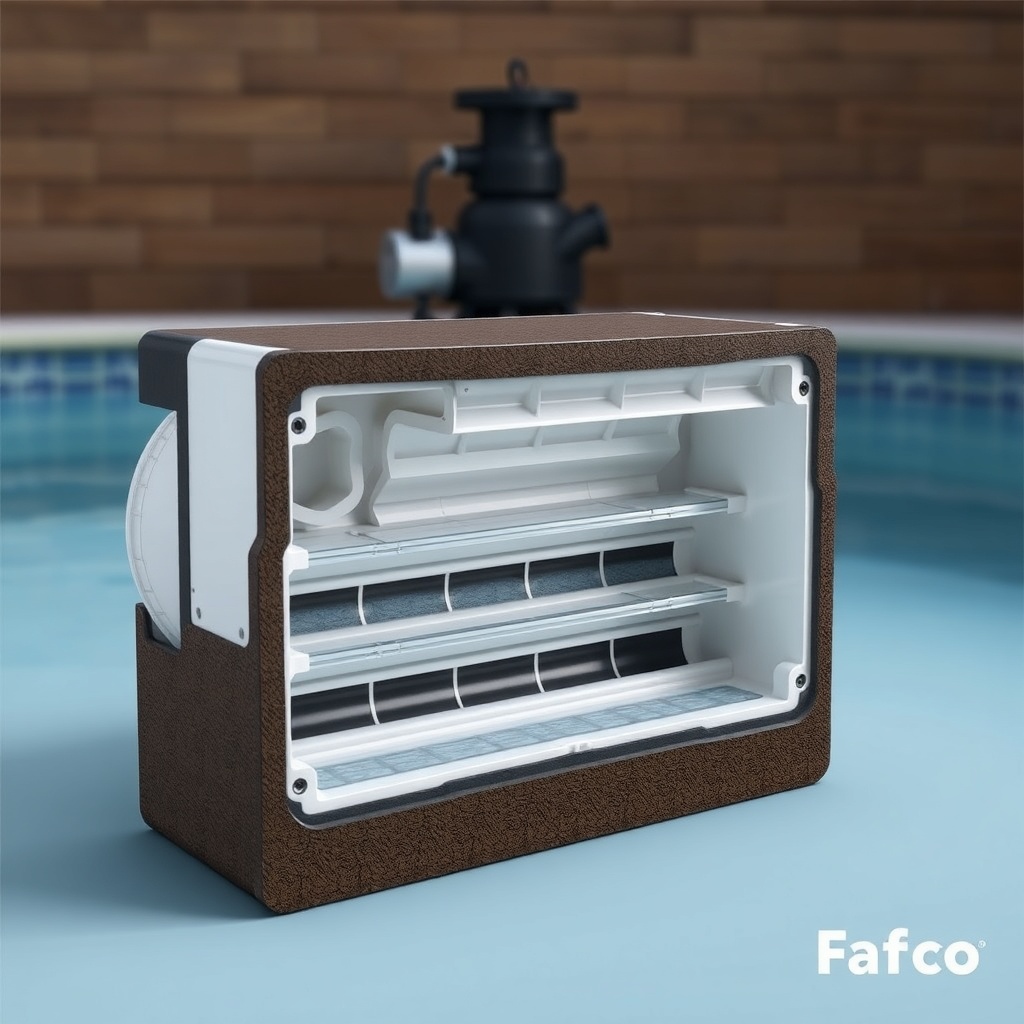
While Fafco Solar Bear systems primarily use direct circulation (pool water flows through the panels), many installations incorporate a heat exchanger for closed-loop configurations with antifreeze or for integration with an existing gas heater. The heat exchanger must match the collector array’s maximum flow rate and BTU output. A typical Fafco Solar Bear panel has a flow rate of 0.05 to 0.08 litres per second per panel, meaning three panels need 0.15 to 0.24 L/s. Choose a heat exchanger with a minimum capacity of 20,000 BTUs per hour for a standard three-panel setup—undersized units create backpressure that reduces flow by 15% or more, cutting heat transfer efficiency.
The plate count and material matter. For Fafco Solar Bear, stainless steel brazed plate heat exchangers with 40 to 60 plates work best because the EPDM rubber panels operate at low pressures (under 2 bar). Oversizing the heat exchanger by 20% is recommended—a 24,000 BTU/h unit for a 20,000 BTU/h collector array—allowing for cloudy days and winter operation. For detailed pairing guidance, see Matching a Heat Exchanger to Your Fafco Solar Bear System.
What Role Does Pump Flow Rate Play in Sizing?
Your solar pump must deliver water through the Fafco Solar Bear panels at the correct velocity to maximise heat transfer without damaging the rubber. The ideal flow rate is 0.02 to 0.03 litres per second per square metre of collector. For a 8.64 m² array (three panels), the pump should provide 0.17 to 0.26 L/s. A 1-horsepower (0.75 kW) variable-speed pump set to low speed typically meets this range. Oversized pumps waste electricity and can cause delamination of the EPDM panels; standard residential pumps use 50 to 100 watts at low speed for these systems.
Head loss calculations must include all fittings, valves, and the heat exchanger if present. A common mistake is ignoring the pressure drop across the panels—each Fafco Solar Bear unit adds approximately 0.15 bar at 0.1 L/s. Three panels in series add 0.45 bar head loss. Choose a pump curve that delivers your target flow at 0.5 to 0.7 bar total head. For a complete breakdown, read Generic Solar Pool Pump Sizing for Fafco Solar Bear Systems.
Should I Adjust Sizing for Cold Climates or Winter Use?
Yes, winter operation or year-round use in climates with ambient temperatures below 5°C demands a larger collector area—typically 90% to 100% of pool surface area instead of 70%. In the UK, where average winter solar insolation drops to 1.5 kWh/m²/day, you need 40% more collector area to maintain comfortable water temperatures. For a 50 m³ pool, that means 6 to 8 Fafco Solar Bear panels instead of 2–3. Vacuum breakers and tilt angle adjustments become essential for freeze protection and maximum gain.
When using antifreeze in a closed-loop system, the heat exchanger sizing must increase by 15% because glycol reduces heat transfer efficiency by 10–15%. Additionally, mounting the panels at a steeper tilt angle (45° to 60°) during winter improves performance. Check Fafco Solar Bear Mounting Tilt Angle Optimization: Best Winter Settings for Maximum Heat Gain for exact angles by latitude. Also, never neglect the vacuum break installation—see Fafco Solar Bear Vacuum Break Installation Guide: Prevent Siphon Damage for safe operation.
What Do Owners Say About Sizing Their Fafco Solar Bear System?
Pool owners consistently report that undersizing is the most common regret. One owner in Surrey with a 65 m³ pool installed four panels and observed only a 2°C rise on cloudy summer days, leading them to add two more panels for a 4°C gain. Another owner in Cornwall with a 30 m³ pool oversized to four panels and achieved a 5°C temperature increase even during marginal spring weather, though they noted slightly higher pump electricity costs of about £30 annually.
Heat exchanger feedback is mixed. A user in Kent with a closed-loop system using propylene glycol found that a 40-plate heat exchanger caused 0.3 bar backpressure issues, resolved by swapping to a 60-plate unit. The consensus: stick to the 70–80% surface area formula for direct systems and oversize heat exchangers by 20% for closed loops. For antifreeze specifics, read Fafco Solar Bear Antifreeze Mix Ratios: Safe Winter Protection.
Frequently Asked Questions
Q1: Can I use a smaller collector area if I have a pool cover?
Yes—a solar blanket reduces heat loss by up to 50%. You can safely reduce collector area by 25%, using 55% to 60% of pool surface area instead of 70%. For a 72 m² pool, that means 40 m² of panels instead of 50 m².
Q2: What happens if my heat exchanger is too large?
A moderately oversized heat exchanger (120% of required capacity) causes minimal issues—slightly slower initial heat transfer due to thermal mass, but better performance on low-sun days. Excessively oversized units (double required) waste money and may create laminar flow, reducing efficiency.
Q3: How do I calculate the pipe run length for sizing?
Measure the distance from your pump to the panels and back. For runs over 15 metres, increase pipe diameter by one size (e.g., 40 mm instead of 32 mm) to keep friction loss under 0.1 bar per 10 metres. This influences pump sizing.
Q4: Does Fafco Solar Bear need a dedicated pump?
Not always—a shared pool pump works if it can deliver the required flow rate without overheating. However, a dedicated solar pump (200–400 watts) improves efficiency and allows independent control. Use a timer or controller to run the solar loop during peak sunlight hours.
Q5: Can I mix panel sizes in the same array?
Yes, but avoid mixing different generations due to flow impedance. Identical panel models from Fafco are safe to series-connect; mixing widths can cause faster panels to starve slower ones. Stick to the 2.4 × 1.2 m standard for uniform performance.
Q6: What is the payback period for correct sizing?
With proper collector area to pool volume matching (70–80% ratio), the average payback in the UK is 3 to 5 years, saving £200–£400 annually on gas or electric heating. Oversized systems pay back faster due to greater seasonal extension.