Why Is Antifreeze Mix Ratio Critical for Your Fafco Solar Bear System?
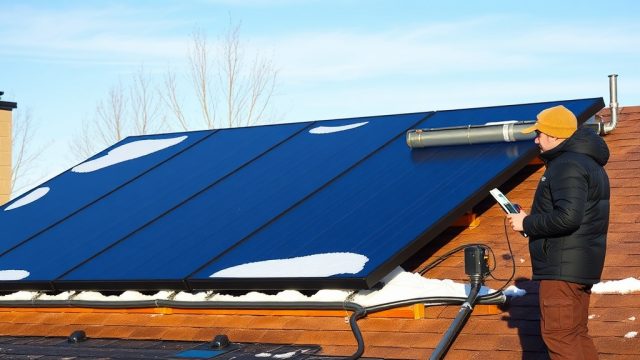
When winter temperatures drop below freezing, water inside your Fafco Solar Bear collector panels and plumbing lines can expand, cracking headers and splitting tubes. Proper antifreeze mix ratios are the first line of defense against costly freeze damage. A well-mixed solution protects not just the panels but also the pump, heat exchanger, and control valves, keeping your solar pool heating system functional through the coldest months.
Fafco recommends a propylene glycol-based antifreeze specifically formulated for solar thermal systems. Unlike automotive ethylene glycol, food-grade propylene glycol is non-toxic and safe for pool water if a leak occurs. The mix ratio determines the freeze protection temperature: too little glycol and the solution freezes; too much reduces heat transfer efficiency and can damage pump seals. This guide provides exact ratios, testing methods, and seasonal adjustments to keep your system safe.
What Is the Correct Fafco Solar Bear Antifreeze Mix Ratio for Your Climate?
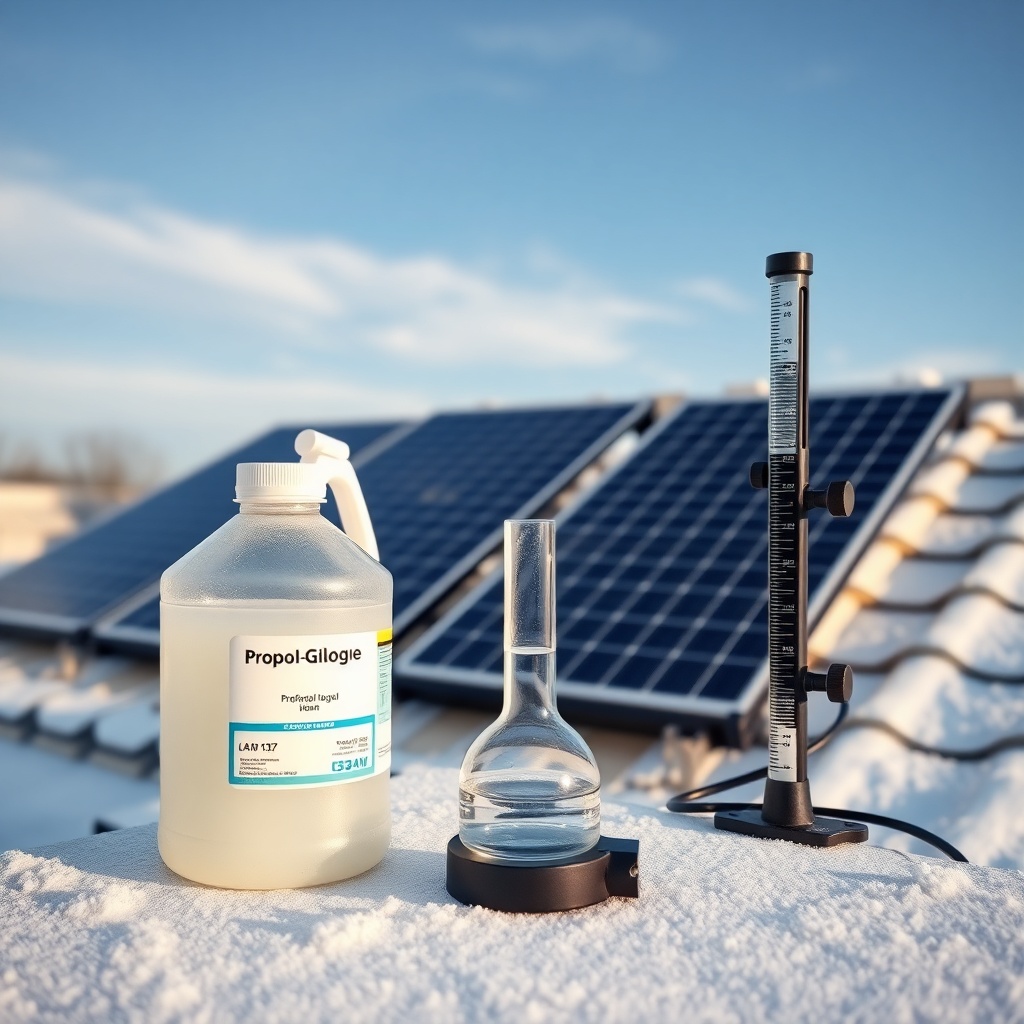
The standard mix ratio for propylene glycol in a Fafco Solar Bear system is a 40:60 glycol-to-water ratio by volume, providing freeze protection down to -10°F (-23°C). This is the baseline recommended for most regions experiencing occasional hard freezes. Table 1 below provides adjusted ratios based on your local temperature lows.
| Freeze Protection Temperature | Propylene Glycol (%) | Water (%) | Application Region Example |
|---|---|---|---|
| -10°F (-23°C) | 40% | 60% | Northern U.S., Canada, high-altitude areas |
| -5°F (-21°C) | 35% | 65% | Mid-Atlantic, Midwest, parts of New England |
| 0°F (-18°C) | 30% | 70% | Southeastern U.S., coastal Pacific Northwest |
| 10°F (-12°C) | 25% | 75% | Mild winter zones, Southern California valleys |
Always use distilled or deionized water to avoid mineral scaling inside the system. Tap water can introduce calcium and other deposits that clog the narrow passages in Fafco’s tube-and-header design.
How Do You Properly Mix and Test Antifreeze for Fafco Solar Bear?
Mixing antifreeze for a Fafco Solar Bear is straightforward but requires precision. Follow these steps:
- Step 1: Drain the existing system using the drain valve at the lowest point. If the system previously contained water, flush it out. For detailed drain-back setup, see our guide on Fafco Solar Bear Winter Freeze Protection: DIY Antifreeze and Drain-Back Setup.
- Step 2: Calculate the total system volume. A typical Fafco Solar Bear system with four 4×10-foot panels holds about 8 gallons of fluid. Add pump and plumbing volume, typically 2–4 gallons, for a total of 10–12 gallons.
- Step 3: In a clean 5-gallon bucket, mix the required amount of propylene glycol (e.g., for a 40% ratio in 12 gallons total, use 4.8 gallons of glycol and 7.2 gallons of water). Stir thoroughly.
- Step 4: Fill the system using a diaphragm pump or gravity feed through the fill port. Run the pump for 5 minutes to circulate, then bleed air from the highest point.
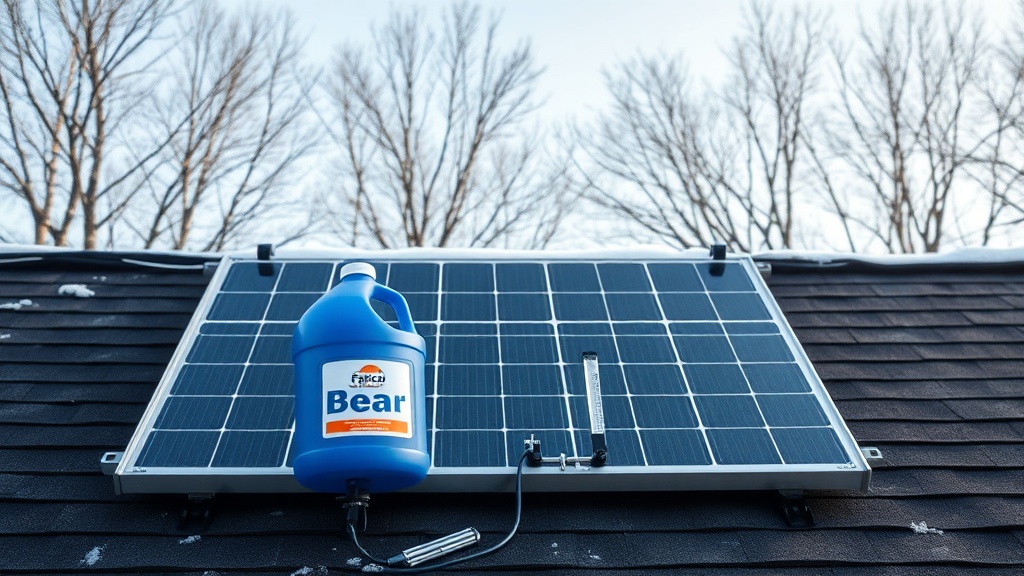
- Step 5: Test the mix with a refractometer. The refractive index for 40% propylene glycol is approximately 1.375 at 68°F. Adjust by adding more glycol or water as needed.
Refractometers are inexpensive and far more accurate than hydrometers for propylene glycol. If you observe low flow after filling, check our Fafco Solar Bear Low Flow Rate: Causes and Fixes article for troubleshooting common issues.
How Does Antifreeze Protect Your Fafco Solar Bear Heat Exchanger and Pump?
Freeze damage isn’t limited to the panels. The heat exchanger and circulation pump are equally vulnerable when water expands. In a Fafco Solar Bear system, the pump is typically located outdoors, where ice formation can crack the volute or destroy seals. Antifreeze solution lowers the freezing point of the liquid, preventing ice crystals from forming inside the pump housing and heat exchanger tubes.
Moreover, propylene glycol contains corrosion inhibitors that protect the copper or stainless steel heat exchanger surfaces. Without these inhibitors, galvanic corrosion can occur between dissimilar metals (e.g., copper tubes and aluminum headers) over time. For tips on selecting a compatible heat exchanger, read Matching a Heat Exchanger to Your Fafco Solar Bear System.
However, a glycol mix that is too rich (above 50%) becomes viscous, increasing pump load and reducing flow rate. This can cause cavitation and overheating of the pump motor. The 40% max ratio keeps viscosity low enough for standard pool pumps. If you’re unsure about pump sizing, consult Generic Solar Pool Pump Sizing for Fafco Solar Bear Systems.
What Owners Say About Fafco Solar Bear Antifreeze in Real-World Use
Homeowners in the Northeast and Mountain West report consistent success with the 40% mix ratio. Mark T. from Vermont says: “Three winters with my Fafco Solar Bear, never a freeze crack. I test the mix every fall with a refractometer, and it’s still right at 40%. The panels look like new.” Susan L. from Colorado adds: “I started with 30% because we only get occasional frosts, but after a -10°F night, I upgraded to 40%. The extra gallon of glycol cost under $30—cheap insurance compared to replacing panels.”
Some owners mention that the antifreeze solution reduces heat transfer slightly compared to pure water, about 5–10% less efficiency. “My panels get warm, but not as hot in spring,” notes David R. from Ohio. “But during a freeze, it’s 100% reliable.” Others highlight the importance of checking the vacuum break installation to avoid siphon issues when using glycol mix—see our Fafco Solar Bear Vacuum Break Installation Guide: Prevent Siphon Damage for details.
How Often Should You Replace Antifreeze in Your Fafco Solar Bear?
Propylene glycol degrades over time due to thermal cycling and exposure to oxygen. Most manufacturers, including Fafco, recommend replacing the antifreeze solution every 3 to 5 years. Signs that replacement is needed include:
- pH dropping below 7.0 (indicating acid formation)
- Color change from clear blue or pink to murky brown
- Gel-like deposits in the panels or pump strainer
- Freeze protection temperature rising above 15°F when tested
To check pH, use test strips designed for propylene glycol. A healthy solution should have a pH between 8.0 and 10.5. If the pH is below 7.5, add a buffer (available from solar supply stores) or perform a full drain and refill. For maximum winter heat gain, also consider optimizing your panel tilt angle. Learn how in our article Fafco Solar Bear Mounting Tilt Angle Optimization: Best Winter Settings for Maximum Heat Gain.
Frequently Asked Questions
Can I use automotive antifreeze in my Fafco Solar Bear system?
No. Automotive ethylene glycol is toxic to humans, pets, and aquatic life. If a leak enters your pool, it creates a health hazard. Always use food-grade propylene glycol (also labeled FDA 21 CFR 175.105). Automotive antifreeze also lacks the corrosion inhibitors needed for solar thermal systems.
How do I calculate the exact amount of antifreeze needed for my system?
Measure total system volume: count panels (each 4×10 holds about 2 gallons), add pump (1-2 gallons), and plumbing (depends on length—1.5-inch pipe holds 0.5 gallons per 10 feet). For a 4-panel setup with 30 feet of pipe, total is roughly 8 gallons (panels) + 1.5 (pump) + 1.5 (pipe) = 11 gallons. At 40% glycol, that’s 4.4 gallons of concentrate.
Does antifreeze void my Fafco warranty?
Fafco recommends using a quality propylene glycol solution at ratios between 25% and 40%. Using the correct mix does not void the warranty. However, using ethylene glycol or higher than 50% glycol concentrations may damage seals and headers, potentially voiding coverage. Always check your model-specific manual.
What’s the cheapest way to test antifreeze concentration?
A refractometer is the most cost-effective tool, priced around $20–$30 USD. It requires no batteries and gives results in seconds. Hydrometers are less accurate for propylene glycol and can be affected by temperature. Refractometers are preferred by pool professionals.
Can I mix different brands of propylene glycol?
Generally yes, provided both products are food-grade and non-toxic. However, mixing brands may produce unexpected pH or inhibitor levels. It’s safer to use the same brand and batch. If mixing is unavoidable, test pH and freeze protection after mixing to ensure it still meets spec.
Does antifreeze affect pool water temperature during winter?
Propylene glycol reduces heat transfer in the solar panels. In mild winter conditions, you may see a 2-4°F drop in pool temperature gain compared to using water only. However, this trade-off is minimal compared to the cost of repairing freeze-damaged panels, which can exceed $1,000 per collector.