Generic Solar Pool Heater Flat Panel vs Evacuated Tube: Performance and Cost Comparison
When shopping for a solar pool heater, homeowners and commercial operators often face the choice between flat panel collectors and evacuated tube systems. Generic, a well-known manufacturer in the solar heating industry, offers both technologies with distinct performance profiles and cost structures. This comparison guide breaks down the key differences in efficiency, durability, installation requirements, and long-term value to help buyers make an informed decision.
How Do Flat Panel and Evacuated Tube Collectors Work for Pool Heating?
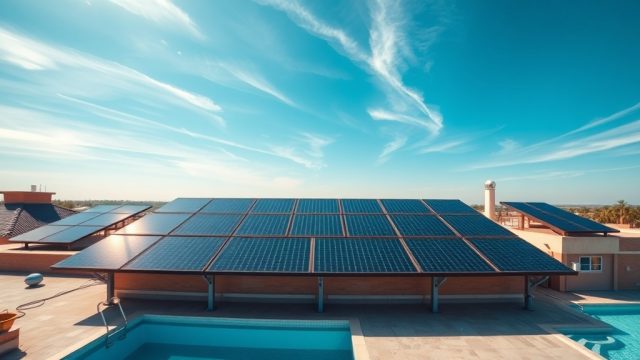
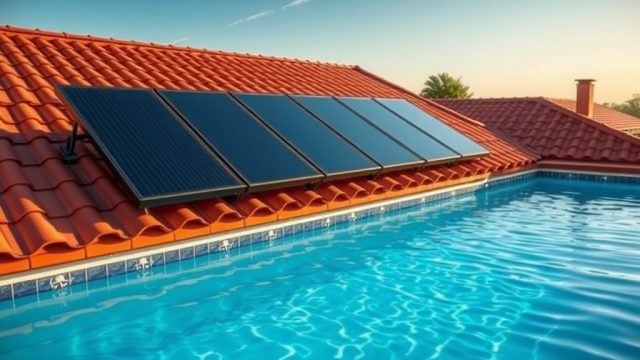
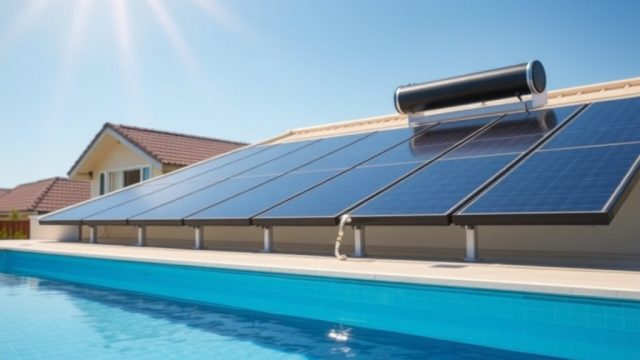
Flat panel collectors consist of a dark absorber plate inside an insulated, weatherproof box with a glass or polymer cover. Water flows through copper or polymer tubes bonded to the plate, absorbing solar energy. These panels are efficient in direct sunlight and moderate climates, typically achieving a thermal efficiency of 60-75%.
Evacuated tube collectors use parallel rows of glass tubes, each containing a copper heat pipe or direct-flow absorber. The vacuum between the inner and outer glass layers dramatically reduces heat loss, making them more efficient in cold, cloudy, or windy conditions. They can achieve efficiencies of 80-95% even with ambient temperatures below 10°C (50°F).
For pool heating, flat panels are more common because they handle the high flow rates of pool water (50-80 L/min per panel) and lower temperature differentials (ΔT of 5-15°C). Evacuated tubes are typically used for domestic hot water but can serve pools with heat exchangers, though they add complexity and cost.
What Is the Performance Difference Between Flat Panel and Evacuated Tube in Real-World Conditions?
Performance varies significantly by climate and season. In Australia’s Gold Coast or California’s Central Valley, flat panels produce 4-6 kWh/m²/day during summer and 2-3 kWh/m²/day in winter. Evacuated tubes deliver 5-7 kWh/m²/day in summer and 3-5 kWh/m²/day in winter, giving them a 30-60% advantage during colder months.
Wind speed impacts flat panels more: a 15 km/h wind can reduce flat panel efficiency by 15-20%, while evacuated tubes lose only 2-5%. For heated pools used year-round, evacuated tubes reduce reliance on backup gas heaters. For seasonal pools (May-September), flat panels often provide sufficient performance at lower cost.
A commercial pool in Melbourne (cool climate) heating 100,000 litres to 28°C requires roughly 20 flat panels (40 m²) or 14 evacuated tube panels (28 m²). The evacuated tube system saves 30% roof area but costs 50-70% more upfront.
How Do Upfront Equipment and Installation Costs Compare for Generic Systems?
| Cost Factor | Generic Flat Panel (per m²) | Generic Evacuated Tube (per m²) |
|---|---|---|
| Collector price (excl. GST) | AU$220–$280 | AU$380–$520 |
| Racking and mounts | AU$60–$90 | AU$70–$110 |
| Piping and fittings | AU$40–$70 | AU$90–$140 (heat exchanger required) |
| Pump upgrade (if needed) | AU$150–$300 | AU$150–$300 |
| Controller (solar pump controller) | AU$200–$400 | AU$200–$400 |
| Installation labour (per m²) | AU$100–$160 | AU$130–$200 |
| Total installed (per m²) | AU$620–$900 | AU$870–$1,470 |
| Typical system size (residential 50,000 L pool) | 8–10 m² | 6–8 m² |
| Total installed cost | AU$4,960–$9,000 | AU$5,220–$11,760 |
| Annual energy savings (gas replacement) | AU$600–$900 | AU$750–$1,100 |
| Simple payback period | 5–10 years | 6–12 years |
Installation complexity differs: flat panels require roof slope of 15-45° and south-facing orientation, while evacuated tubes can be mounted on flat roofs with tilt frames. For roof-mounted systems, the roof mount attachment methods (rails vs clips) impact cost and structural load distribution.
What Are the Maintenance and Longevity Differences Between the Two Technologies?
Generic flat panels have a lifespan of 10–20 years, depending on water chemistry and climate. Maintenance includes: checking absorber plate for corrosion (especially in acidic water with pH below 7.2), inspecting seals and glazing, and cleaning glass annually. The absorber plate corrosion prevention guide outlines how proper pH control (7.2–7.8) and sacrificial anodes extend panel life.
Evacuated tubes last 15–25 years, but individual tubes (AU$40–$80 each) may break from hail or thermal shock. Maintenance involves replacing broken tubes (DIY friendly), checking vacuum integrity (a tarnished getter indicates loss), and cleaning glass. Flat roofs with tubes require securing bundles against wind uplift—see the vacuum break installation guide to prevent siphon damage during drainback cycles.
Flow rates differ: flat panels need 50–80 L/min per panel for optimal heat transfer, while evacuated tubes with heat exchangers need lower flow (10–30 L/min). Improper flow can cause scaling or overheating. The flow meter installation guide helps maintain correct rates for both systems.
Which Technology Works Best for Commercial Pools?
Commercial pools (hotels, aquatic centres, schools) have high water volume (200,000–1,000,000 L) and year-round heating demands. Evacuated tubes excel here because they maintain efficiency in winter and can integrate with existing gas systems. A typical 500,000 L pool in Sydney requires 50–70 m² of flat panels or 35–50 m² of tubes. The sizing guide for commercial pools covers load calculations and backup heater integration.
Flat panels are simpler to install across large roof areas (lower piece count, fewer connections) and easier to repair—individual panels are swapped without draining the system. However, their lower winter output may require supplemental gas heating of 150–300 kWh/day during June–August. Evacuated tube arrays require more careful design to avoid stagnation in summer and freezing in winter, but their smaller footprint suits roofs with limited space or shading.
Control systems differ: commercial flat panel arrays use multiple temperature sensors and variable-speed pumps, while evacuated tube systems benefit from advanced controls to manage heat exchangers. The wireless controller setup guide explains programming delta-T differential and freeze protection for both technologies.
What Owners Say About Generic Flat Panel and Evacuated Tube Systems
Residential owners with seasonal pools consistently report satisfaction with Generic flat panels. “Installed 8 panels last spring on my Gold Coast house. Heats our 40,000 L pool to 28°C from October to April. Cost AU$5,200 installed. Pool is comfortable without gas bills,” one owner posted on a pool forum. Another added, “Cleaned the glass once in two years. No corrosion issues after I kept pH at 7.4.”
Owners with year-round heated pools in cooler climates favour evacuated tubes. A Canberra homeowner wrote, “Generic evacuated tubes with a heat exchanger cost AU$8,900 installed. We heat to 28°C even in July. Maintenance is simple—replaced two broken tubes after a hailstorm. Would do it again.” However, a Melbourne owner noted, “The heat exchanger adds complexity and cleaning every six months. Flat panels might have been cheaper for our 3-season use.”
Commercial pool operators emphasize reliability. A resort manager in Cairns said, “We switched from flat panels to evacuated tubes three years ago for our 600,000 L lagoon. Winter heating bills dropped 40%. The system paid for itself in 7 years.” Conversely, a school principal remarked, “Our flat panels have been trouble-free for 10 years. Easy to maintain, and students can run the controls. Evacuated tubes seemed fragile for a busy school environment.”
Frequently Asked Questions
1. Can evacuated tubes be used directly with a swimming pool without a heat exchanger?
No, evacuated tubes typically cannot handle the high flow rates and large volume of pool water directly. The small bore of vacuum tubes (8-15 mm) creates excessive pressure drop, and pool chlorine degrades copper. A heat exchanger separates the pool circuit from the solar circuit, typically adding AU$800–$1,500 to system cost.
2. How much roof space do I need for each technology?
Flat panels require about 1.2–1.5 times more roof area than evacuated tubes for the same heating output. For a 50,000 L pool in Sydney, flat panels need 8–10 m², while evacuated tubes need 6–8 m². Use the commercial sizing guide for large installations.
3. Which system performs better in cloudy or rainy weather?
Evacuated tubes outperform flat panels in diffuse light by 30-50%. Their vacuum insulation captures more UV and indirect radiation. In sustained cloudy periods (3+ days), both systems benefit from a backup gas heater.
4. What is the typical warranty on Generic flat panels vs evacuated tubes?
Generic flat panels carry a 10-year warranty against absorber plate corrosion and a 5-year warranty on glazing and seals. Evacuated tubes have a 15-year warranty on tubes (replacement for breakage), with a 5-year guarantee on vacuum integrity. Heat exchangers carry a 3-year warranty.
5. Can I mix flat panels and evacuated tubes in one system?
Yes, but it requires two separate solar circuits with individual controllers and pumps. This approach suits large commercial pools with different roof orientations. Homeowners rarely need mixing—choose one technology based on climate and budget.
6. How do I prevent overheating in summer with evacuated tubes?
Generic evacuated tube systems include stagnation protection: automatic drainback (when pump stops, water drains to prevent boiling) and high-temperature cut-off controllers. Install a vacuum break per the vacuum break installation guide to protect pipes during drainback.