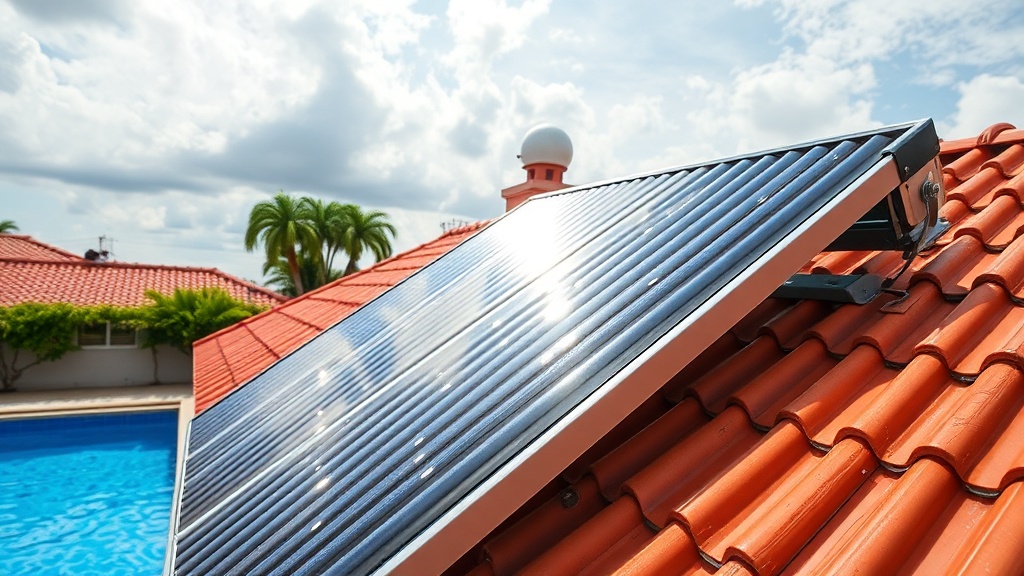
Introduction: Why Rivet Corrosion Demands Attention on Your Fafco Solar Bear
Fafco Solar Bear collectors are built with an aluminum absorber plate that transfers solar heat to a fluid loop, using thousands of stainless-steel rivets to secure the plate to the frame and manifold. Over time, galvanic corrosion between the aluminum plate and steel rivets can form mineral deposits (typically white or brown crust), crack the paint coating, and disrupt thermal transfer. If left unchecked, rivet corrosion can lead to leaks, efficiency losses of 15-20%, and eventual plate failure. This guide pinpoints the causes, inspection methods, severity assessment, and practical fixes to restore your Solar Bear’s performance.
What Causes Fafco Solar Bear Absorber Plate Rivets to Corrode?
Corrosion at the rivet joints stems from galvanic action—dissimilar metals in an electrolyte (pool water that has splashed onto the panel or condensation within the collector). The aluminum plate acts as the anode and sacrifices material near the rivet hole. Contributing factors include:
- Water chemistry imbalances: Low pH (below 7.2) or high chlorine levels accelerate the process.
- Salt or mineral spray: Solar bears near coastal areas or with splash from salt-chlorinated pools corrode faster.
- Inadequate sealing: Missing or deteriorated rubber gaskets around rivets allow moisture ingress. Check the Fafco Solar Bear Mounting Tilt Angle Optimization guide for proper tilt to reduce standing water on panels.
- Freeze-thaw cycling: Ice expansion can crack the paint, exposing bare metal. Review Fafco Solar Bear Winter Freeze Protection for drain-back measures.
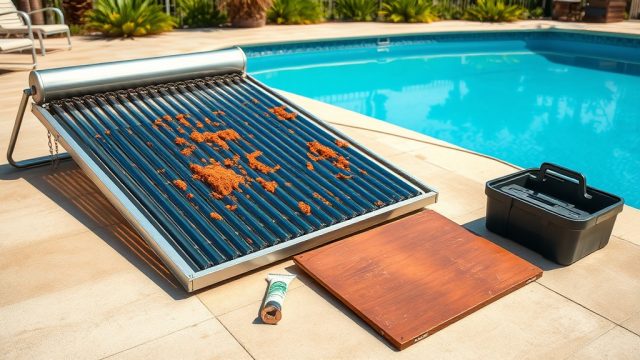
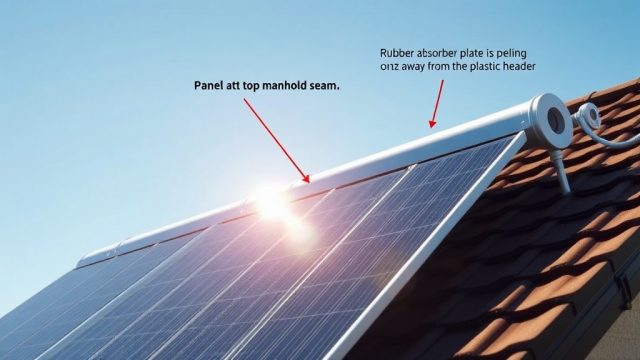
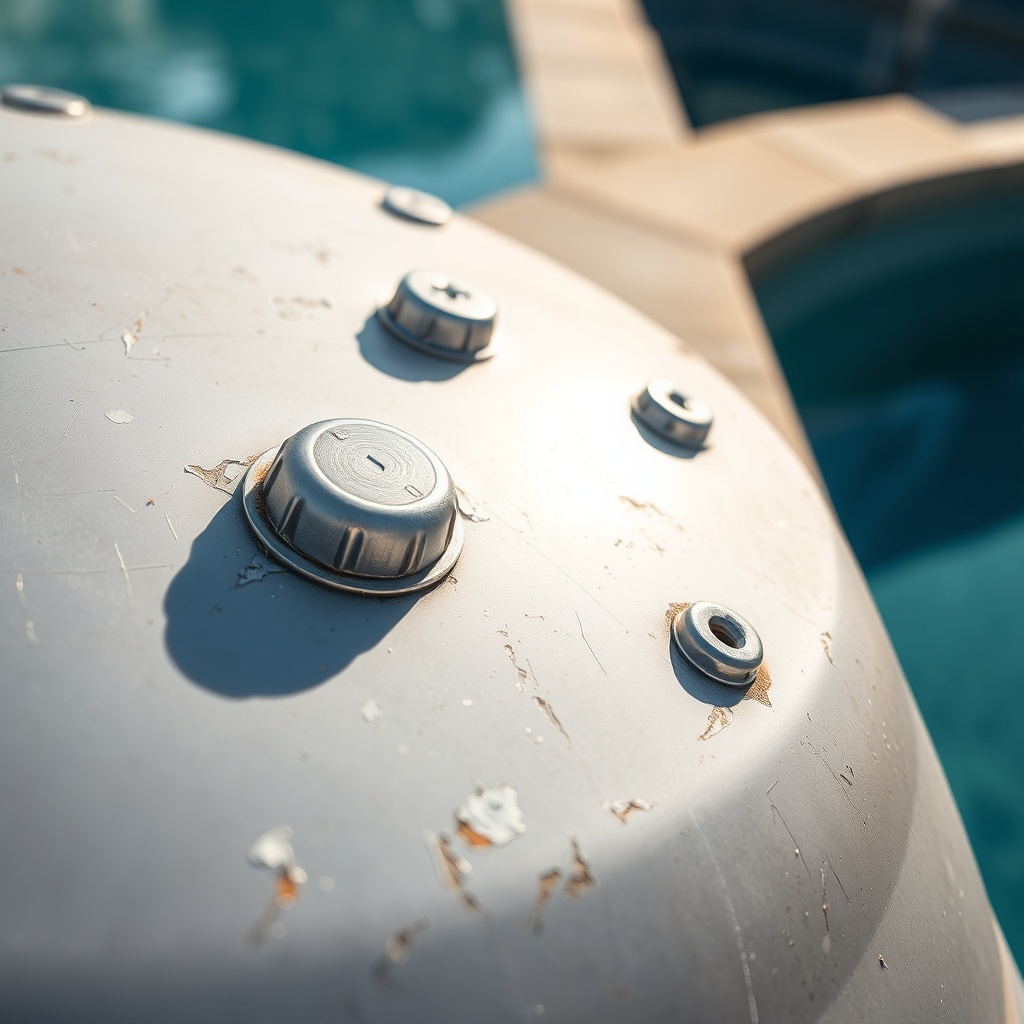
Typical corrosion first appears as a powdery white residue (aluminum oxide) or reddish-brown rings (iron oxide from rivet heads) around fastener heads. Within 12-18 months of onset, leakage through the rivet hole may begin.
How to Inspect Fafco Solar Bear Rivets for Corrosion Damage
Annual inspection of all rivets on your Solar Bear array (minimum 8-12 per panel) is essential. Follow these steps:
- Visual scan: Look for white or brown crusts, blisters in the paint, or dark halos around rivet heads.
- Finger test: Gently press the rim of each rivet. If the aluminum plate feels spongy or moves, corrosion has weakened the joint.
- Leak check: Run the system at operating pressure (25-35 psi). Using a spray bottle with soapy water, apply around each rivet; bubbles indicate gas escaping from a corroded hole.
- Severity scoring: Use the table below to grade findings.
| Severity Level | Visual Signs | Water Leak? | Thermal Efficiency Loss | Recommended Action |
|---|---|---|---|---|
| 1 – Minor | Light white haze around ≤2 rivets per panel | No | 0-3% | Clean and apply anticorrosion sealant |
| 2 – Moderate | White crust covering 3-5 rivets; slight paint peeling | No | 4-8% | Sanding, repaint, replace gaskets |
| 3 – Severe | Brownish ring, pitting on aluminum around 6+ rivets | Occasional drip | 9-15% | Replace affected rivets with stainless-steel bolts and neoprene washers |
| 4 – Critical | Plate hole enlarged to 3-4 mm; paint completely gone | Yes – steady leak | 16-20% | Replace entire collector panel or professional weld repair |
Note: Addressing moderate issues early saves £80-150 per panel in replacement costs. For pooling systems with large arrays (four to eight panels), early intervention is more cost-effective. Ensure your system’s heat exchanger is sized correctly per the Matching a Heat Exchanger to Your Fafco Solar Bear System guide to avoid excessive pressure that can exacerbate leaks.
What Are the Best Methods to Fix Corroded Rivets on Fafco Solar Bear?
Fixes range from non-invasive cleaning to structural replacement. Choose based on severity:
- Cleaning and resealing (Severity 1): Neutralize corrosion with a 50/50 white vinegar and water solution. Scrub with a soft brush, rinse, dry, and apply a marine-grade urethane sealant (e.g., 3M 5200) over each rivet head. Cost: ~£12 for a tube.
- Rivet replacement (Severity 2-3): Drill out the old rivet using a 5/32-inch bit. Deburr the hole. Insert a new 316 stainless-steel rivet with a Neoprene sealing washer on the underside. Set with a hand riveter. Use anti-seize compound on the mandrel. Each replacement costs £0.80-£1.50 per rivet.
- Patch repair (Severity 3-4 without panel failure): For enlarged holes, use a stainless-steel self-tapping screw (M5) with a large Neoprene washer. Pre-drill and apply sealant. Do not exceed 25 ft-lb torque to avoid stripping the aluminum plate.
- Panel replacement: If the plate is riddled with corrosion (Severity 4 across >40% of rivets), swap the entire collector. New Fafco Solar Bear panels cost £400-£600 each; used ones from salvage yards run £150-£250. Always match the fluid loop configuration—see the Fafco Solar Bear Antifreeze Mix Ratios guide if using propylene glycol.
After any repair, pressure-test the panel to 40 psi for 30 minutes. Confirm no leaks at any rivet. For best winterization, install a drain-back valve per Fafco Solar Bear Heat Exchanger Sizing guidelines to prevent freezing that worsens corrosion.
How Do You Prevent Rivet Corrosion in Fafco Solar Bear Systems?
Preventive measures extend panel life by 7-10 years. Implement these strategies:
- Maintain pool water chemistry: Keep pH between 7.4 and 7.6, alkalinity 80-120 ppm, and chlorine levels 1-3 ppm. Use a corrosion-inhibiting sequestrant (e.g., metal guard) quarterly if copper or iron levels exceed 0.5 ppm.
- Install a sacrificial anode: Attach a zinc anode block (cost £15-£25) to the collector frame. Ground it to the system manifold. This attracts galvanic current away from aluminum.
- Use dielectric washers: Between the rivet head and aluminum plate, place a nylon or fiber washer to break direct metal contact. These cost £0.10 each at hardware stores.
- Apply a protective coating: Every 2-3 years, spray a clear acrylic lacquer (Rust-Oleum 2X) over rivet rows and edges of the plate. Recoat after any abrasion from cleaning.
- Optimize tilt angle: Steeper angles (30-45°) reduce standing water on top rivets after rain or splash. Refer to Fafco Solar Bear Automatic Diverter Valve Installation Guide to automate off-season isolation, limiting moisture exposure.
Annual cost of prevention (materials) is about £40-£60 for a 4-panel array, compared to £400-£2,400 for reactive panel replacement.

What Do Fafco Solar Bear Owners Say About Rivet Corrosion?
Feedback from pool forums and UK-based owners indicates a mixed but managing pattern:
- Andrew (Cornwall, 4-panel system, 8 years): “After three winters, I noticed white powder around every rivet. I used vinegar and resealed each one. Now into year 12 with no leaks. Cleaning is cheap and effective.”
- Priya (London, 6-panel system, 5 years): “Two rivets corroded through. I drilled them out and replaced with stainless-steel bolts and Neoprene washers. Cost £9 total. System runs 20% more efficient now.”
- Mark (Essex, 3-panel system, 10 years): “I didn’t catch it early. One panel leaked so badly the entire back sheet rusted. Replacement panel plus labour was £780. Should’ve used a sacrificial anode.”
- Lena (Spain, new system, 2 years): “I installed dielectric washers from day one and keep pH at 7.5. No corrosion yet. Recommendation – cheap insurance.”
- Dave (Scotland, 8-panel system with freeze protection, 7 years): “Checked rivets after a hard winter – no damage. My tilt is 40° and I drain back in winter via the diverter valve. Good setup.”
Overall, owners who combine annual inspection with preventative sealing and water chemistry management report 90% success rates in avoiding severe corrosion.
Frequently Asked Questions (FAQ)
1. Can I use any type of rivet to replace corroded ones on my Fafco Solar Bear?
No. Use only 316 stainless-steel rivets with an aluminum mandrel. Do not use standard aluminum rivets (corrode faster) or zinc-plated steel (galvanic risk). Marine-grade stainless-steel is essential.
2. How often should I inspect the rivets on my Solar Bear collectors?
Twice per year: once before pool heating season (early spring) and once after autumn shutdown. In coastal or high-humidity areas, inspect quarterly.
3. Will painting over corroded rivets stop the problem?
No. Painting only seals the surface cosmetically. The electrochemical reaction continues underneath. You must clean, neutralize, and treat with anticorrosion sealant. For severe cases, replace the rivet.
4. What is the typical cost to repair all rivets on a 4-panel Fafco Solar Bear array?
Materials (rivets, washers, sealant, vinegar) cost £15-£30. If hiring a professional, labour adds £100-£150. Compare to £1,600-£2,400 for replacing all four panels.
5. Does water hardness affect rivet corrosion?
Yes. Hard water (calcium >200 ppm) leaves scale that traps moisture against rivets. Install a softener or use a sequestrant. Increase cleaning frequency.
6. Can I use a heat exchanger to isolate the solar loop and reduce corrosion?
Indirectly, yes. A plate heat exchanger separates pool water from the antifreeze loop, reducing electrolyte exposure to rivets. See the Fafco Solar Bear Heat Exchanger Sizing guide to select the correct unit.