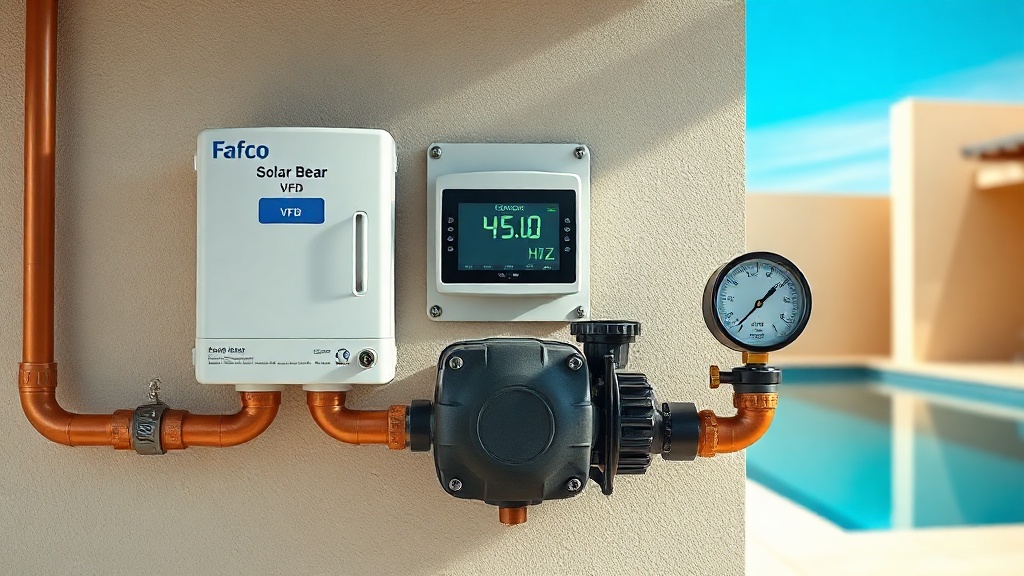
What Is the Fafco Solar Bear Pump VFD Retrofit and Why Does It Matter?
Retrofitting a Variable Frequency Drive (VFD) to a Fafco Solar Bear pump is one of the most impactful upgrades a solar pool heating owner can make. It transforms a fixed-speed motor into a precision flow control tool, slashing electricity use while maintaining the exact flow needed for efficient solar harvesting. For a typical 12-panel Fafco Solar Bear array, a VFD retrofit can cut pump energy consumption by 40% to 60%, translating to yearly savings of $150 to $300 in electricity costs depending on local rates.
The Fafco Solar Bear system, with its unglazed rubber absorbers, operates most efficiently at relatively low flow rates—typically 4 to 6 gallons per minute per panel. Running a standard 1-horsepower pump at full speed often pushes excess flow, wasting energy and accelerating wear on components like the absorber plate rivets. A VFD retrofit gives the homeowner precise dial-in of flow, matching it exactly to the Fafco Solar Bear Pressure Drop Analysis parameters for your specific roof layout.
How Much Energy Can You Save with a VFD Retrofit on a Fafco Solar Bear Pump?
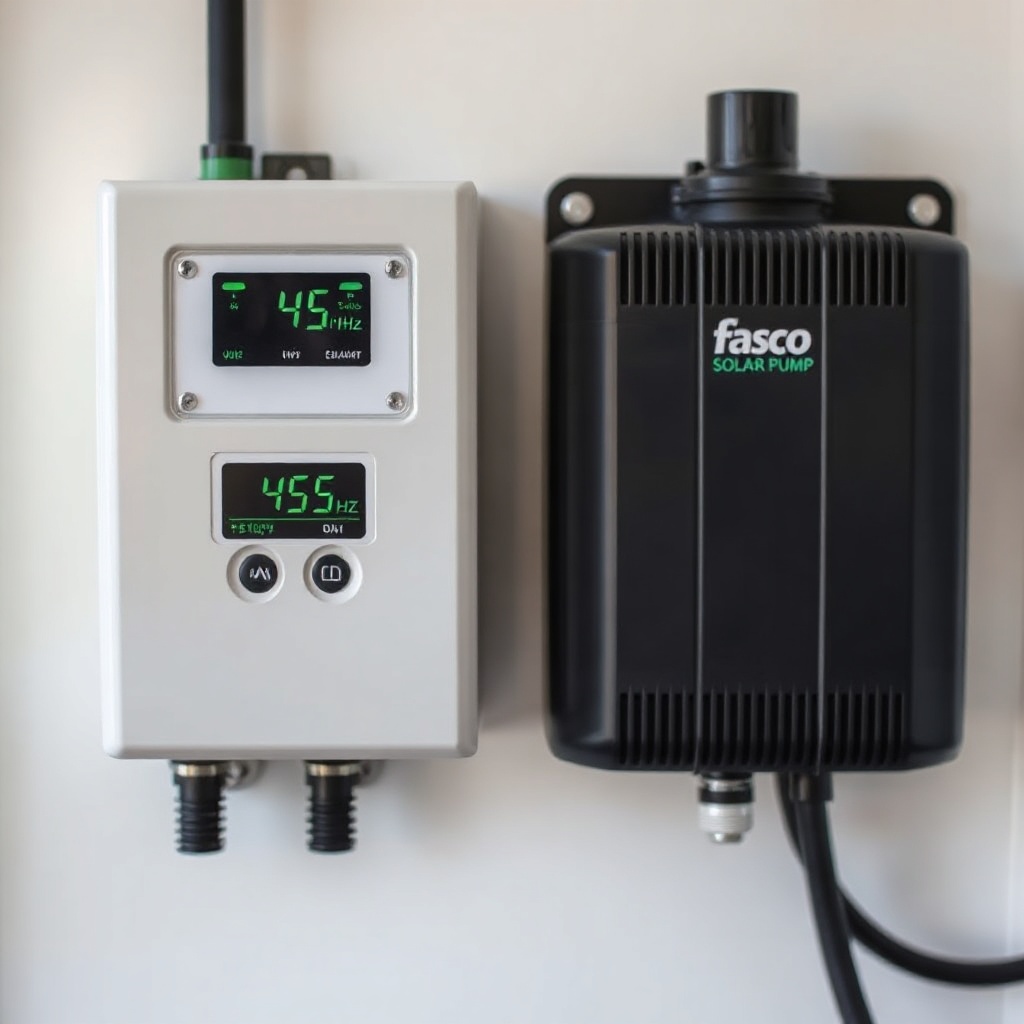
The savings are substantial and easily measurable. A fixed-speed 1 HP pump running 8 hours daily at a rate of $0.12 per kWh consumes about $0.96 per day. That’s roughly $350 per year just for pumping during solar hours. With a VFD, you can reduce pump speed to 40-50 Hz, which cuts power draw by 60-70% due to the cubic relationship between motor speed and power consumption.
Using a realistic example with a Fafco Solar Bear system of 10 panels requiring 50 GPM total, here’s the comparison:
| Parameter | Fixed-Speed 1 HP Pump | VFD Retrofit at 45 Hz |
|---|---|---|
| Pump Speed (RPM) | 3450 | 2070 |
| Flow Rate (GPM) | 65 | 48 |
| Power Consumption (Watts) | 1100 | 380 |
| Daily Runtime | 8 hours | 8 hours |
| Daily kWh | 8.8 | 3.04 |
| Annual Cost ($0.12/kWh) | $385 | $133 |
| Annual Savings | — | $252 |
Over five years, that’s over $1,200 saved—well exceeding the typical $400 to $600 retrofit cost. The payback period is often under 2 years, making it a smart investment that also reduces strain on the Fafco Solar Bear Absorber Plate Rivets Corrosion issues caused by high velocities.
What Equipment Do You Need for a Fafco Solar Bear VFD Retrofit?
A successful VFD retrofit requires the right gear. For a standard Fafco Solar Bear installation with a single-speed pump, you’ll need these core components:
- VFD Unit: Choose a 1 to 1.5 HP VFD compatible with single-phase input if your home supply is single-phase. Brands like Grundfos, Franklin Electric, or a generic NEMA 4X rated drive work well. Ensure it supports constant pressure or PID mode for automatic flow adjustment.
- Pressure Transducer or Flow Sensor: A 0-100 psi transducer or a paddlewheel flow sensor sends real-time data to the VFD to maintain target flow. Without this, the VFD cannot auto-adjust to changes from Fafco Solar Bear Collector Freeze Damage or debris buildup.
- Bypass and Isolation Valves: Install a check valve and two ball valves on the pump discharge to allow service without draining the system.
- Electrical Enclosure and Wiring: Use a weatherproof NEMA 4X box, 14-gauge THHN wire, and a 15-amp breaker. Hire a licensed electrician for final connections.
- Mounting Plate: Secure the VFD to a wall or post near the pump pad, at least 3 feet from the pump to avoid vibration.
Optional but recommended: add a bypass timer to run the pump at high speed occasionally for Fafco Solar Bear Absorber Plate Delamination prevention during heavy winter flows. Total hardware cost is typically $250 to $450, with labor adding $150 to $200.
How Do You Properly Set Up the VFD Flow Control for Fafco Solar Bear Panels?
Proper setup ensures you maximize energy efficiency without starving the panels of flow. The Fafco Solar Bear pressure drop is highly dependent on panel count and pipe length. Start with the Fafco Solar Bear Pressure Drop Analysis to get the baseline: for a 10-panel system with 50 feet of 1.5-inch pipe, target 45-55 GPM total.
Step-by-step commissioning:
- Initial test run: Start the VFD at 50 Hz and measure flow with a bucket or inline flow meter. Record the pressure at the pump discharge using a 0-100 psi gauge.
- Adjust setpoint: Gradually lower the frequency in 5 Hz increments, waiting 1 minute at each step. Observe the solar panel manifold pressure—it should not drop below 5 psi for most residential installs. The ideal operating point is where flow is just enough to prevent panel backwash and maintain a consistent temperature rise across the panels (typically 5-10°F rise at peak sun).
- Enable PID mode: Program the VFD to maintain a constant pressure at the pump discharge (e.g., 15 psi for a 10-panel system). This compensates for debris buildup or valve adjustments automatically.
- Set low-frequency limit: Program the VFD not to go below 30 Hz, which corresponds to roughly 25 GPM—sufficient to keep the panels primed and avoid stagnation.
Always verify that the bypass valve on the solar array (if equipped, as detailed in Fafco Solar Bear Automatic Diverter Valve Installation Guide) is positioned to allow full flow through the panels during normal operation. A common mistake is leaving the bypass partially open, which disrupts the VFD’s PID control and wastes energy.
What Maintenance Practices Ensure Long VFD Life in a Fafco Solar Bear System?
A VFD is a robust device but requires minimal care to last 10-15 years. The main threats are heat, moisture, and voltage spikes. Follow these best practices:
- Keep the VFD cool: Mount it out of direct sun and ensure at least 6 inches of clearance around the heat sink. In hot climates, consider a small fan or shading structure.
- Check electrical connections yearly: Torque down screws on the power and motor terminals to prevent arcing. Loose connections are a leading cause of VFD failure in pool applications.
- Monitor for harmonics: Use a line reactor or DC choke on the input to reduce harmonic distortion, which can affect the pump’s motor windings over time.
- Inspect the pump seal: A leaking shaft seal can drip water onto the VFD enclosure. Replace the seal if you see moisture near the pump coupling area.
- Update firmware (if applicable): Smart VFDs sometimes get firmware updates that improve efficiency curves. Check the manufacturer’s website annually.
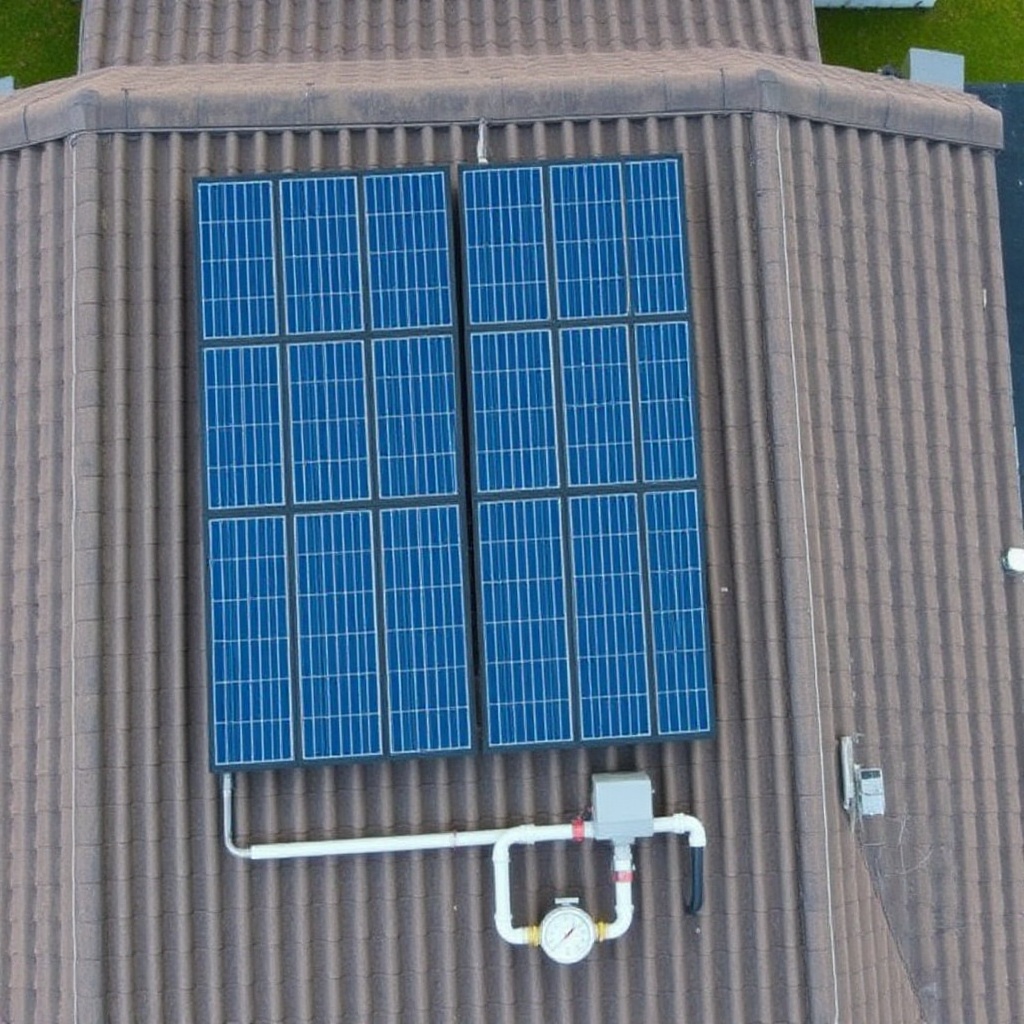
Routine care also means checking the Fafco Solar Bear Roof Mount Tilt Angle Optimization to ensure the panels drain fully when the pump stops—this prevents standing water that can stress the pump and VFD by creating a “water hammer” effect at startup.
What Owners Say About the Fafco Solar Bear Pump VFD Retrofit
Pool owners who have performed this retrofit consistently report three positive outcomes: lower bills, quieter operation, and better pool temperature control. Tom H. from Florida writes: “My electric bill dropped $30 a month after installing a VFD on my Solar Bear pump. The noise level went from a drone to a hum. I can now adjust the flow perfectly for those cool winter days when I only want a trickle.”
Another owner in Arizona, Linda S., notes: “I was worried about the cost, but the payback was less than two years. The best part is I can program the VFD to run at higher speed in the morning to quickly warm the pool, then slow down once it’s hot. My pool temperature is much more stable.”
A few cautionary tales mention the importance of professional installation. Jim R. comments: “I tried to wire it myself and fried the first VFD. A licensed electrician was $150 and now it runs perfectly. Don’t skip the surge protector—lightning took out my neighbor’s drive.” These experiences reinforce that while the retrofit is DIY-friendly for the mechanically inclined, electrical safety and precision programming are worth outsourcing.
Frequently Asked Questions
Q: Will a VFD void the warranty on my Fafco Solar Bear pump?
A: Not typically, as long as the VFD is installed by a professional and the pump’s manufacturer specifications (voltage, phase, and max RPM) are respected. Most pump warranties cover defects, not modifications to the control system.
Q: Can I retrofit a VFD to any existing Fafco Solar Bear pump?
A: Yes, most single-speed pumps with a standard NEMA frame motor (56C or 56J) can accept a VFD. Check that the motor is not a “PSC” (permanent split capacitor) type, which is incompatible. A simple induction motor with a start capacitor is ideal.
Q: How do I calculate the exact flow rate needed for my Fafco Solar Bear system?
A: Use the formula: total flow (GPM) = (number of panels × 5 GPM) + (10% for piping friction). For example, 10 panels × 5 GPM = 50 GPM, then add 10% = 55 GPM. Fine-tune by measuring pressure drop using a manifold gauge—target 10-15 psi across the supply and return headers.
Q: What happens if the VFD fails mid-summer?
A: Install a bypass switch that allows the pump to run at full speed directly from the power line. This keeps the solar heating operational while you replace the VFD. Include this bypass in your initial installation.
Q: Does a VFD reduce the lifespan of my Fafco Solar Bear rubber absorbers?
A: No, it actually extends their life. Running at lower speeds reduces the mechanical stress on the rubber absorbers and the rivets that hold the plates together, minimizing the risk of leaks and delamination from thermal cycling.
Q: Can I use a solar-powered VFD to run my Fafco Solar Bear pump completely off-grid?
A: Yes, but sizing is critical. A 1 HP pump at 45 Hz draws about 400 watts. You would need a solar array of at least 1 kW (with a 2 kWh battery for cloudy days) plus a special VFD that accepts DC input. This is a complex setup best undertaken with a solar electric specialist.