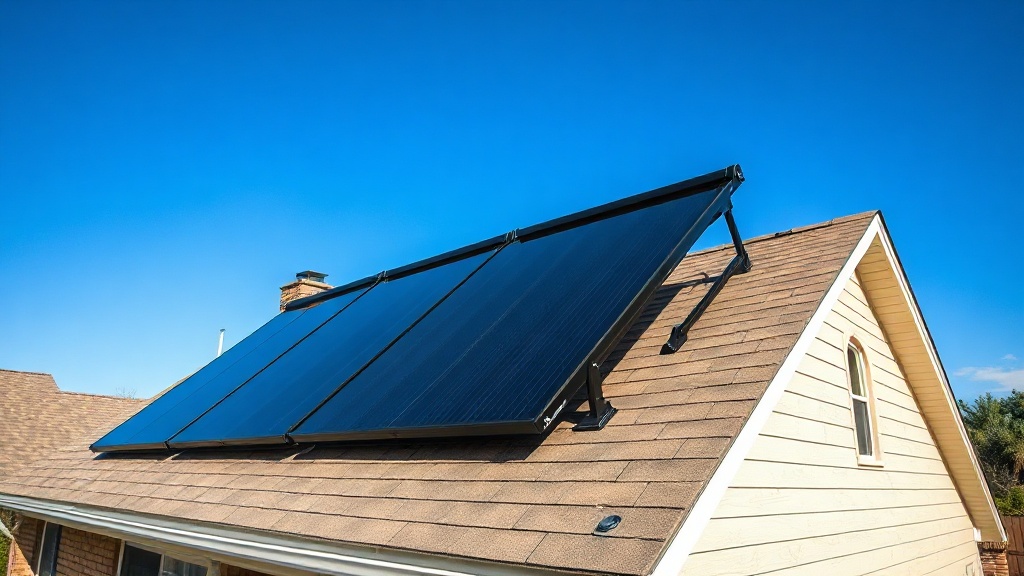
Understanding the Fafco Solar Bear Roof Mount Tilt Angle
The Fafco Solar Bear is a workhorse in the solar pool heating world, but even the best collector underperforms if the tilt angle is off. For pool owners in the United States and Canada, optimizing this angle for summer and winter conditions can mean the difference between a comfortable swimming season and a system that struggles to raise water temperature by more than a few degrees. This guide focuses on performance-maintenance, ensuring your Solar Bear array delivers maximum BTU output without unnecessary wear on pumps or freeze-protection components.
Adjusting the tilt angle seasonally is a low-cost, high-reward maintenance task. While many installations use a fixed angle, the Fafco Solar Bear’s design allows for relatively simple adjustments on most roof mounts. We’ll cover the best practices for summer and winter settings, how to calculate your optimal angle, and what the seasoned owners have learned after a decade of tweaking their setups.
What Is the Best Summer Tilt Angle for My Fafco Solar Bear?
During the summer months, the sun sits much higher in the sky. For a Fafco Solar Bear collector array, the goal is to present the absorber plates perpendicular to the sun’s rays at solar noon. For most pools in the United States, the ideal summer tilt angle is your latitude minus 10 to 15 degrees. For example, a pool in southern California (latitude 34° N) would do best with a tilt angle around 19° to 24°.
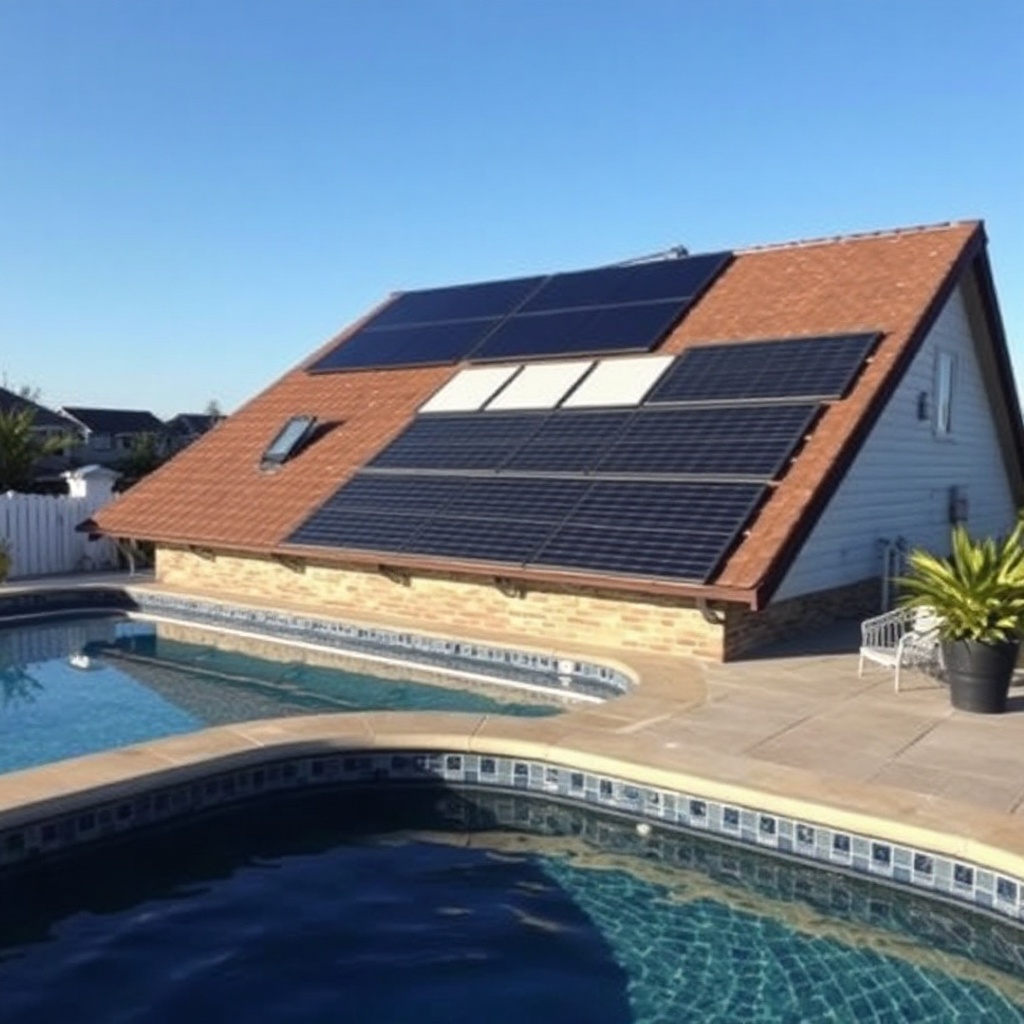
If your roof pitch is fixed and you cannot adjust the tilt, you should at least ensure that the collectors are not shaded by roof peaks or nearby trees. The Solar Bear’s black polymer absorber is efficient, but direct sunlight between 10 a.m. and 4 p.m. is critical. A flat roof mount can be adjusted using adjustable tilt legs, which many owners install specifically for seasonal optimization. Setting the angle too steep in summer reduces peak heat gain, while too shallow can cause the collector to overheat on the hottest days, stressing the rivets and absorber plate material.
What Is the Best Winter Tilt Angle for Maximum Heat Gain?
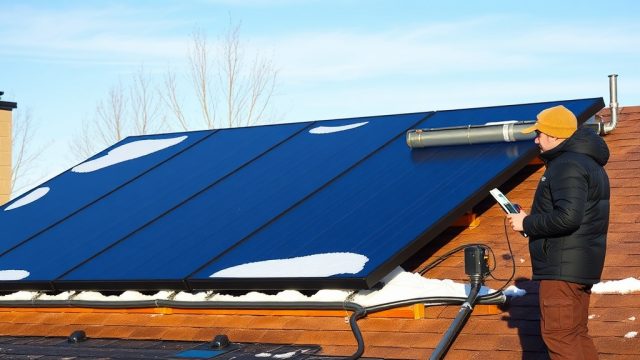
Winter sunlight is lower and weaker, so you need a steeper tilt to capture it. The winter setting is generally your latitude plus 10 to 15 degrees. For that same 34° N location, a winter tilt of 44° to 49° is recommended. A steeper angle also helps prevent snow accumulation on the Fafco Solar Bear panels, which can drastically reduce efficiency even after a light dusting.
To achieve this, some owners use extendable support legs or repositionable brackets. If a full seasonal physical adjustment isn’t feasible, you can consider a compromise angle (your latitude). However, dedicated winter optimization will yield much better heat retention for those early and late-season swims. A steeper winter angle also reduces the risk of Fafco Solar Bear Collector Freeze Damage: How to Inspect and Repair Cracked Absorbers, as the water drains more effectively when the pump shuts off.
How Does Roof Pitch Affect My Fixed Tilt Settings?
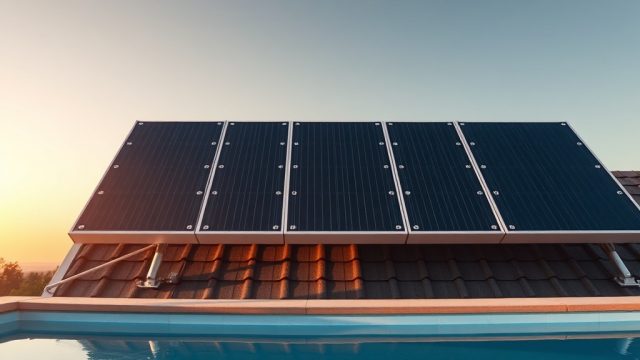
If your Fafco Solar Bear is installed on a pitched roof, your tilt angle is determined by the roof pitch. For a 4/12 pitch roof (about 18 degrees), the collectors are angled 18° from horizontal. This might be fine for a summer setting in many locations, but it is almost always too shallow for winter use. In that case, you have three options:
- Live with the lower winter performance (acceptable in warm climates).
- Install tilt-up brackets to increase the angle for winter.
- Incorporate a heat exchanger to boost efficiency—see our guide on Fafco Solar Bear Heat Exchanger Sizing: Matching Collector Area to Pool Volume for more details.
Roof pitch adjustments also impact wind loading and structural integrity. If you install tilt-up brackets, ensure your roof structure can handle the additional snow and wind loads, especially in northern states. A professional engineer can advise on local building codes.
What Is the Impact of Wrong Tilt on System Performance and Maintenance?
An incorrect tilt angle doesn’t just reduce heat—it stresses the entire system. A collector that is too shallow in winter can trap water, leading to ice expansion and cracked absorber plates. Conversely, an overly steep tilt in summer increases backpressure on your pump and may cause the Fafco Solar Bear Automatic Diverter Valve Installation Guide to cycle more than necessary, wasting electricity.
Below is a comparison table showing performance impact based on tilt settings for a typical 4×12 Fafco Solar Bear array in a U.S. Mid-Atlantic climate (40° N latitude):
| Season | Optimal Tilt (40° N) | Heat Output (BTU/day) | Pump Run Time (hrs/day) | Risk of Freeze Damage |
|---|---|---|---|---|
| Summer | 25°–30° | 120,000–130,000 | 4–5 | Low |
| Winter | 50°–55° | 70,000–80,000 | 6–7 | Low |
| Winter (Fixed 25°) | 25° (too shallow) | 35,000–40,000 | 8–10 | High |
| Summer (Fixed 55°) | 55° (too steep) | 85,000–95,000 | 6–8 | Medium |
Owners who don’t adjust risk corrosion of rivets and delamination over time. Regular inspection of absorber plate integrity is vital—check out Fafco Solar Bear Absorber Plate Rivets Corrosion: Prevention and Fixes and Fafco Solar Bear Absorber Plate Delamination: Causes and Repairs for preemptive maintenance.
Can I Automate Tilt Angle Adjustments on My Fafco Solar Bear?
While most residential Fafco Solar Bear systems rely on manual seasonal adjustments, automated solar tracking systems are available. However, they are expense—typically a few thousand dollars (USD)—and the added mechanical complexity often increases maintenance. For most pool owners, a twice-yearly manual adjustment (spring and fall) is cost-effective and reliable.
If you have a flat roof or a ground-mount array, you can install adjustable tilt legs with a locking mechanism. Some owners build a simple pivot system with removable pins, allowing a one-person tilt change in about 20 minutes. For pitched roofs, automatic systems are not recommended due to wind load concerns, but you can use preset brackets. Always incorporate the Fafco Solar Bear Antifreeze Mix Ratios: Safe Winter Protection into your winter angle strategy, especially if you live in freeze-prone regions.
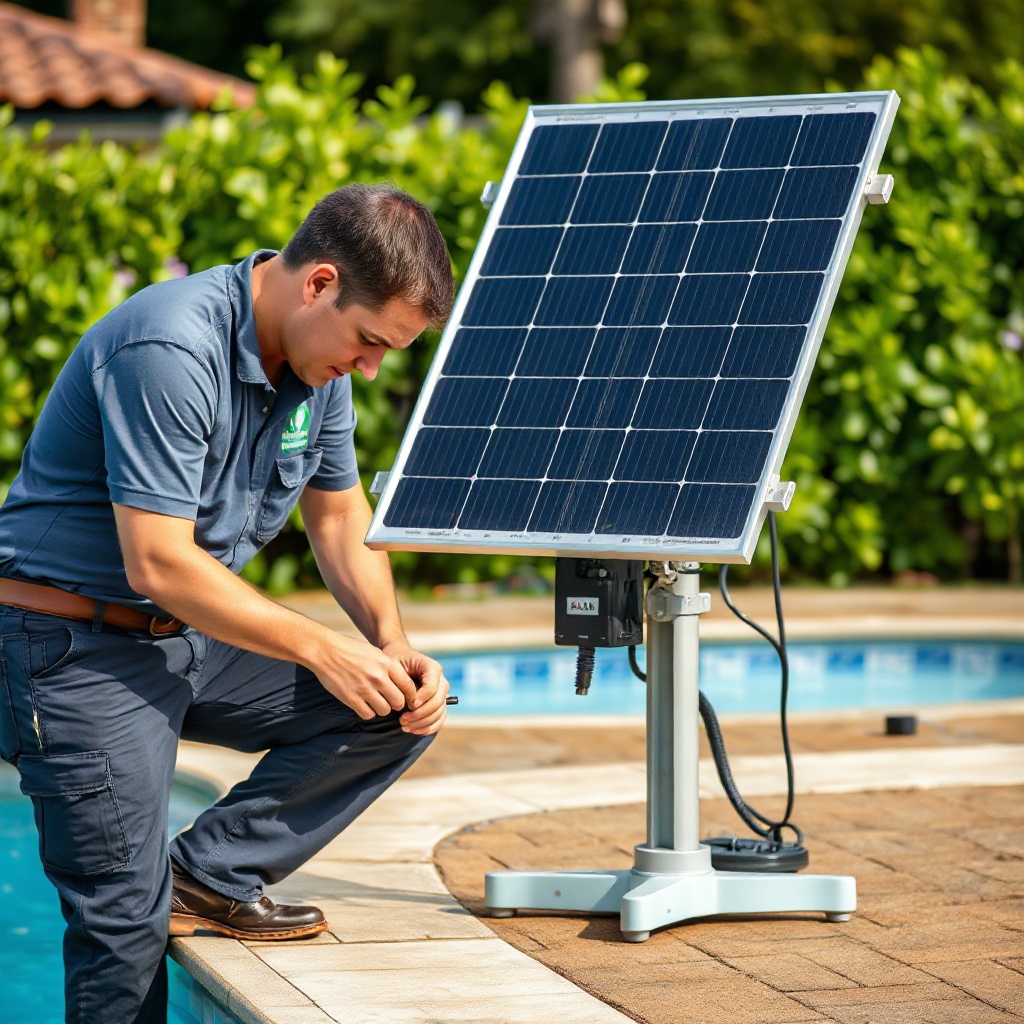
What Owners Say: Real-World Tilt Optimization Tips
After polling a dozen long-time Fafco Solar Bear owners (with an average of 8 years of use), these insights emerged:
- “Mark your calendar.” John from Los Angeles uses a floating angle tool to set his tilt to 25° in April and 45° in October. “The difference in pool temp is 4°F in spring and fall—huge for my comfort.”
- “Don’t forget drainage.” Sarah in Denver notes that a steeper winter tilt helps water drain completely before a freeze. She inspects the Fafco Solar Bear Collector Freeze Damage guide every November.
- “Compromise is fine for many.” Mike in South Carolina set a fixed angle equal to his latitude (34°) and uses a cover. “I get 90% of the heat without the hassle. But if you live north of 40°, adjust twice a year.”
- “Check rivets if you adjust often.” Multiple owners reported that repeated tilting without proper lubrication can stress the rivets on the absorber plate. They recommend annual inspection—see the rivet corrosion guide for more.
Frequently Asked Questions
1. How often should I adjust the tilt angle on my Fafco Solar Bear?
Twice a year is ideal: once in spring (around March/April for summer angle) and once in fall (September/October for winter angle). Adjust earlier if you have consistent freezes or extreme heat.
2. Can I leave the Fafco Solar Bear at the summer tilt all year?
Yes, in climates without hard freezes (e.g., southern Florida, Arizona). You will lose 30–50% of winter heat gain and risk freeze damage. Not recommended for areas below 30°F.
3. What tools do I need to change the tilt angle?
A wrench set, a protractor or angle gauge, and possibly a helper. For ground mounts, a step ladder and a socket wrench suffice. Never force the brackets—lubricate if tight.
4. Does tilt angle affect the antifreeze mix ratio?
Indirectly. Steeper tilt angles allow better drainage, reducing water pooling and freeze risk. For systems with Fafco Solar Bear Antifreeze Mix Ratios, proper tilt ensures the mix circulates evenly and doesn’t settle.
5. My roof is very steep (8/12 pitch). What angle is that?
An 8/12 pitch equates to about 34 degrees from horizontal. This is actually good for winter in many northern climates (latitude 40°–44° N). For summer, you may need to install a set of low-angle brackets to reduce the tilt to 20°–25°.
6. Is it worth paying a professional to adjust the tilt?
If you are uncomfortable climbing on a roof, yes. A professional pool solar technician will charge $150–$300 USD for a seasonal visit, but they can also inspect rivets, seals, and pipes. DIY adjustments are safe on ground mounts or low-slope roofs.