Introduction
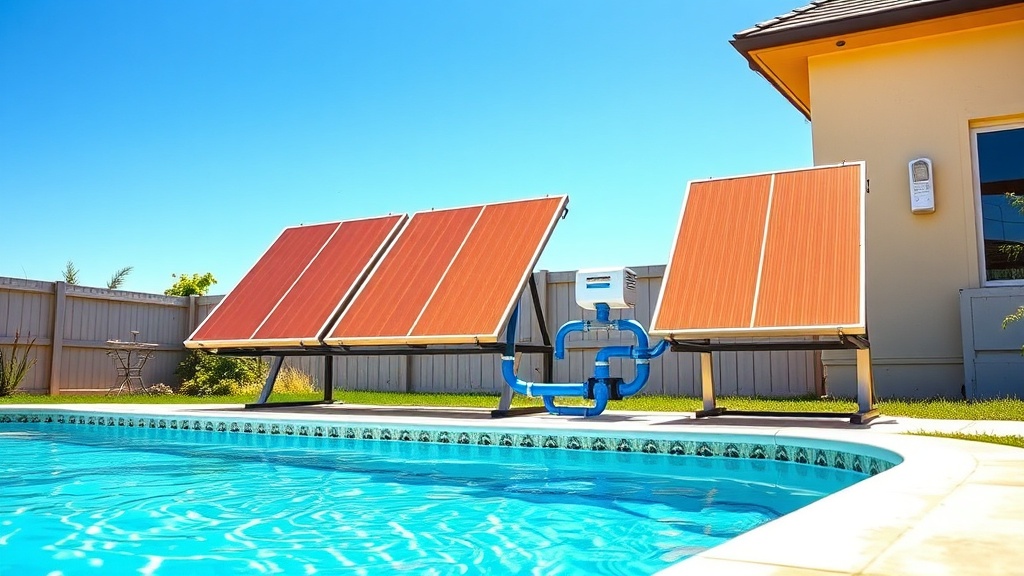
Choosing the correct pump flow rate for a Heliocol solar pool heater is critical for achieving optimal heating performance while preserving the long-term integrity of the collector array. Under-sizing the pump leads to insufficient water turnover, reduced heat transfer, and potential stagnation damage on hot, sunny days. Over-sizing, conversely, creates excessive system pressure that can stress fittings, accelerate wear on the vacuum break, and bypass the Heliocol Solar Pool Heater Pressure Relief Valve: Installation and Maintenance Guide. This guide provides a methodical, data-driven approach to calculating the ideal flow rate for your Heliocol system, considering total collector square footage, pipe diameter, and head loss.
How Do I Calculate the Minimum Flow Rate for My Heliocol System?
Heliocol collectors are designed to operate within a specific flow range: typically 0.50 to 0.75 litres per minute per square metre of collector surface area. For standard 2.8 m² panels, this equates to roughly 1.4 to 2.1 L/min per panel. However, a more robust rule of thumb for pump sizing is to target 0.60 to 0.70 L/min per square metre across the entire array.
To calculate your system’s minimum flow requirement, multiply the total collector surface area (in m²) by 0.60. For example, a six-panel Heliocol array (6 × 2.8 m² = 16.8 m²) requires a minimum pump flow of 16.8 × 0.60 = 10.1 litres per minute, or roughly 600 litres per hour. This baseline ensures sufficient water velocity to purge air pockets and maintain even heat distribution across all panels.
The following table compares recommended flow rates for common Heliocol system sizes:
| Number of Panels | Total Surface Area (m²) | Minimum Flow (L/min) | Optimal Flow (L/min) | Maximum Flow (L/min) |
|---|---|---|---|---|
| 4 | 11.2 | 6.7 | 8.4 | 11.2 |
| 6 | 16.8 | 10.1 | 12.6 | 16.8 |
| 8 | 22.4 | 13.4 | 16.8 | 22.4 |
| 10 | 28.0 | 16.8 | 21.0 | 28.0 |
| 12 | 33.6 | 20.2 | 25.2 | 33.6 |
Note: Exceeding the maximum flow rate can cause excessive head pressure, leading to premature wear on the vacuum break and potential water hammer. Refer to the Heliocol Solar Pool Heater Vacuum Break Installation Guide: Prevent Siphon Damage for details.
What Pump Horsepower Do I Need for a 6-Panel Heliocol Array?
Pump horsepower alone does not determine flow rate; it is the pump’s hydraulic performance curve at the system’s total dynamic head (TDH) that matters. For a typical Heliocol ground-mount installation with 50 metres of 2-inch (50 mm) schedule 40 PVC pipe, four 90° elbows, and a lift of 2 metres, a 0.75-horsepower (560-watt) pump is generally sufficient to deliver 12 to 15 L/min—the optimal range for a six-panel array.
However, if the system includes multiple vertical stacks or a longer pipe run exceeding 80 metres, a 1.0-horsepower (750-watt) pump may be necessary. Always consult the pump’s published flow curve at the estimated TDH. As a rule, Heliocol systems operate best with pumps rated between 0.5 hp and 1.5 hp for residential pools, depending on panel count and pipe configuration.
How Does Pipe Diameter Affect Flow Rate for Heliocol?
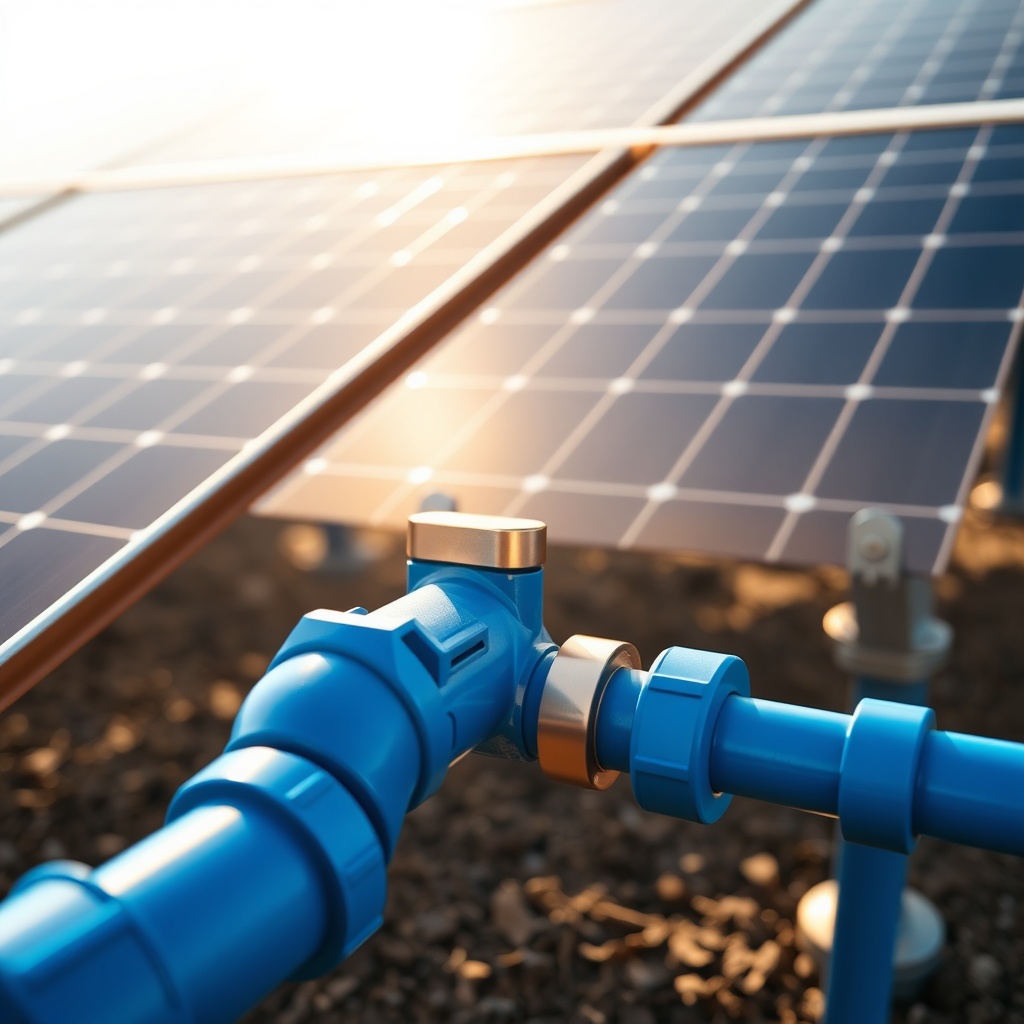
Pipe diameter directly impacts friction loss and, consequently, the pump’s ability to deliver the required flow. Heliocol recommends using 2-inch (50 mm) diameter supply and return headers for arrays of 6 to 12 panels. For installations with fewer than 6 panels, 1.5-inch (40 mm) pipe may suffice, but it significantly increases friction head.
Consider this: a 50-metre run of 1.5-inch pipe at 15 L/min creates approximately 8.5 metres of head loss, whereas 2-inch pipe at the same flow creates only 3.8 metres of head loss—a 55% reduction. This lower friction head allows the pump to operate at a higher flow rate on the curve, often delivering 20–30% more water. For any system larger than 8 panels, 2-inch pipe is essential to avoid pump starvation and poor heater performance. Review the Heliocol Solar Pool Heater Pressure Drop Analysis: Understanding System Restrictions for in-depth calculations.
Should I Use a Dedicated Solar Pump or a Shared Pool Pump?
Most residential pool pumps generate enough flow for a properly sized Heliocol array. However, if the pool pump also serves a water feature, spa jets, or a pressure-side cleaner, the net flow available for the solar heater may drop below the minimum threshold. In such cases, a dedicated solar pump (often called a “solar circulation pump”) is recommended.
A dedicated pump, sized as above and controlled by the solar controller, ensures consistent flow through the collector array. It also allows the main pool pump to operate at a lower speed, saving energy. For a typical 6-panel Heliocol system, a small 0.5-hp wet-rotor pump (e.g., Grundfos or equivalent) costing approximately $350–$500 AUD can be installed in the return line after the filter. This approach is especially beneficial for passive systems, where the collector is higher than the pump. See Sizing Heliocol Solar Pool Heater: Passive vs Active Collectors Explained for more details on system topology.
How Do I Measure Actual Flow Rate After Installation?
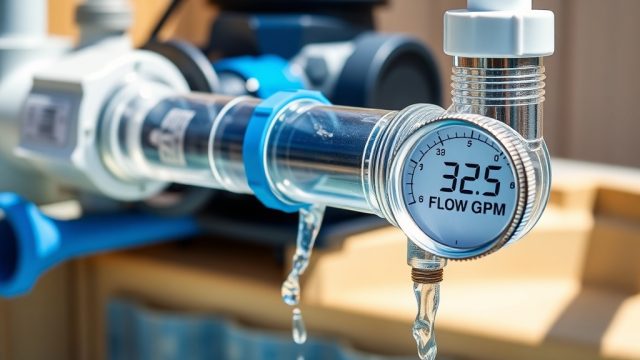
Do not rely solely on calculations; verify flow rate with a flow meter. Install a 2-inch paddle-wheel or ultrasonic flow meter in the return line downstream of the collector array, or use a temporary clamp-on meter. Alternatively, time the water that exits the return line into a calibrated 20-litre bucket (if accessible) under full solar operation.
Steps to measure:
- Ensure all solar valves are fully open and the pump is running.
- If using a bucket: divert the return flow into a bucket and measure the time (in seconds) to fill 20 litres. Flow rate (L/min) = (20 litres ÷ seconds) × 60.
- Compare to the minimum flow from the table above. If below the minimum, check for restrictions such as a partially closed valve, a blocked filter, or an undersized pump.
- If flow is above the maximum, consider installing a bypass valve system to reduce flow and protect the collector. Refer to the pressure relief valve guide for proper installation.
What Happens If the Flow Rate Is Too High or Too Low?
Running the pump at a flow rate significantly above the maximum (e.g., 30+ L/min for a 6-panel array) increases the velocity inside the collector tubes, which can cause erosion of the copper header joints and accelerate wear on the pressure relief valve. Excess velocity also reduces heat transfer efficiency, as water moves through the collector too quickly to absorb heat. Over a season, this can reduce heating output by 10–15%.
Conversely, a flow rate below the minimum (less than 8 L/min for a 6-panel array) leads to hot spots within the collector. On a sunny summer day, water inside the tubes may boil, creating steam that causes thermal shock, pressure surges, and potential damage to the glazing or absorber sheets. This condition also increases the likelihood of siphon damage if the vacuum break fails. For winter protection, proper drain-back procedures are essential—check Heliocol Solar Pool Heater Winterization: Drain-Back and Antifreeze Methods.
What Owners Say
Pool owners in Australia who correctly sized their Heliocol pumps report steady heating gains of 3–5°C on sunny days and virtually no maintenance issues over five years. One owner in Queensland noted that after switching from a 0.5-hp to a 0.75-hp pump for a 6-panel array, flow improved from 8.5 L/min to 12.4 L/min, resulting in noticeably warmer water within two hours of operation on sunny afternoons. Others mention that a dedicated solar pump eliminated the need to run the full pool pump for extended periods, cutting electricity costs by roughly $200 per year.
Common feedback highlights that using a flow meter during commissioning is invaluable—many owners initially overestimated flow based on pump curves alone. Those who followed the Heliocol sizing table consistently achieved the recommended 0.60–0.70 L/min per m² and reported “very consistent” heating performance across all panels.

Frequently Asked Questions
- What is the minimum flow rate per Heliocol panel?
Each 2.8 m² Heliocol panel requires at least 1.4 L/min (0.60 L/min per m²). The optimal flow is 1.7–1.9 L/min per panel. - Can I use a variable-speed pump for a Heliocol system?
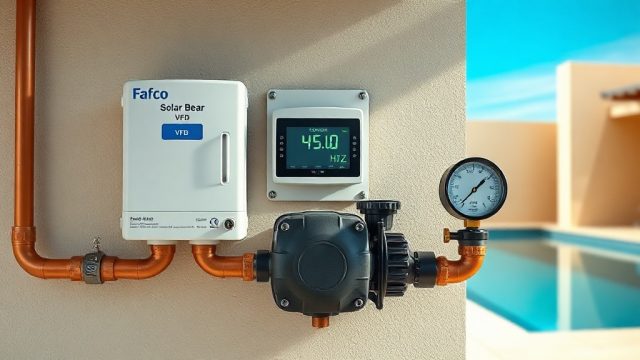
Yes, a variable-speed pump offers excellent control. Set the speed to deliver the desired flow rate (e.g., 12 L/min for a 6-panel array) during solar operation. Many models can be integrated with the solar controller. - How do I know if my pump is too large?
If the return line exhibits strong vibration, water hammer, or if the pressure relief valve opens frequently, the pump may be over-sized. Measure the flow rate; if it exceeds the maximum in the table, install a bypass or reduce pump speed. - Does the pipe layout on the ground mount affect flow?
Absolutely. Long runs, numerous 90° elbows, and elevations increase head loss. Use a minimum 2-inch header pipe and keep runs under 60 metres. See the ground mount guide for layout tips: Heliocol Solar Pool Heater Ground Mount Installation: A Step-by-Step Guide. - Can I have too many panels for my pump?
Yes. Pump flow must match the panel count. A 0.5-hp pump may struggle with 8 or more panels. Use the table to match pump capacity to panel count, or add a dedicated solar pump. - What flow meter is recommended for Heliocol?
A 2-inch inline paddle-wheel flow meter with a digital display is ideal. Brands such as Blue-White or Badger Meter work well. Alternatively, a simple bucket test with a stopwatch is accurate enough.