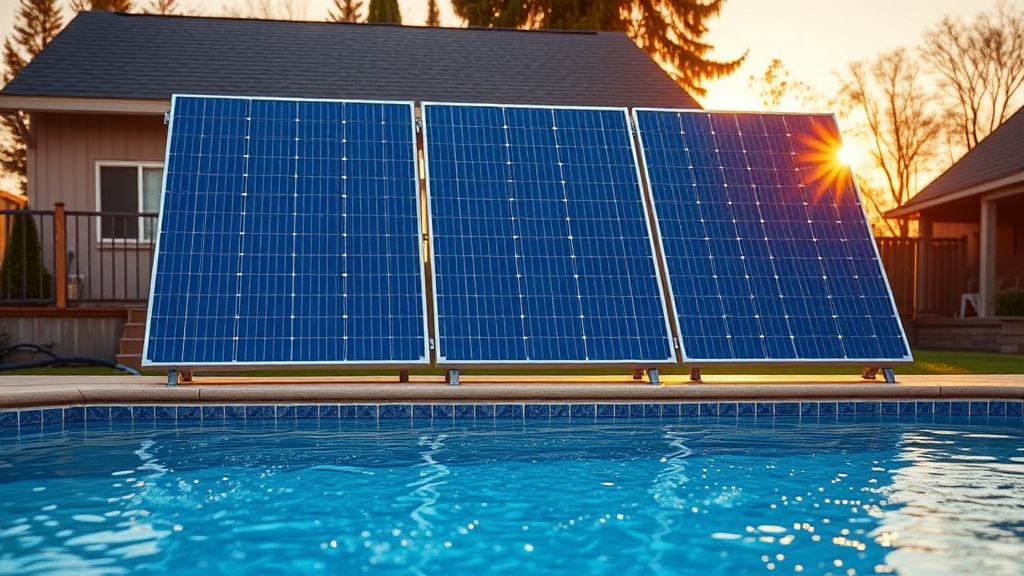
Why Tilt Angle Matters for Your SunStar Solar Pool Heater
Getting the tilt angle right on a ground-mounted SunStar solar pool heater can mean the difference between a pool that reaches a comfortable 84°F in spring and one that barely hits 76°F. The angle at which the collectors face the sun directly impacts how many BTUs per square foot the system captures, and this changes significantly between summer and winter. This article walks through the optimal tilt settings for ground-mounted SunStar systems, covering both seasonal adjustments and fixed-angle compromises for year-round use.
What Is the Best Summer Tilt Angle for a Ground-Mounted SunStar Solar Pool Heater?
For summer operation, the sun is high in the sky, and your SunStar solar collectors need a relatively flat angle to capture the most energy. The general rule is to set the tilt angle equal to your latitude minus 10 to 15 degrees. For example, a homeowner in Tampa, Florida (latitude 27.9°N) would set the collectors at roughly 13° to 18° from horizontal. This shallow angle allows the sun’s rays to strike the absorber plates more directly during the long summer days, maximizing heat gain when you need it most.
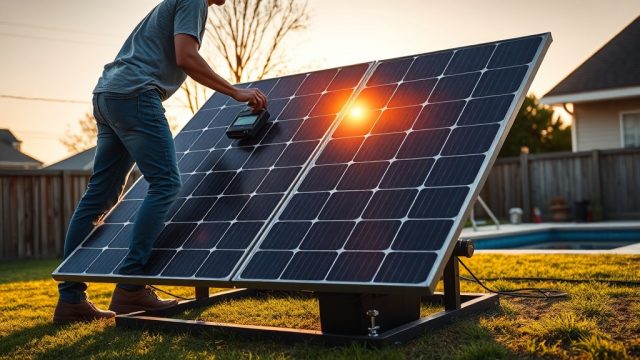
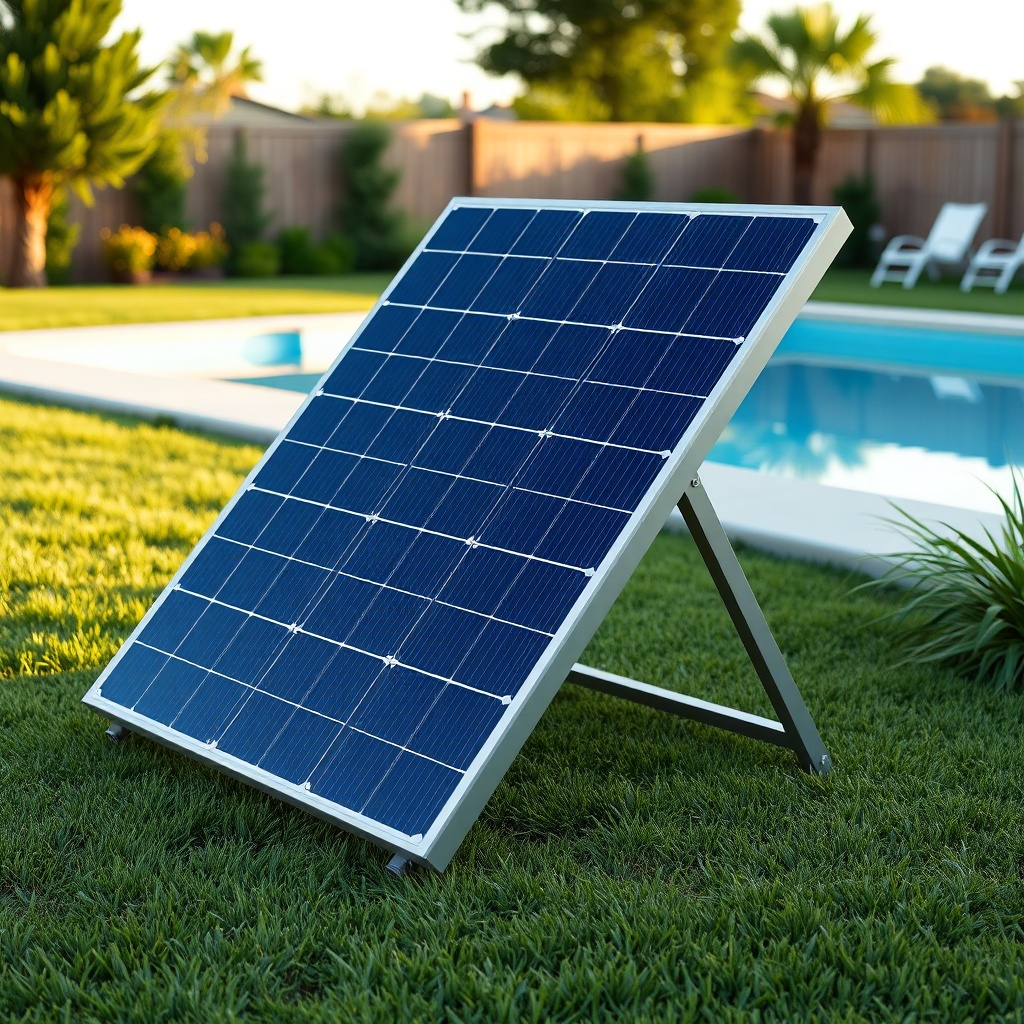
Ground-mounted systems offer a clear advantage here because you can physically adjust the support frame. A typical SunStar ground mount kit uses adjustable legs with bolt holes spaced every 5 degrees. Mark the summer position with a permanent marker so you can quickly switch back. For a permanent summer-only installation, a flat 15° angle works well for most of the United States south of the 40th parallel.
What Is the Best Winter Tilt Angle for a Ground-Mounted SunStar Solar Pool Heater?
Winter sun sits much lower on the horizon, so your SunStar collectors need to tilt steeper to intercept those rays. The typical winter angle is your latitude plus 10 to 15 degrees. A homeowner in Denver, Colorado (latitude 39.7°N) would aim for a tilt of 50° to 55° from horizontal. This steeper angle also helps snow slide off the collector glazing, reducing snow buildup that can block sunlight for days.
Keep in mind that winter solar gain is substantially lower—sometimes only 30% to 50% of summer output. Adjusting the tilt can recover up to 15% more BTUs during those short winter days. If you use your pool year-round or have an indoor pool, this adjustment is well worth the effort. Just lock the legs securely, because high winds can catch steeper panels. For a detailed guide on seasonal angle changes, see Optimal Tilt Angle for SunStar Solar Pool Heater: Summer vs Winter Settings.
How to Calculate the Best Fixed Tilt Angle for Year-Round Use
Not everyone wants to adjust the tilt twice a year. For a fixed-angle ground mount, the optimal compromise is typically your latitude minus 5 degrees. This splits the difference between the shallow summer angle and the steep winter angle, giving you about 85% of possible annual energy capture compared to seasonal adjustments. Here is a quick reference table for common US latitudes:
| Latitude (City Example) | Summer Best Angle | Winter Best Angle | Fixed Year-Round Angle |
|---|---|---|---|
| 25°N (Miami, FL) | 10° – 15° | 35° – 40° | 20° |
| 30°N (Houston, TX) | 15° – 20° | 40° – 45° | 25° |
| 35°N (Memphis, TN) | 20° – 25° | 45° – 50° | 30° |
| 40°N (Indianapolis, IN) | 25° – 30° | 50° – 55° | 35° |
| 45°N (Portland, OR) | 30° – 35° | 55° – 60° | 40° |
For commercial applications, a fixed angle is often preferred to minimize maintenance. The Sizing SunStar Solar Pool Heater for Commercial Pools: Key Considerations article covers how tilt angle affects total collector area requirements in large installations.
What Are the Structural Requirements for Adjusting SunStar Ground Mount Angles?
Ground-mounted SunStar solar pool heaters use a powder-coated aluminum frame with galvanized steel legs. Each leg has multiple mounting holes spaced at 5-degree intervals from 10° to 60°. Adjusting the angle requires loosening the stainless steel bolts, moving the leg bracket to the desired hole, and retightening to 30 ft-lbs of torque. Do not overtighten, as this can strip the threads in the aluminum frame.
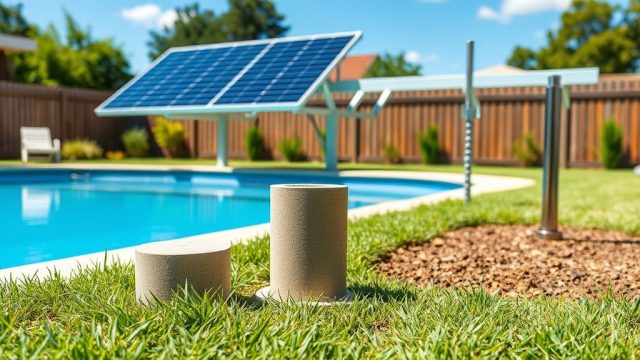
The ground mount must sit on a level concrete pad or compacted gravel base at least 4 inches thick. Unlevel ground can cause uneven weight distribution, leading to frame twisting when you change angles. Ensure all four legs share equal load. For heavy snow regions, consider using cross-bracing kits available from SunStar dealers. Also, remember that steeper winter angles increase wind loading—the collector acts like a sail. Check local building codes for wind resistance requirements. If you are winterizing the system, read the Winterizing Your SunStar Solar Pool Heater: Freeze Protection Guide before making any adjustments.
Can You Combine Ground Mount Tilt Optimization with Vacuum Breaks and Flow Control?
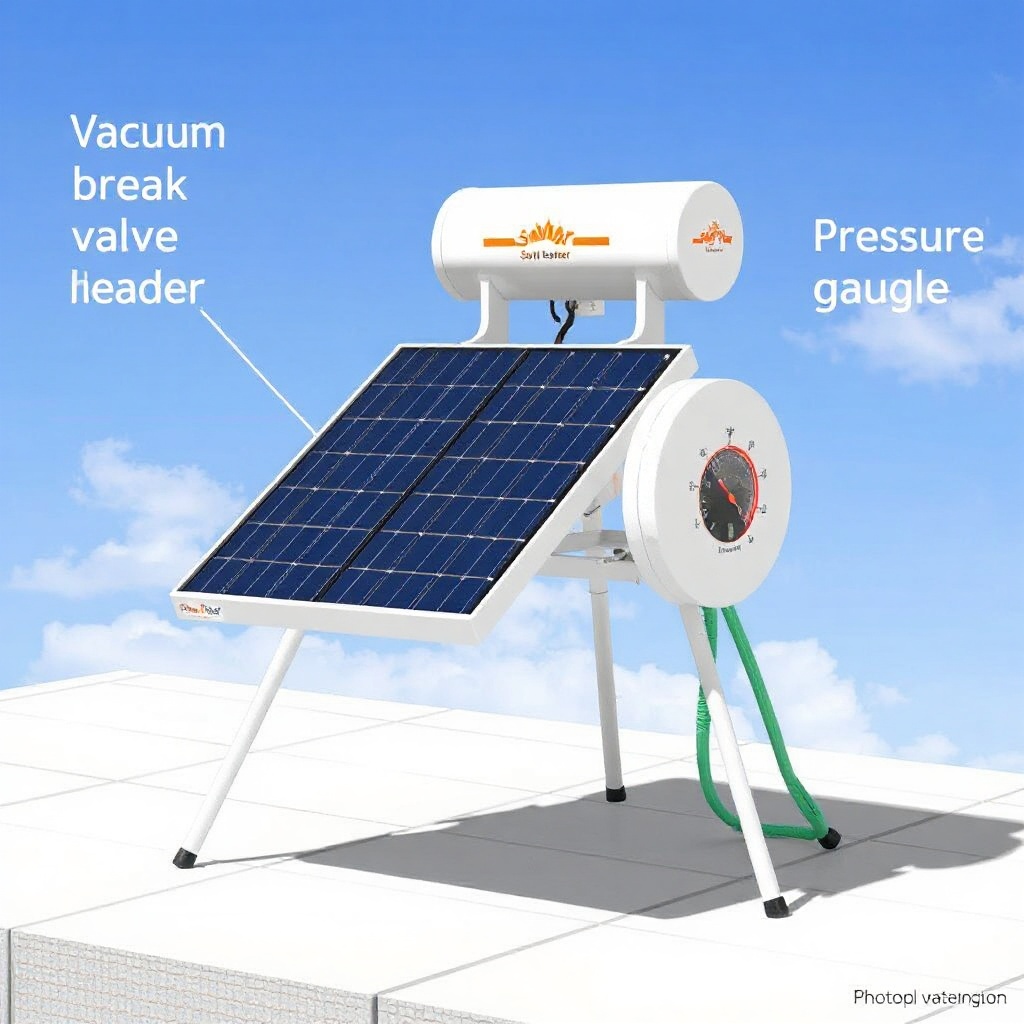
Absolutely. Changing the tilt angle of your SunStar ground mount also changes the internal water pressure distribution across the absorber tubes. A steeper angle increases the pressure differential between the bottom and top headers, which can affect flow rates. This is where a properly installed vacuum break becomes critical. Without one, a steep angle combined with a rooftop or elevated ground mount can create a siphon that drains your pool when the pump shuts off. Check the SunStar Solar Pool Heater Vacuum Break Installation Guide: Prevent Siphon Damage for placement specifics relative to tilt angles.
Also note that pressure drop changes slightly with tilt. A steeper angle may increase head loss by 0.5 to 1.0 feet of water, which can affect pump performance if you are near the pump’s upper limit. Review the SunStar Solar Pool Heater Pressure Drop Analysis: Optimizing System Flow to see how tilt plays into total system hydraulics.
What Do Owners Say About SunStar Ground Mount Tilt Adjustments?
Long-time users report that adjusting the tilt twice a year adds about 30 minutes of work but can extend the swimming season by three to four weeks on each end. One owner in North Carolina said his pool water hit 88°F in late April after switching to the summer tilt, whereas the previous year with a fixed 30° angle it barely reached 82°F.
Owners in high-wind areas recommend securing the legs with concrete anchors, especially if you adjust to the steep winter angle. A user in Colorado noted that after a 60 mph windstorm, his unanchored ground mount shifted 2 inches. He now uses 18-inch ground screws rated for 1,200 lbs per leg. Another common tip from owners is to use a smartphone inclination app to verify the angle rather than relying on the leg holes alone, as mounting on uneven ground can throw off the actual tilt by up to 3 degrees.
Sizing your system correctly from the start also matters. A properly sized SunStar array for your pool volume will deliver noticeable gains even without frequent tilt changes. See the Sizing SunStar Solar Pool Heater for Inground vs Above Ground Pools article to match collector area to your specific pool dimensions.
Frequently Asked Questions
1. Can I leave my SunStar ground mount at a fixed 30° angle all year?
Yes, but you will lose about 15% of annual solar collection compared to seasonal adjustments. A fixed 30° angle is a reasonable compromise for latitudes around 35°N to 40°N.
2. How often should I adjust the tilt angle?
Twice per year is ideal: change to the summer angle around April 1st and switch to the winter angle around October 1st. Adjust earlier if you use a pool cover, as the water will heat faster.
3. Will a steeper winter angle damage my SunStar collector frame?
No, the frame is rated for angles up to 60°. However, ensure the ground mount is anchored securely to handle increased wind loads at steeper settings.
4. Do I need to drain the collectors before changing the tilt angle?
It is recommended but not mandatory. Draining reduces weight and prevents water sloshing inside the tubes. If you drain, follow the freeze protection steps in the winterizing guide linked above.
5. What tools do I need to adjust the SunStar ground mount tilt?
You will need a 9/16-inch socket wrench, a torque wrench (30 ft-lbs), and optionally a smartphone inclinometer app. The leg bolts are standard 3/8-inch stainless steel.
6. Does the tilt angle affect the solar pool heater’s warranty?
No, as long as the angle is within the recommended range (10° to 60°) and the mount is installed per SunStar’s instructions. Using unauthorized mounting brackets or exceeding the angle limits voids the warranty.