How Does the SunStar Solar Pool Heater Restrict Water Flow?
When installing a SunStar solar pool heating system, one of the most critical yet often overlooked factors is the pressure drop across the collector panels. Pressure drop refers to the resistance water encounters as it flows through the narrow absorber tubes and manifold channels. For the SunStar series, typical pressure drop at a recommended flow rate of 4 gallons per minute (GPM) per panel ranges from 1.5 to 2.5 feet of head per panel, depending on the model and array configuration. This resistance directly impacts pump selection, energy consumption, and overall heating efficiency.
High pressure drop forces the pump to work harder, potentially reducing flow to other pool equipment like heaters or chlorinators. Conversely, too low a drop can indicate inadequate flow, leading to poor heat transfer and stagnation. Understanding and measuring this parameter ensures the system operates within the optimal hydraulic zone. For detailed pump sizing specifics, refer to the companion guide on SunStar Solar Pool Heater Pump Requirements: GPM Guide.
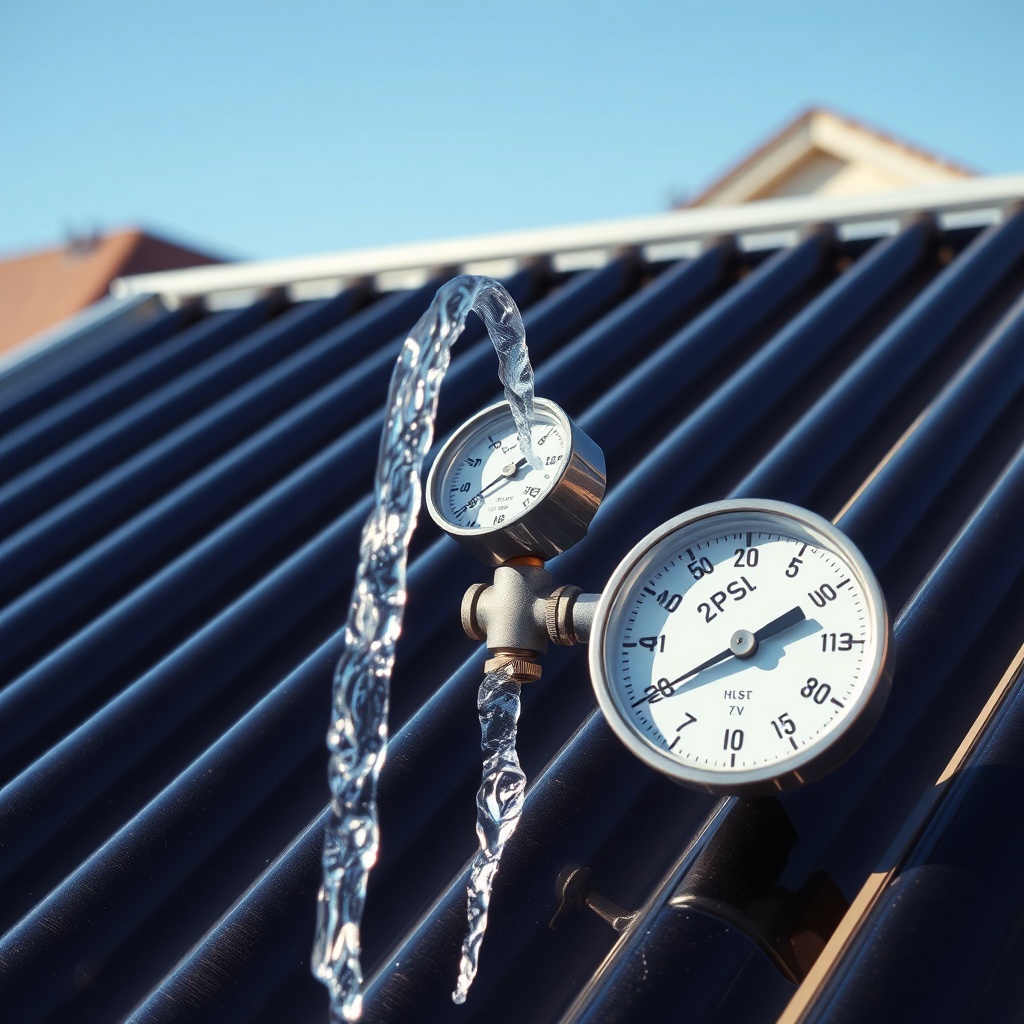
What Is the Exact Pressure Drop Specification for a Single SunStar Panel?
The manufacturer specifies that a single 4′ x 12′ SunStar solar collector (approximately 48 square feet of absorber area) has a pressure drop of 2.0 feet of head at a flow rate of 4 GPM. This value is used as the baseline for calculating the total system head loss. For a 4′ x 20′ panel (80 square feet), the drop increases to approximately 2.8 feet of head at 8 GPM due to the larger manifold and longer tube runs.
It is crucial to note that pressure drop scales non-linearly with flow. Doubling the flow roughly quadruples the pressure drop in turbulent flow regimes common in solar collectors. Therefore, operating panels at higher than rated flow—say 6 GPM per panel—can push pressure drop beyond 4 feet of head, significantly increasing pump energy costs and potentially exceeding pump capacity. The table below summarizes typical values for the most common SunStar residential panels.
| Panel Size (ft) | Absorber Area (sq ft) | Recommended Flow (GPM) | Pressure Drop (ft of head) | Pressure Drop (PSI) |
|---|---|---|---|---|
| 4×12 (1 panel) | 48 | 4 | 2.0 | 0.87 |
| 4×20 (1 panel) | 80 | 6 | 2.8 | 1.21 |
| 4×12 (2 in series) | 96 | 4 | 4.0 | 1.73 |
| 4×20 (2 in parallel) | 160 | 12 | 2.8 | 1.21 |
Note: Values are approximate at 20°C water temperature. Always consult the specific model datasheet.
How Does Array Configuration Affect Total System Pressure Drop?
The arrangement of multiple SunStar panels—whether in series or parallel—dramatically alters total pressure drop and flow distribution. In a series configuration, water flows sequentially through each panel, meaning the cumulative pressure drop is additive. For a bank of three 4×12 panels in series, total drop would be roughly 6.0 feet of head at 4 GPM. This can quickly overwhelm a standard 1-horsepower pump if pipe runs are also long.
Parallel configurations, conversely, split total flow among multiple panels, keeping per-panel flow at the recommended rate. For instance, two 4×20 panels plumbed in parallel require 12 GPM total, but each panel sees only 6 GPM and 2.8 feet of head. Total system pressure drop in a parallel array equals the drop of a single panel plus the losses from the header pipes. This is why most residential installations use parallel plumbing for arrays larger than two panels. For guidance on matching array size to pool volume, see Sizing SunStar Solar Pool Heater for Inground vs Above Ground Pools.
Additionally, consider vacuum break placement to prevent siphon damage when installing multiple panels on a roof. Proper vacuum breaks mitigate air lock issues that can artificially increase pressure drop. The article SunStar Solar Pool Heater Vacuum Break Installation Guide: Prevent Siphon Damage details how to incorporate these components without compromising hydraulic performance.
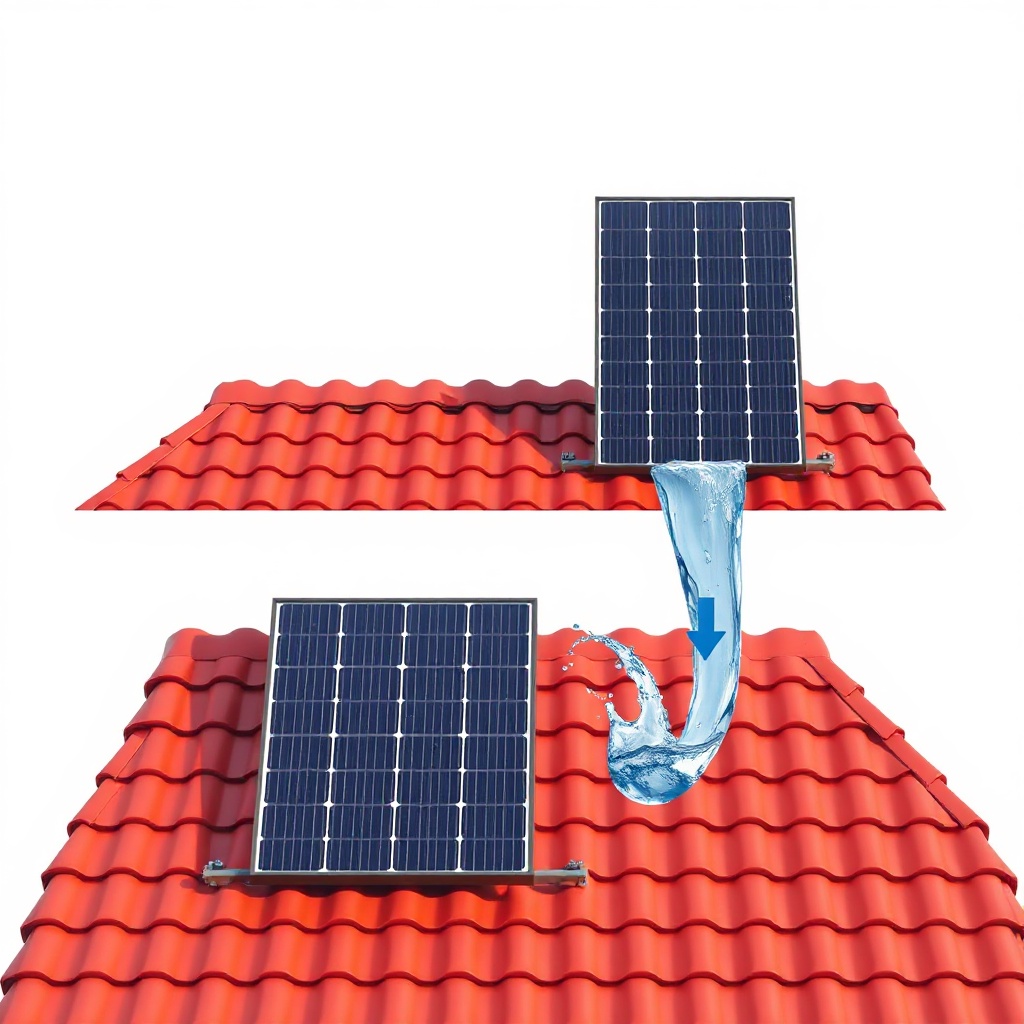
What Pump Horsepower Is Needed to Overcome SunStar Pressure Drop?
Selecting the correct pump requires calculating total dynamic head (TDH), which includes the solar panel pressure drop plus friction losses from piping, valves, and elevation rise. For a typical single-story roof installation with 50 feet of 2-inch PVC pipe and one 4×20 SunStar panel, TDH often falls between 20 and 30 feet at 8 GPM. A 1-horsepower high-head pump is usually sufficient for arrays up to six panels in parallel.
For larger arrays—such as those used on commercial pools or large inground pools exceeding 30,000 gallons—pressure drop can become a limiting factor. Commercial installations may require a 2-horsepower pump or a dedicated circulation loop. Always verify pump curves from the manufacturer against your calculated TDH. When dealing with commercial-scale setups, the dedicated resource Sizing SunStar Solar Pool Heater for Commercial Pools: Key Considerations provides deeper hydraulic analysis.
Underpowered pumps lead to flow starvation, reduced heat output (sometimes by 30% or more), and risk of panel overheating on sunny days. Oversized pumps waste energy and may cause erosion in absorber tubes. Use a flow meter and pressure gauge during commissioning to confirm actual conditions.
How Does Seasonal Temperature and Angle Affect Pressure Drop?
Water temperature influences viscosity and thus pressure drop. In summer months, warm pool water (80–90°F) has lower viscosity, reducing pressure drop by roughly 5–10% compared to colder spring or fall water at 60–70°F. While this variation is modest, it can shift pump operating points near the edge of efficiency curves. Seasonal angle adjustments for optimal solar gain, as discussed in Optimal Tilt Angle for SunStar Solar Pool Heater: Summer vs Winter Settings, do not directly change hydraulic pressure drop, but they can influence water temperature inside the panels, indirectly affecting viscosity.
Freeze protection measures add another dimension. Winterizing a SunStar system involves draining water to prevent ice damage, which can leave air in the panels during startup. Air in the lines dramatically increases pressure drop and can cause pump cavitation. The guide Winterizing Your SunStar Solar Pool Heater: Freeze Protection Guide explains proper purging techniques to minimize air-related pressure issues. Always bleed air from high points in the system after winterization to restore normal pressure drop.
What Do SunStar Owners Report About Flow and Pressure?
User feedback across pool forums and reviews consistently highlights pressure drop as a common concern. Many owners report that their initial pump was undersized, leading to sluggish flow and minimal temperature rise. One notable report from a Florida homeowner with four 4×12 panels on a 20,000-gallon inground pool described pressure drop of 8 feet of head measured at the solar feed line, which was resolved by upgrading from a 0.75 to 1.5-horsepower pump.
Several owners note that using flexible hose instead of rigid PVC increases total head by 2–4 feet, raising overall pressure drop. Those who follow recommended parallel plumbing observe less than 3 feet of additional drop beyond the panel spec. A common tip shared by experienced users is to install a bypass valve that allows partial flow diversion during low-sun days, reducing pump runtime and wear. Overall, owners emphasize that proper hydraulic design is essential for unlocking the SunStar’s heating potential.
Frequently Asked Questions
1. What happens if my SunStar panels have too high pressure drop?
Excessive pressure drop reduces flow rate through the panels, lowering heat transfer efficiency and potentially causing the pump to run dry or cavitate. It can also increase energy costs and shorten pump lifespan.
2. Can I measure pressure drop myself?
Yes. Install a pressure gauge on the supply and return manifolds. The difference in PSI between the two readings, multiplied by 2.31, gives pressure drop in feet of head. Compare this to the manufacturer’s spec for your flow rate.
3. What is the maximum pressure drop allowed for SunStar panels?
The manufacturer does not specify an absolute maximum, but keeping per-panel drop below 3 feet of head (about 1.3 PSI) at the recommended flow ensures reliable operation and pump compatibility.
4. Does roof height affect pressure drop?
Roof elevation adds static head (vertical lift), not frictional pressure drop. A two-story roof adds roughly 18–20 feet of static head to the pump’s TDH, which is separate from panel pressure drop but must be included in pump selection.
5. Should I clean the panels to reduce pressure drop?
Periodic cleaning of the absorber tubes (especially if they accumulate debris or scale) can reduce pressure drop by 5–15%. Use a chemical descaler or gentle pressure wash to restore original flow characteristics.
6. How can I balance flow across multiple parallel panels?
Use balancing valves on each return line and measure flow with a turbine flow meter. Adjust the valves until each panel achieves within 10% of its target GPM, typically 4 GPM per 4×12 panel or 6 GPM per 4×20 panel.