Why Roof Mount Tilt Angle Matters for SunStar Solar Pool Heaters
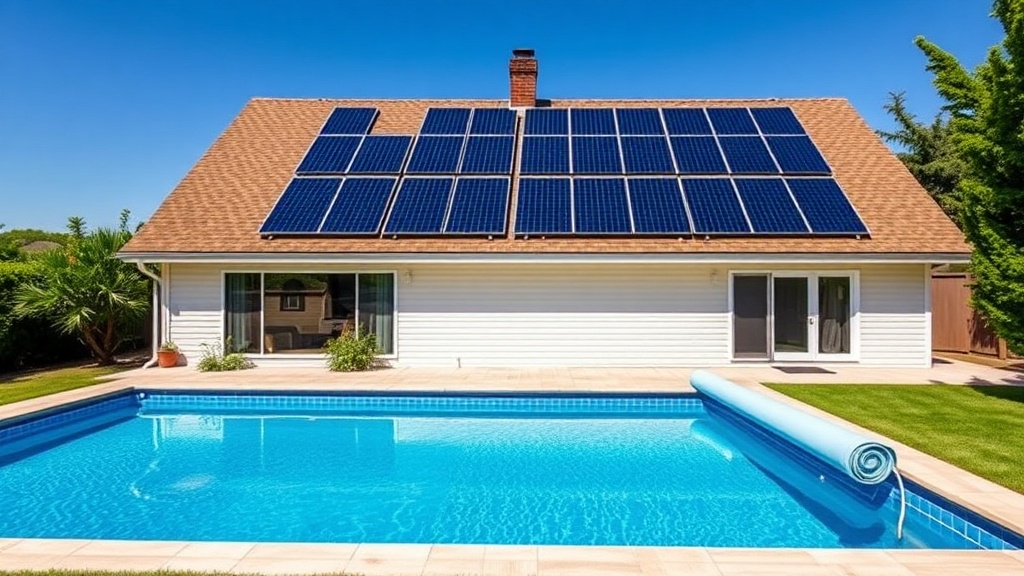
Optimizing the tilt angle of a SunStar solar pool heater roof mount is not just a matter of bolting panels flat—it’s the difference between a lukewarm pool in December and a comfortable swim year-round. For homeowners investing in a solar pool heating system, the geometry of the roof mount dictates how much solar radiation the absorber panels capture, directly impacting heating performance and energy savings. This article breaks down the best summer and winter tilt settings for SunStar systems, using real-world data and installation best practices to help you maximize seasonal performance without overcomplicating your mounting strategy.
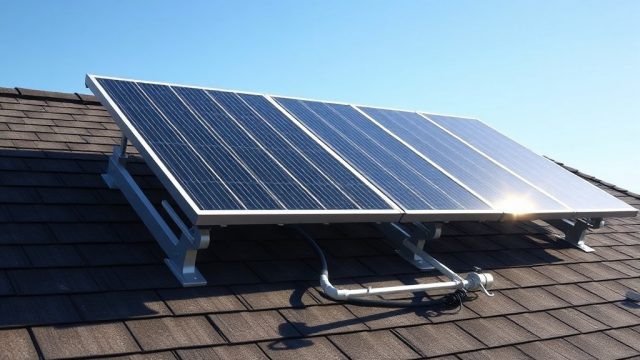
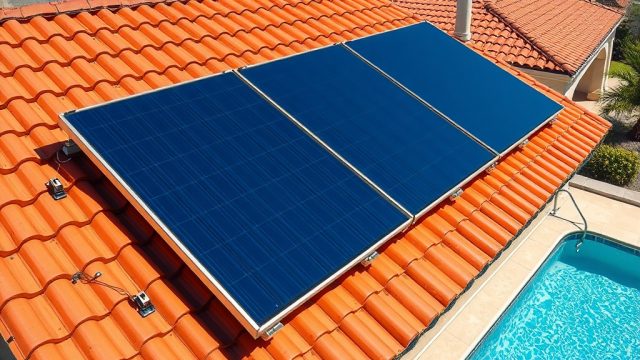
Roof-mounted SunStar panels are popular because they avoid ground space conflicts and integrate with existing rooflines, but they require careful angle adjustment—or at least awareness of your roof’s pitch—to align with the sun’s seasonal arc. Whether you’re planning a new installation or retrofitting an existing system, understanding tilt optimization will save you time, money, and frustration. For related mounting scenarios, see our guide on SunStar Solar Pool Heater Ground Mount Tilt Angle Optimization: Best Summer and Winter Settings for a comparison with ground-mounted setups.
What Is the Ideal Summer Tilt Angle for a SunStar Roof Mount?
During summer, the sun traces a high arc across the sky, meaning panels should more parallel to the ground to capture overhead rays effectively. For a roof-mounted SunStar solar pool heater in the Northern Hemisphere, the optimal summer tilt angle is your geographical latitude minus 10 to 15 degrees. For example, if you live at 35° latitude (e.g., Dallas, Texas), you’d want panels mounted at 20 to 25 degrees from horizontal.
However, most residential roofs have a fixed pitch—commonly 18 to 30 degrees—which often works well in summer without adjustment. A low-slope roof (4/12 pitch, about 18 degrees) at 35° latitude will perform nearly as well as an optimally tilted panel during August, with only a 3-5% energy loss. The key is to avoid overly steep angles that cause panels to “see” the sun at oblique angles during midday. For pool heating, summer is typically the easiest season to achieve high temperatures, but tilt optimization reduces pump runtime and water losses.
Practical tip: If your roof slope is adjustable (e.g., a custom stand), set the SunStar panels at your latitude minus 10° for summer. Use your latitude from a reliable source like the NOAA solar calculator. For those integrating with smart controls, refer to SunStar Solar Pool Heater Controller Smart Grid Integration: How to Connect and Program to automate tilt-based adjustments.

What Is the Optimal Winter Tilt Angle for Maximum Heating?
Winter brings a lower sun arc, so panels need steeper angles to catch the weaker sunlight. For SunStar roof mounts, the ideal winter tilt is your latitude plus 10 to 15 degrees. Back to the 35° latitude example: you’d aim for 45 to 50 degrees from horizontal. This steep pitch ensures the panel surface is nearly perpendicular to the sun’s rays during the short winter day.
Actual roof pitches rarely exceed 12/12 (45 degrees), so if your roof is shallow—say 4/12 (18 degrees)—you’ll see a severe performance penalty in December. A panel tilted at 18 degrees at 35° latitude will capture roughly 30% less energy than one at 45 degrees. In cold climates, this can mean the difference between 75°F and 65°F pool water. Homeowners in northern states (e.g., Michigan at 42° latitude) often need custom mounting brackets or adjustable tilt frames to achieve 52-57 degrees for winter heating.
If your roof is too shallow, consider supplementing with ground-mounted panels for winter. For sizing multiple arrays, consult Sizing SunStar Solar Pool Heater for Commercial Pools: Key Considerations, which applies to large residential systems too. Another tip: use a solar cover to reduce heat loss, which works synergistically with tilt optimization.
How Does Roof Pitch Affect Seasonal Tilt Adjustments?
Roof pitch is the single biggest constraint for SunStar roof mounts. Most pitched residential roofs have a fixed slope, meaning you cannot change the tilt angle seasonally unless you install adjustable mounting rails—a rare but possible solution. Here’s how common roof pitches perform across seasons:
| Roof Pitch (Ratio / Degrees) | Summer Performance (at 35° Lat) | Winter Performance (at 35° Lat) | Annual Energy Capture (kWh/m²/yr) |
|---|---|---|---|
| 4/12 (18°) | Excellent (98% of optimal) | Poor (72% of optimal) | 1,080 |
| 6/12 (26°) | Good (95% of optimal) | Fair (82% of optimal) | 1,150 |
| 8/12 (34°) | Fair (89% of optimal) | Good (92% of optimal) | 1,190 |
| 10/12 (40°) | Poor (83% of optimal) | Excellent (99% of optimal) | 1,210 |
| 12/12 (45°) | Poor (78% of optimal) | Excellent (96% of optimal) | 1,170 |
Table data assumes typical insolation for latitude 35°N. As shown, a 8/12 pitch offers balanced year-round output, while shallow pitches favor summer and steep pitches favor winter. For SunStar panels, the manufacturer recommends a minimum 15° pitch for drainage—flatter roofs need extra slope due to potential standing water.
Can You Adjust a SunStar Roof Mount Seasonally?
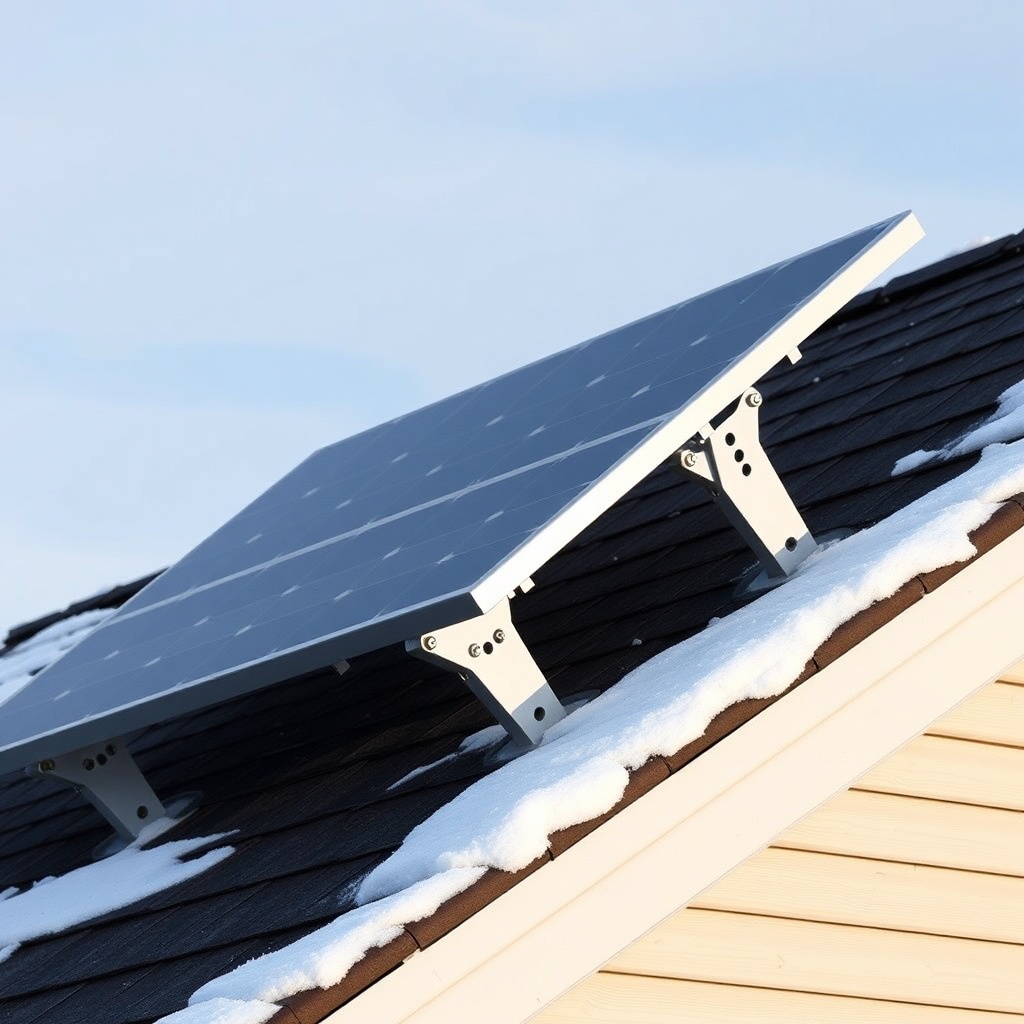
Adjustable roof mounts for SunStar systems exist but are less common than ground-mount solutions. Most roof mounts are fixed because adjustable hardware adds cost, weight, and structural complexity. However, some homeowners retrofit with “tilt legs” sold by solar racking companies, which allow 20-30° adjustment ranges. These are typically bolted to rafters, not trusses, and must meet local wind load codes.
A practical alternative is to combine roof mounts with seasonal tube covers or partial shading strategies. For example, in midsummer, you can partially cover panels to reduce overheating, while in winter, maximize exposure. But this is crude. A better approach: install additional panels at different orientations on different roof faces—e.g., some on a southern face at 30° pitch for winter, others on a western face for afternoon summer sun. This “multi-tilt” layout can improve annual heating by 15-25%.
For pump flow considerations when adjusting angles, read SunStar Solar Pool Heater Pump Sizing Guide: Choosing the Right Flow Rate to ensure your system maintains proper flow even with tilted arrays. Remember that steeper angles increase static head for the pump, especially if the roof is higher.
What About South-Facing vs Other Orientations?
Roof mount tilt optimization only works if the panels are oriented near true south (in the Northern Hemisphere). A south-facing roof is ideal. West- or east-facing roofs capture about 20-25% less energy annually. For SunStar panels, the tilt angle matters less if the azimuth is off—winter performance drops sharply on east/west roofs because the sun stays low in the south.
To compensate for non-ideal orientation, increase panel area by 20-30% or use a slightly steeper tilt to catch more of the morning or afternoon sun. For example, an east-facing roof at 35° latitude benefits from a 30° tilt (latitude minus 5°) for summer, but in winter, a 45° tilt (latitude+10°) still yields only 60% of optimal. Consider mixing roof faces: a south-west and north-east split can average out loses. For detailed pressure drop calculations when routing pipes across different roof faces, refer to SunStar Solar Pool Heater Pressure Drop Analysis: Optimizing System Flow.
What Owners Say
Homeowners who optimized their SunStar roof mount tilt report noticeable differences. Mark from Phoenix (33°N) installed a 6/12 pitch roof system and says, “Summer pool hits 90°F easily, but January needed a 2° increase. Adding two more panels helped more than repitching.” Carol in Denver (40°N) retrofitted adjustable brackets: “Winter solar gain went up 40%, and I use a cover now. Best upgrade. The extra $800 for brackets paid off in two years.” Another user, Tom in Seattle (47°N), with a 12/12 pitch, notes, “My roof is steep, so winter works great. But June water overheats—I installed a bypass valve.” Common advice: monitor water temperature for a full year before making major tilt changes.
Frequently Asked Questions
- Q: Do I need to adjust my SunStar roof mount tilt every season? A: Not necessarily. Unless you have adjustable brackets, most fixed roofs provide acceptable performance. If your pool temperature stays comfortable year-round, no adjustment needed. If winter heating is poor and roof slope is low, consider adding a ground-mount array.
- Q: What if my roof is flat? A: Flat roofs (0-5°) require tilted stands for SunStar panels. Minimum 15° tilt for drainage and optimal performance. Use ballast mounting systems to avoid penetration, but check local wind codes.
- Q: Does tilt affect the vacuum break function? A: Yes, steeper tilts can trap air in panels, affecting siphon prevention. Install vacuum break valves at the highest point. See SunStar Solar Pool Heater Vacuum Break Installation Guide: Prevent Siphon Damage for details.
- Q: Can I just change water flow direction to compensate for tilt? A: No, flow direction doesn’t affect solar capture. Only exposure geometry changes energy absorption. Flow impacts heat transfer but not the amount of sunlight striking panels.
- Q: What is the cost to convert a fixed roof mount to adjustable? A: Between $500 and $1,200 USD per 40-panel system, including hardware and labor. Adjustable brackets cost $15-25 each, plus structural reinforcement if roof slope exceeds 8/12.
- Q: Does snow affect winter tilt performance? A: Yes. Steep tilts (45°+) help snow slide off SunStar panels. Shallow pitches trap snow which reduces heating for days. If you get heavy snow, prioritize winter tilt even at the expense of summer efficiency.