Introduction: Why Tilt Angle Matters for Your Heliocol System
For any Heliocol solar pool heater owner, maximizing season-to-season performance hinges on one adjustable variable: the collector tilt angle. Getting the tilt right for summer versus winter can mean the difference between 82°F water in May and a pool that never breaks 70°F in December. This article walks through the physics, practical adjustments, and maintenance considerations that keep your Heliocol panels delivering consistent BTUs across all seasons.
What Is the Recommended Tilt Angle for Heliocol Collectors in Summer?
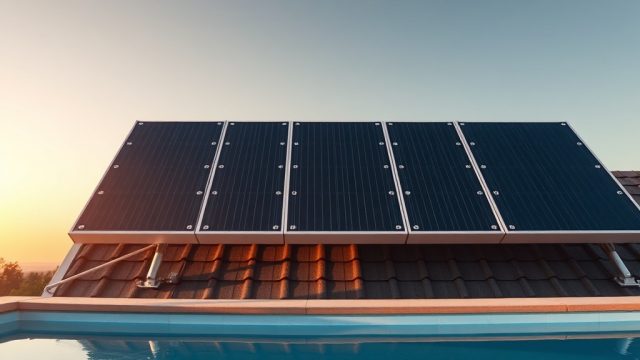
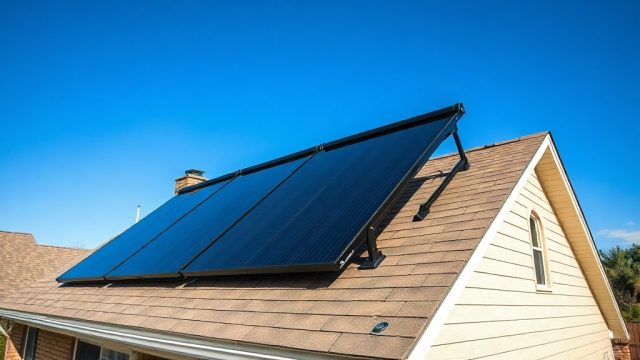
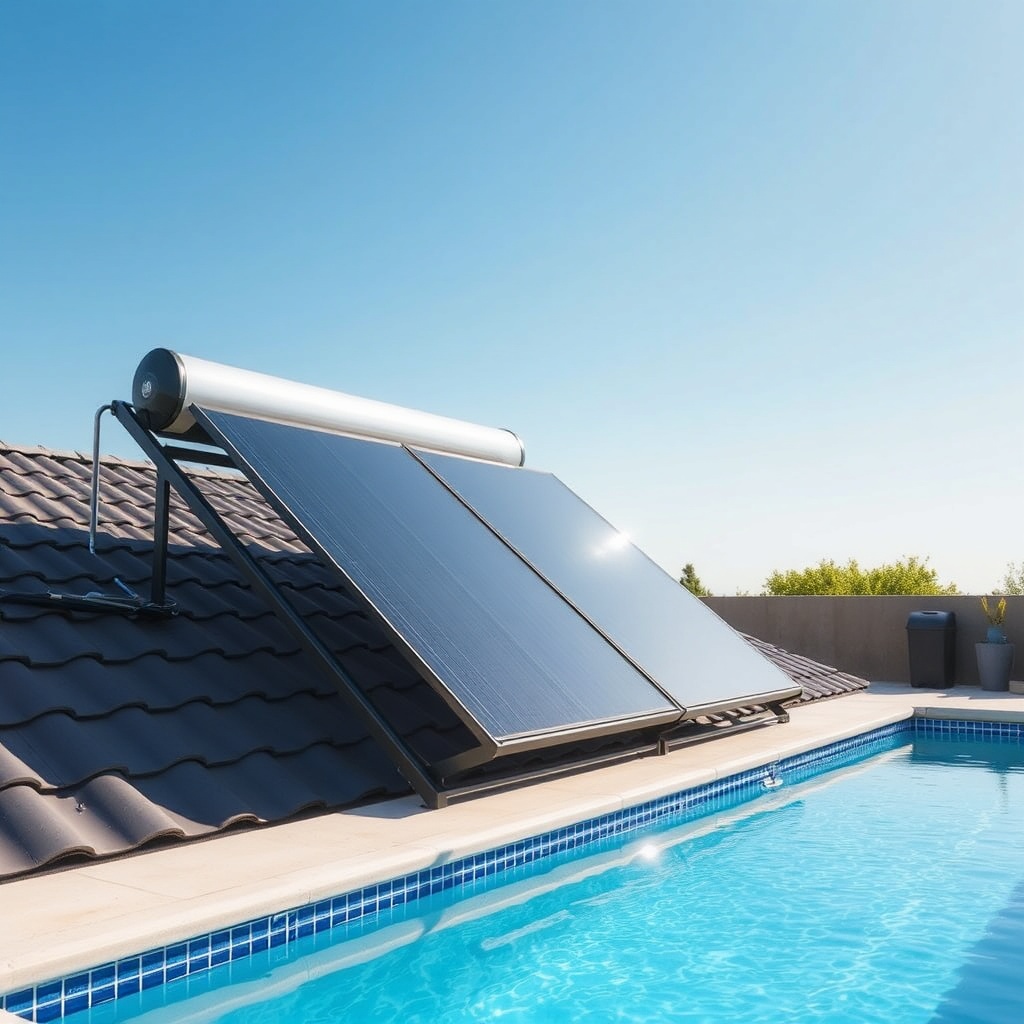
During high-sun months (June through August in the Northern Hemisphere), the sun’s path is nearly overhead. For optimum energy capture, Heliocol collectors should be mounted at a tilt angle equal to your local latitude minus 10 to 15 degrees. For a homeowner in, say, Los Angeles (latitude 34° N), that means a summer tilt of around 19–24° from horizontal. This relatively shallow angle ensures the collector surface intercepts the midday sun nearly perpendicularly, reducing reflection losses.
One important maintenance nuance: at shallow summer tilts, debris like leaves and dust tend to accumulate faster because the panel slope is lower. Owners should schedule an extra rinse cycle every two weeks during peak leaf-drop months. Pool cleaning crews often miss the top edges of ground-mounted Heliocol arrays, so a garden hose with a gentle spray nozzle is the safest way to clear debris without damaging the patented Heliocol polymer tubing.
What Winter Tilt Angle Should You Use for Heliocol Panels?
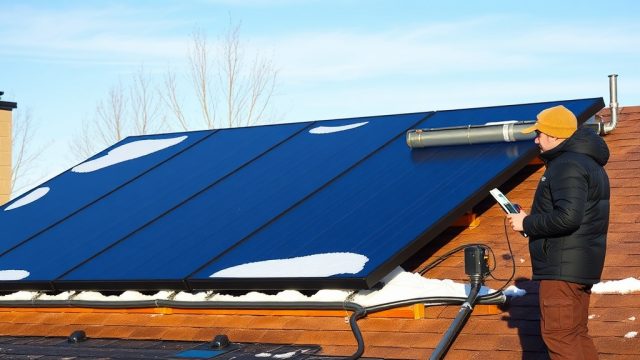
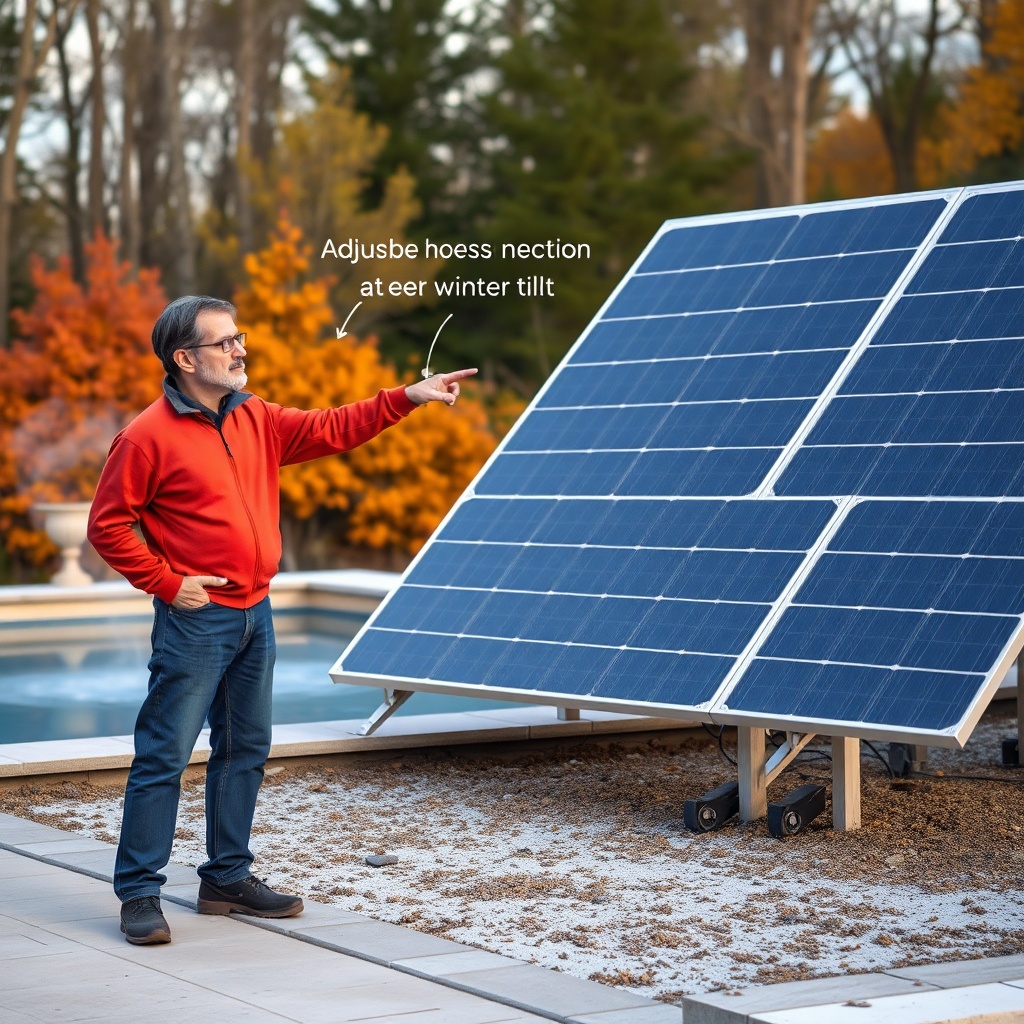
When the sun stays low in the sky (November through February), the optimum tilt flips. For winter operation, Heliocol collectors perform best when tilted at latitude plus 10 to 15 degrees. A Los Angeles owner would set the tilt to approximately 44–49°. This steeper angle exposes the collector face to more direct radiation and, critically, improves snow and ice shedding in colder climates.
The physics are straightforward: winter sunlight arrives at a shallower angle, so tilting the panels steeper follows the sun’s arc. However, a high winter tilt can increase wind loading. All Heliocol mounting hardware—whether roof attachments or ground-mount racks—should be inspected before the season changes. Pay special attention to the stainless steel bolts and aluminum rails for corrosion, especially if you live near coastal air. If you’re planning to install a new system with seasonal adjustability, our Heliocol Solar Pool Heater Ground Mount Installation: A Step-by-Step Guide covers adjustable rack options in detail.
Winterization also ties directly to tilt: if your system uses a drain-back design, the steeper angle helps water flow completely back to the storage tank, preventing freeze damage. For a deeper dive on this, read Heliocol Solar Pool Heater Winterization: Drain-Back and Antifreeze Methods.
How Does Seasonal Tilt Affect Your Pool Heating Performance?
The performance difference between a non-adjusted system and an optimized tilt system can be quantified. Consider the following typical payback and temperature gain data for a 4×20-foot Heliocol collector array in a moderate climate:
| Season | Set Tilt (deg) | Daily BTU Gain (est.) | Pool Temp Rise (10k gal) | Annual Savings vs. Flat Mount (£/USD) |
|---|---|---|---|---|
| Summer (June–Aug) | 20° (Latitude – 14°) | 54,000 | +5.4°F | £240 / $298 |
| Winter (Dec–Feb) | 48° (Latitude + 14°) | 22,000 | +2.2°F | £95 / $118 |
| Fixed at 35° (no change) | 35° year-round | 42,000 (summer) / 18,000 (winter) | +4.2°F / +1.8°F | £189 / $235 |
Note: Values based on 75°F ambient temperature, clear skies, and 4 GPM flow rate. Actual results vary by location and cloud cover.
As the table shows, the winter gain from an optimized tilt (22,000 BTU vs. 18,000 BTU) yields an extra 0.4°F rise in pool temperature daily. Over a 30-day month, that’s about 12°F more cumulative heating—enough to keep a swimming pool usable when a fixed-tilt system would lose ground.
What Maintenance Steps Are Needed for Tilt Adjustments?
Changing the tilt on Heliocol collectors is not a daily task—most owners do it twice per year (spring and fall). Before adjusting, perform these steps:
- Inspect all mounting brackets: Look for bent aluminum, stripped threads, or cracked composite pads. Heliocol uses aluminum extrusion frames; any bending compromises structural integrity.
- Check flexible hose connections: When the tilt changes, the supply and return hoses may be pulled or kinked. Adjust hose length or use a support bracket to prevent sharp bends that reduce flow.
- Verify pressure gauge reading: After repositioning, run the pump at your usual speed. The system pressure should not change by more than 1–2 psi. A sudden drop could indicate a blocked collector. Install a Heliocol Solar Pool Heater Pressure Relief Valve: Installation and Maintenance Guide is recommended if you haven’t already.
- Lubricate pivot points: Use a silicone-based lubricant on adjustment bolts. Never use petroleum-based grease as it can degrade the polymer tubing.
If you notice any water leaks near the manifold connections after adjusting, the seals may have dried out. A quick replacement of the o-rings (size 1/2-inch ID for Heliocol headers) resolves this in minutes.
What Do Owners Say About Seasonal Tilt Adjustments?
Heliocol users in the SolarPoolWise community consistently report that the seasonal tilt adjustment is the single most impactful low-cost modification for year-round swimming. One owner from Phoenix, Arizona, shared: “We set our panels to 18° in May and 50° in November. Our pool stays at 88°F in July and we still get 80°F in early December. The only downside is that we have to climb a ladder to adjust the top brackets, but it’s a 30-minute job with a socket wrench.”
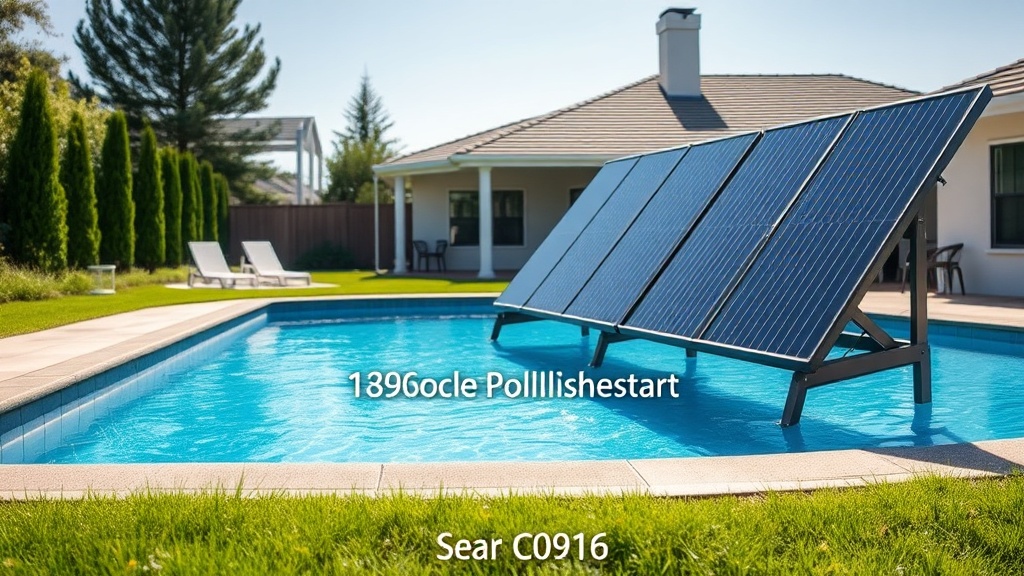
Another owner in New Jersey noted that their fixed 40° tilt gave them only 72°F water in late October, while a neighbor’s adjustable Heliocol system hitting 48° tilt pushed 79°F. The consensus: if you can install an adjustable ground mount (which is often simpler than roof mounts), it is worth the extra cost. For roof-mounted systems, a tilt adjustment may not be feasible without a custom railing, which is why many owners choose to optimize for summer and accept lower winter performance. Those interested in going the ground-mount route can reference Sizing Heliocol Solar Pool Heater: Passive vs Active Collectors Explained for collector sizing considerations.
Frequently Asked Questions
1. Can I adjust Heliocol tilt without professional help?
Yes, if your system uses adjustable brackets. Most ground-mount racks allow tilt changes using a wrench. Roof-mounted systems often require a professional due to safety and load concerns.
2. Does tilt angle affect the vacuum break operation?
Yes. A steeper tilt can help the vacuum break open more reliably when the pump stops, because water drains downward faster. See Heliocol Solar Pool Heater Vacuum Break Installation Guide: Prevent Siphon Damage for installation specifics.
3. Should I change tilt for fall and spring?
Most owners adjust once for summer (May) and once for winter (November). The shoulder months see acceptable performance from either tilt, but if you want peak efficiency, you can set a spring angle equal to your latitude minus 5°.
4. How does tilt affect pump sizing?
Steeper tilts can increase head pressure slightly, especially if the collector array is high above the pump. Check your pump’s flow curve. Our Heliocol Solar Pool Heater Pump Sizing Guide: Choosing the Right Flow Rate helps match your pump to your tilt conditions.
5. Will a wrong tilt angle damage my Heliocol panels?
No, but it will reduce efficiency. The polymer tubing is UV-stable and can handle any tilt between 0° and 90°. However, very shallow tilts (under 10°) can trap water and cause sagging in the collector manifold over many years.
6. Do collectors need extra winterizing if I use a steep tilt?
If you manually drain the system before frost, a steep tilt helps complete drainage. But you should still install freeze protection if your area sees temperatures below 32°F. Follow the drain-back procedures in the winterization guide.